
Chippendale Mahogany Side Table
When you search for a chippendale mahogany side table, you encounter the robust forms and carved ornament that defined eighteenth-century English dining rooms and parlours.
Chippendale Mahogany Side Table
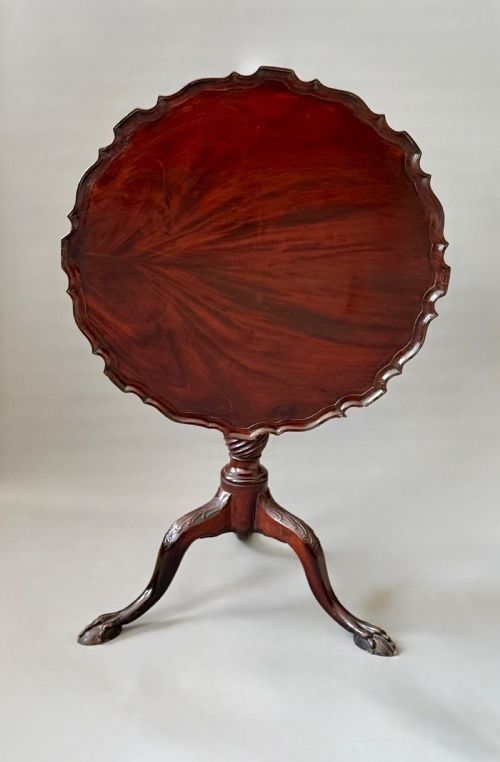
A chippendale mahogany side table encompasses a diverse group of domestic furniture, ranging from mid-eighteenth-century Georgian originals to later revival pieces produced across the nineteenth and early twentieth centuries.
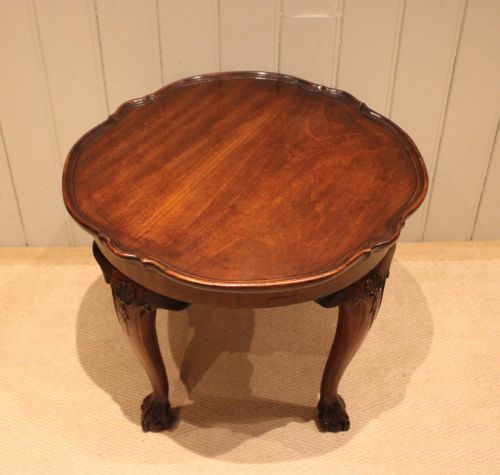
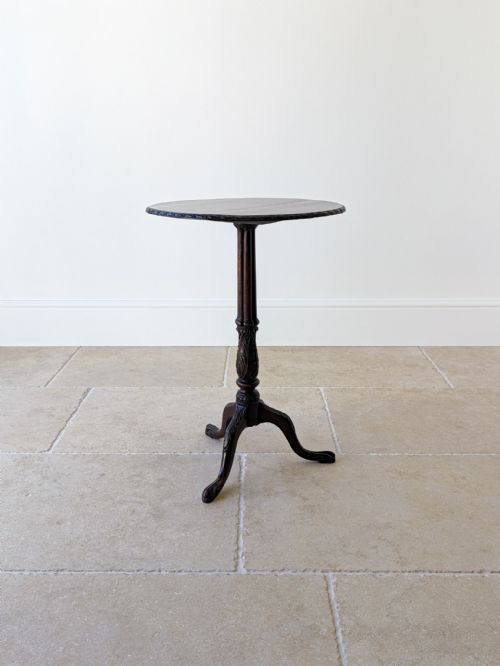
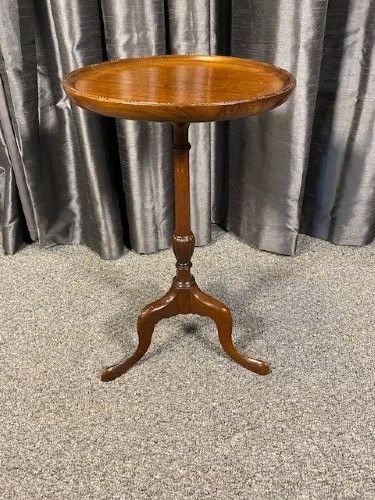
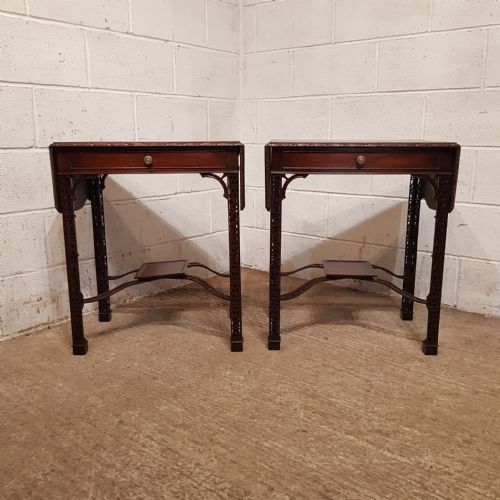
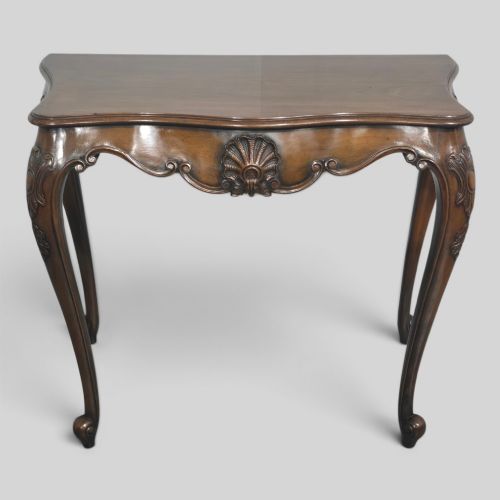
The selections span functional forms such as tripod occasional tables, card tables, console tables, and kettle stands, alongside larger serving pieces.
Materials and Construction
The primary material across these pieces is mahogany, including dense Cuban varieties that provided makers with a stable surface for intricate carving and patination.
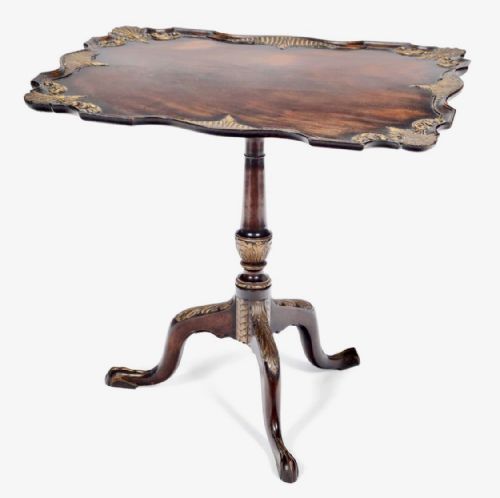
Selected examples incorporate supplementary materials such as parcel gilt accents, brass hardware, leather inserts, and contrasting exotic timbers like padauk.
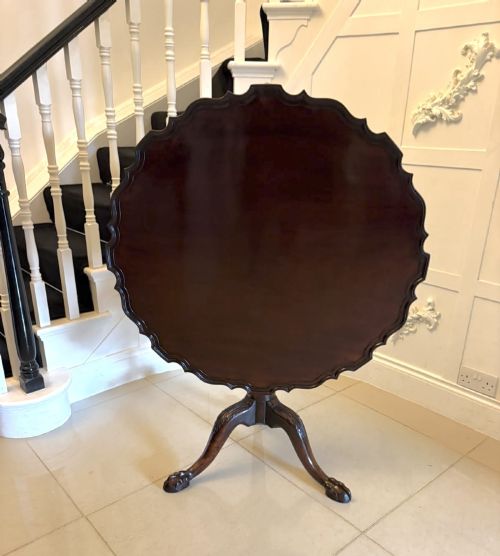
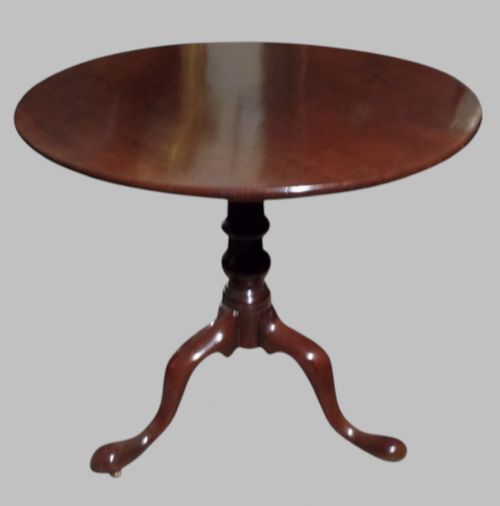
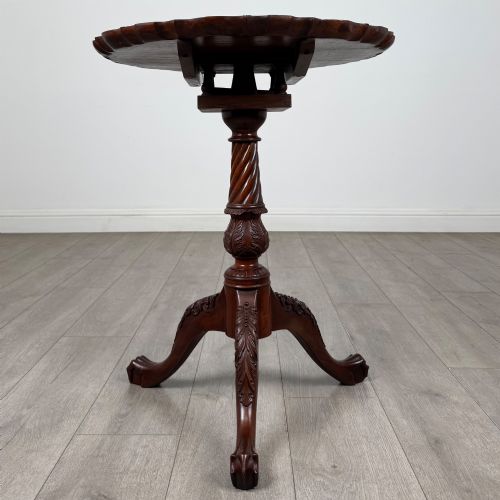
Joinery techniques ranged from standard framing to specialised mechanisms like the birdcage tilt-top pivot, allowing tables to rotate and fold when not in use.
Several tilt-top tables retain mechanisms nimble enough to spin freely after nearly three hundred years of domestic service.
Assessing Craftsmanship
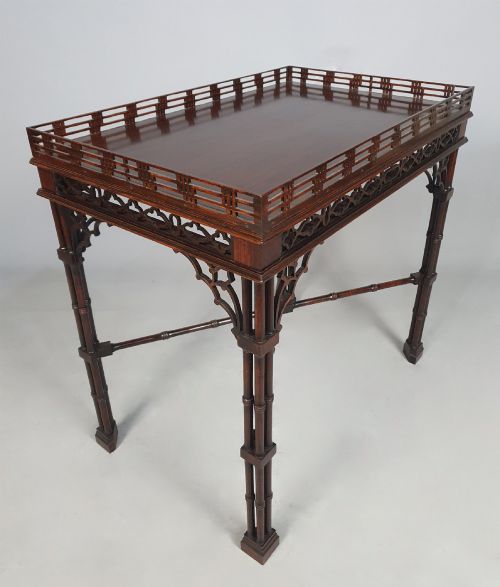
The distinction between ordinary and exceptional examples rests upon the crispness of the hand-carving on the knees, edges, and gallery rails.
Timber selection dictates the visual depth of the piece, with richly figured grain and original patination elevating the standing of a table far above plain or heavily restored surfaces.
Proportion and structural integrity separate master-carved regional pieces and later revivals from utilitarian workshop output.
The Chippendale Mahogany Side Table Glossary
- Pie crust
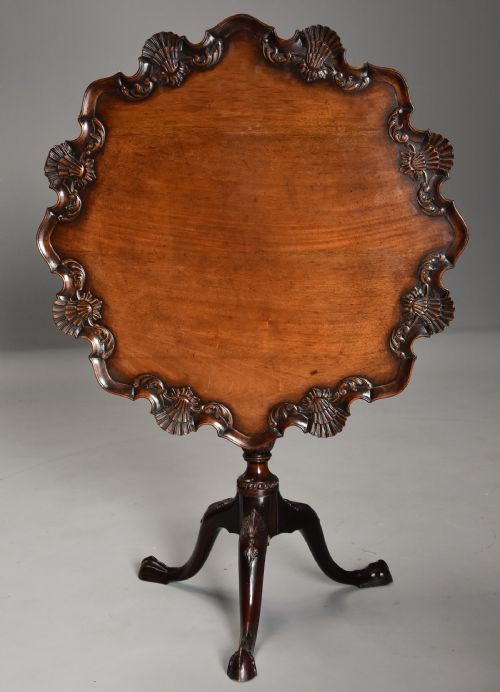
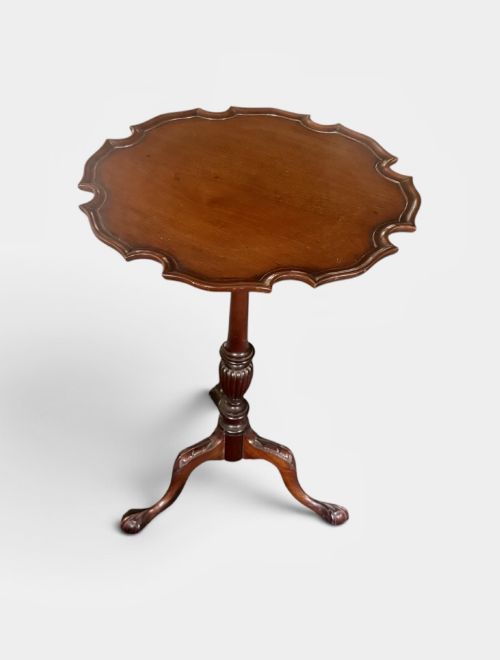
- A raised, scalloped tabletop edge carved directly from the solid timber. This decorative moulding resembles the crust of a traditional pastry.
- Tilt-top
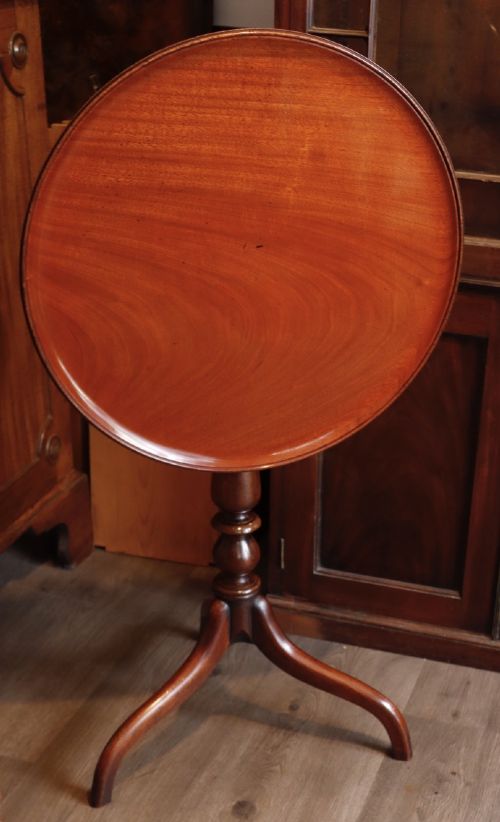
- A hinged tabletop mechanism that allows the surface to pivot into a vertical position. This clever adaptation saved floor space in smaller period rooms.
- Birdcage
- A wooden revolving assembly placed beneath a tabletop to permit turning and tilting. It uses small vertical spindles resembling a cage.
- Padauk
- A dense, heavy exotic hardwood native to the tropics, noted for its rich reddish-brown colour. Cabinetmakers utilised it for high-status eighteenth-century tables.
- Lowboy
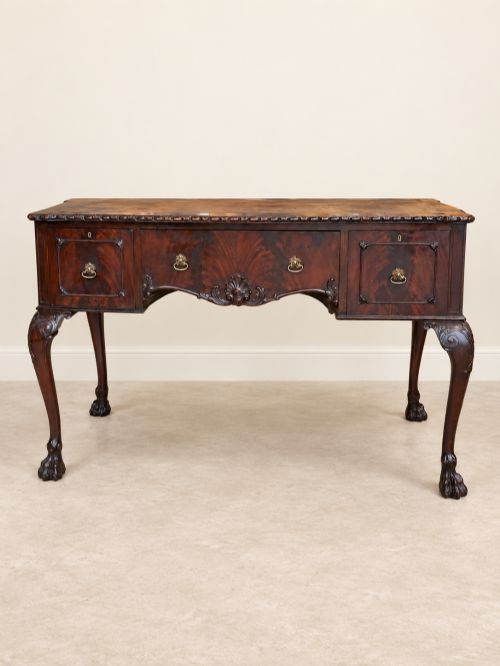
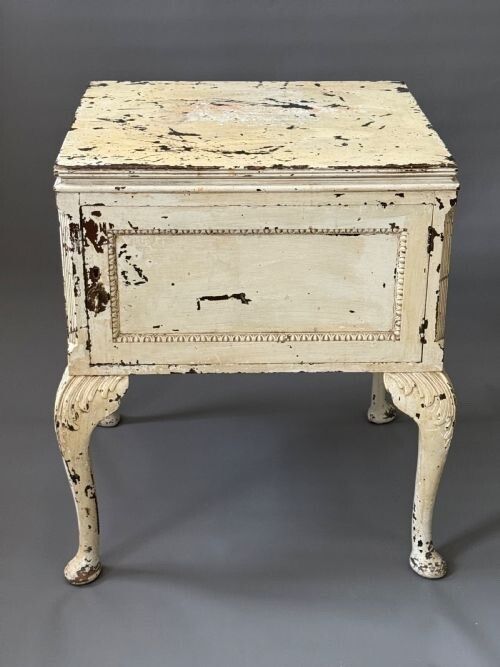
- A small dressing or side table featuring one or more rows of drawers beneath the top. Eighteenth-century makers frequently set them on slender cabriole legs.
Chippendale Mahogany Side Table: Frequently Asked Questions
How do I spot an original eighteenth-century table?
Examine the timber shrinkage, tool marks on the underside, and the consistency of the hand-carved details. Period pieces show authentic wear patterns developed over centuries of domestic use.
Compare the construction methods in the drawer linings and frame joints against known eighteenth-century workshop practices to confirm the age of the piece.
What is a birdcage mechanism?
A birdcage is a rotating wooden frame mounted between the central pillar and the tabletop. It allows the surface to spin horizontally and tilt vertically.
This functional innovation appeared frequently on mid-Georgian tripod tables to facilitate compact storage against a wall.
How were these tables used originally?
These versatile furnishings served multiple domestic functions, including holding tea service, displaying porcelain, or providing a surface for card games and writing.
Smaller tripod and wine variants moved easily around the parlour to suit the immediate needs of the household.
Are Edwardian revivals well made?
Edwardian cabinetmakers frequently produced high-quality interpretations of earlier Georgian designs, utilising excellent mahogany and skilled carving.
While they lack eighteenth-century age, these revival pieces offer durable construction and classical aesthetics for modern interiors.