
Chippendale Mahogany Occasional Table
A chippendale mahogany occasional table brings structural elegance and rich timber tones to a room, offering practical surface space rooted in eighteenth-century design.
Chippendale Mahogany Occasional Table
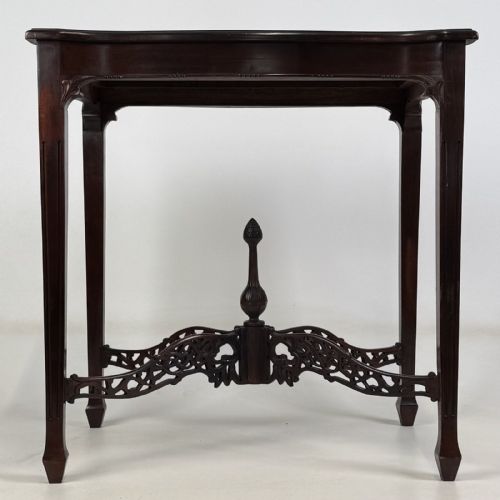
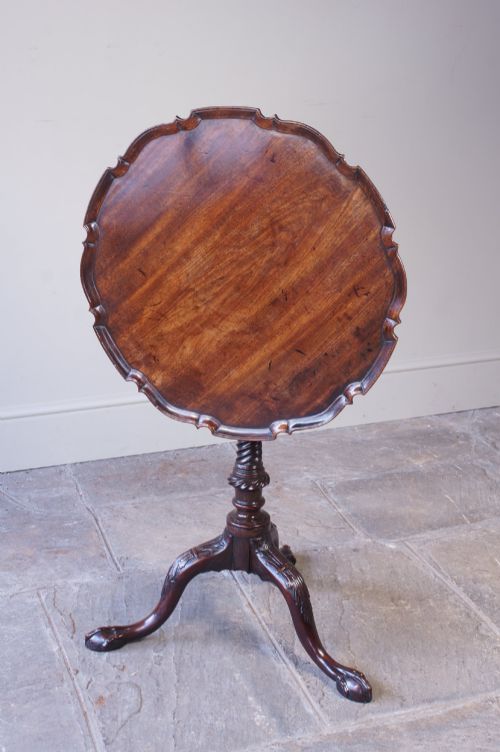
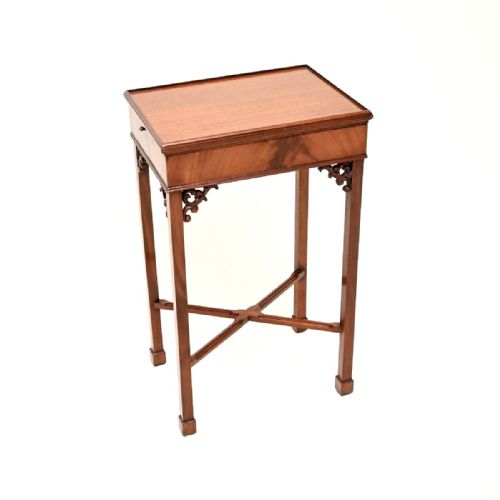
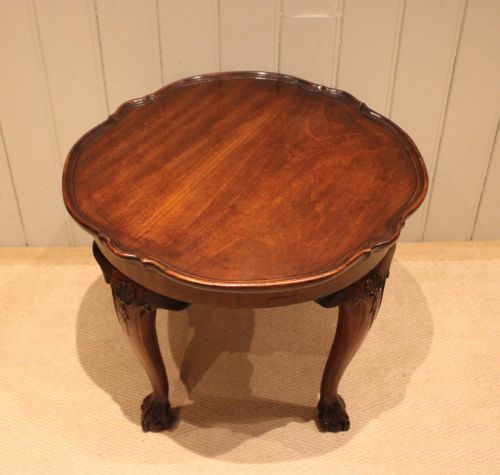
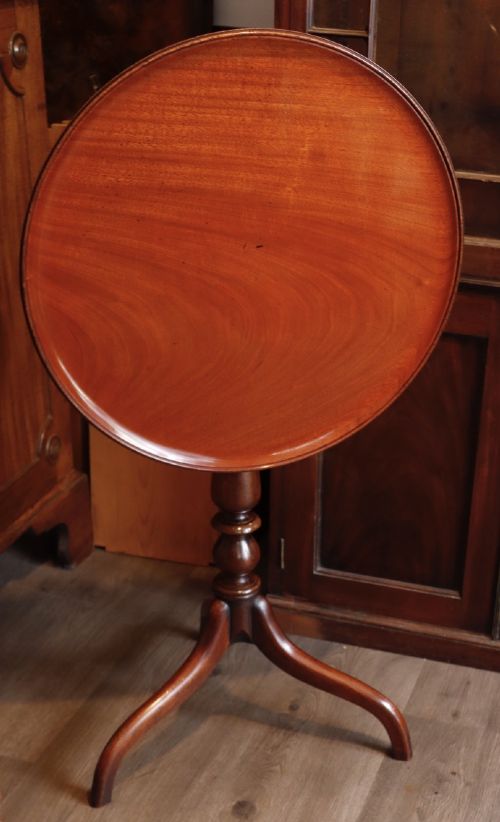
A chippendale mahogany occasional table comprises a compact surface supported by a central pedestal or four legs, designed for tea, wine or display. Pieces meeting this description emerge across eighteenth-century Georgian periods, alongside later nineteenth and twentieth-century revivals.
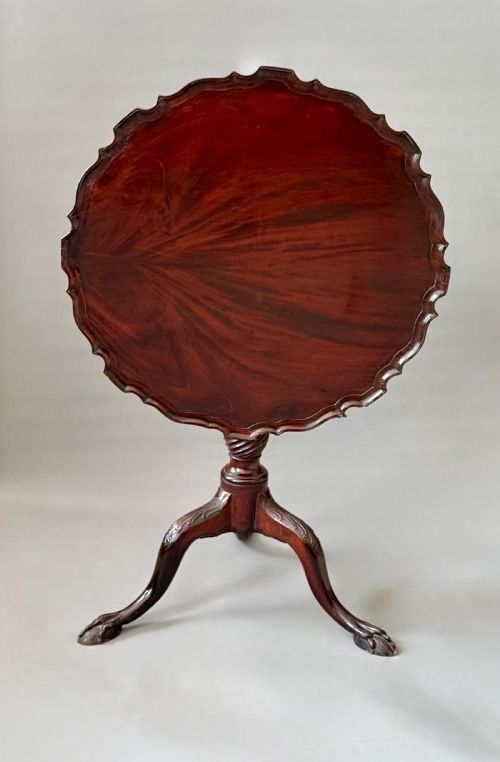
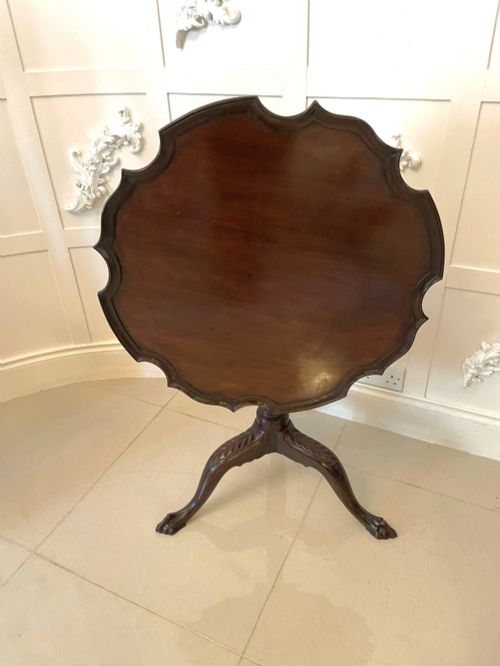
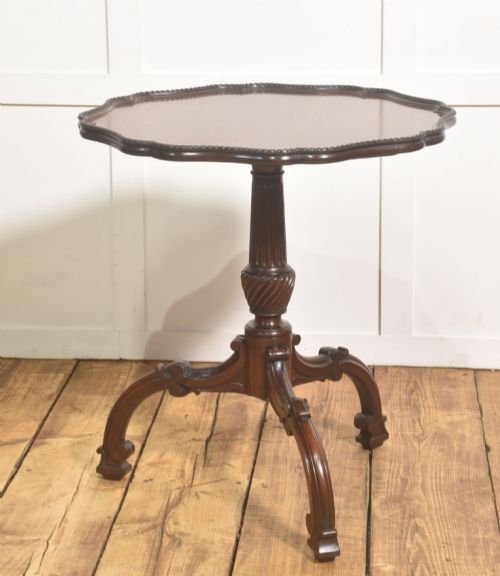
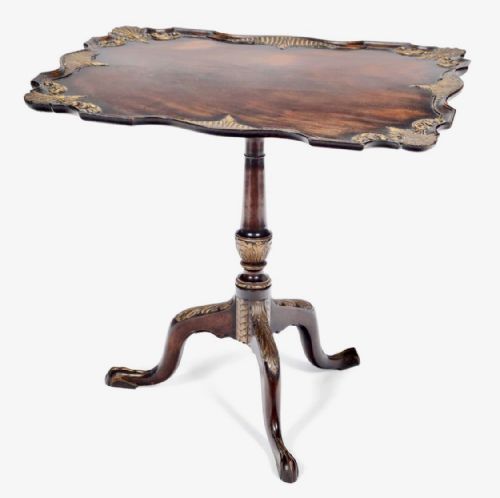
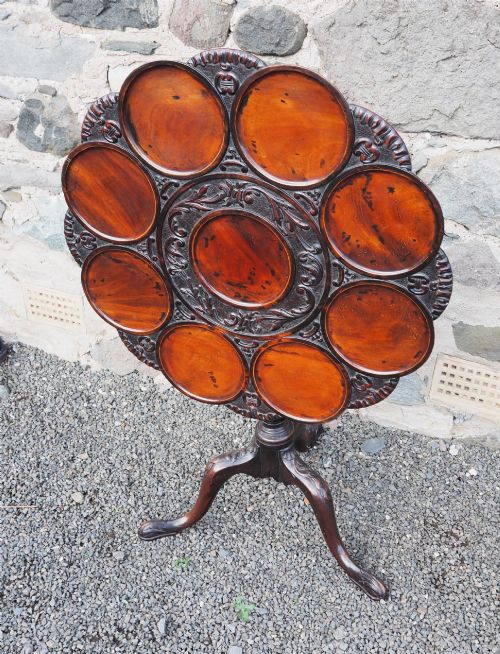
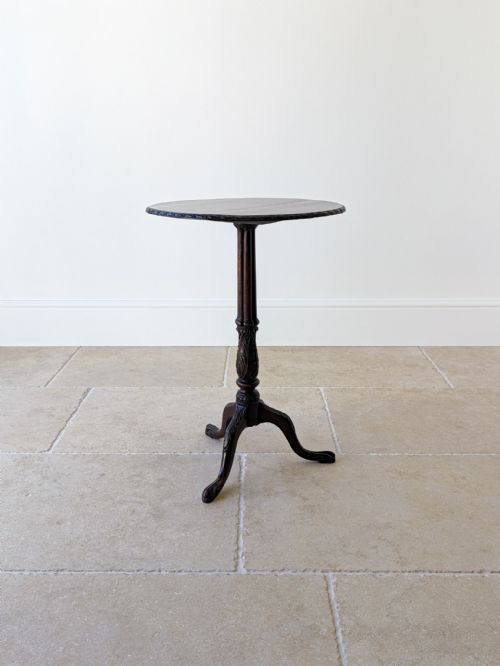
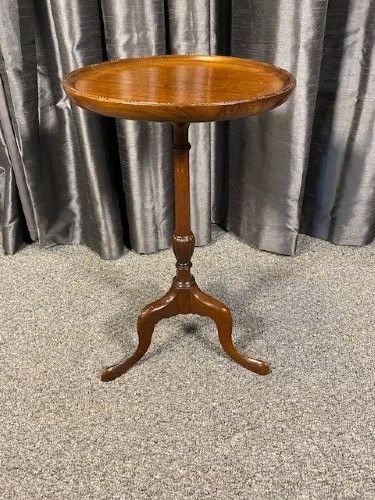
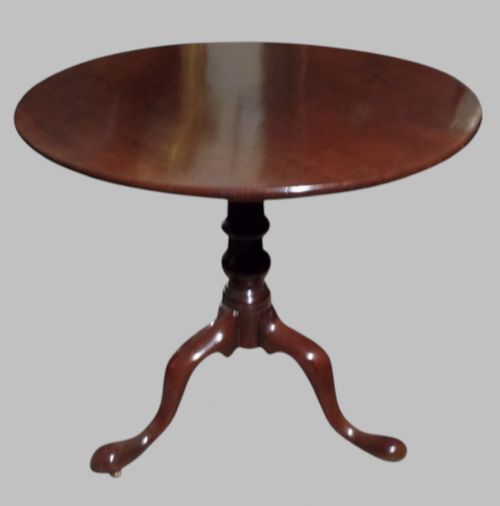
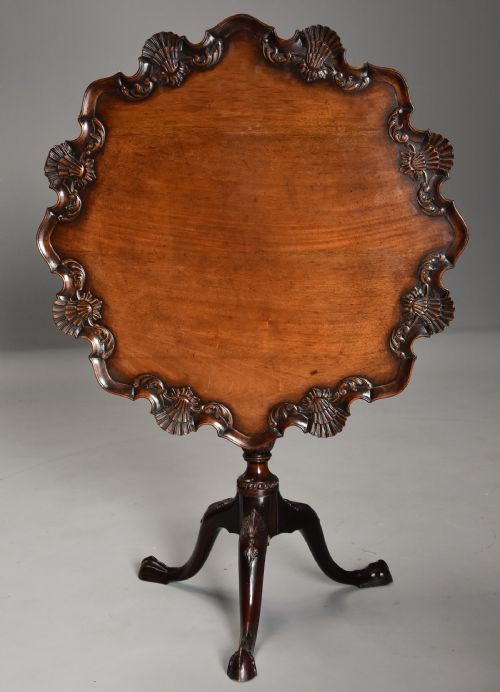
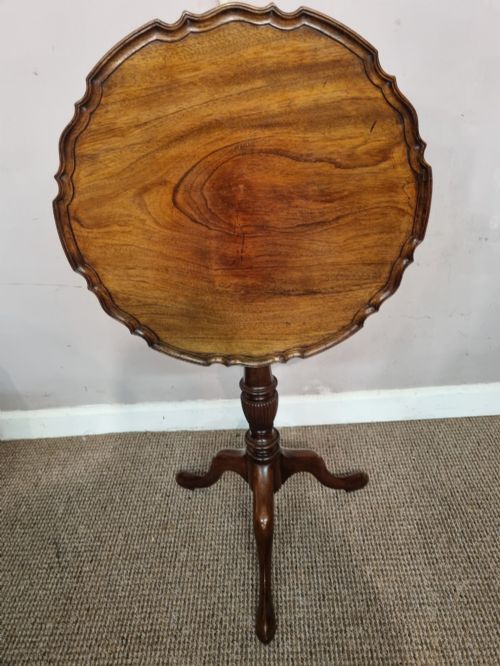
The form encompasses wine tables, tilt-top tripod tables with birdcage mechanisms, pie-crust edges and side tables. Most examples on this page date either from the Georgian era or the Edwardian and late nineteenth-century revival periods.
Buyers select these tables for their versatility in domestic settings, functioning beside seating as lamp, tea or occasional surfaces. The construction ranges from plain circular tops to finely carved tripod bases.
How they were made
Cabinetmakers utilised solid mahogany, Cuban mahogany and flame mahogany veneer, supported occasionally by oak internals or brass fittings and parcel gilt highlights. Timber selection dictated the depth of figure and grain pattern across the circular and occasional tops.
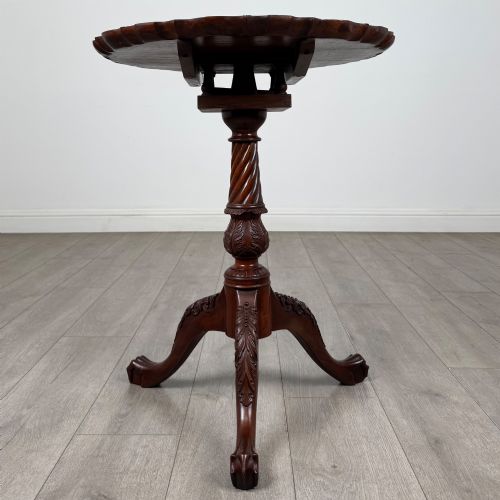
Construction relied on traditional joinery, incorporating tilt-top actions, birdcage mechanisms allowing the top to rotate and tip, and tripod legs terminating in carved feet. Edges often received shaped pie-crust mouldings or raised rims carved directly from the solid timber.
Birdcage mechanisms let tables double as impromptu room rotators for the indecisive decorator.
What varies in quality
Quality rests on the crispness of the carving upon the tripod legs and the fidelity of the pie-crust edge. Earlier eighteenth-century examples display sharper detailing and deeper patination in the timber compared to later revivals.
The sophistication of the mechanism also separates standard items from finer pieces, particularly where birdcage actions and tilt-top pivots operate with smooth precision. The selection of Cuban or flame mahogany veneer introduces greater visual depth to the surface.
The Chippendale Mahogany Occasional Table Glossary
- Pie Crust
- A raised, carved circular tabletop edge resembling pastry crimping. This decorative moulding requires skilled hand-carving from solid mahogany.
- Tripod Table
- A small table supported by a pillar above three spreading legs. This form gained popularity during the Georgian period for its stability on uneven floors.
- Birdcage
- A wooden framework beneath a tabletop allowing it to rotate and tilt. It connects the central column to the top via a pivoting block.
- Tilt-Top
- A hinged tabletop mechanism enabling the surface to fold vertical when not in use. This allowed tables to store flat against walls in period interiors.
- Patina
- The surface sheen and colour developed by mahogany through age and handling. Original polish deepens this character over centuries.
Chippendale Mahogany Occasional Table: Frequently Asked Questions
What is a birdcage mechanism?
A birdcage is a rotating timber assembly positioned beneath the tabletop. It permits the surface to turn horizontally and tilt vertically.
This mechanism links the top to the central pedestal column using small wooden spindles resembling a cage.
How do I spot an eighteenth-century piece?
Eighteenth-century examples display hand-carved details, timber shrinkage consistent with age, and construction methods characteristic of the Georgian period. The patina on the mahogany develops a deep, warm tone over generations of use.
Revival pieces from the Victorian and Edwardian eras often show machine-finished uniformity or different secondary woods beneath.
Where should I place an occasional table?
These tables suit placement beside armchairs, sofas or in corners as lamp and display surfaces. Their compact footprints allow them to fit into smaller reception rooms.
Tilt-top versions can also stand flat against a wall as decorative objects when not holding items.