


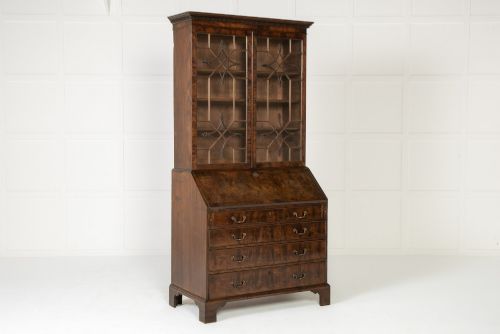


Chippendale Mahogany Bureau Desk
A chippendale mahogany bureau desk combines architectural cabinetwork with practical writing quarters, offering serious period presence and fitted internal drawers for the collector.
Chippendale Mahogany Bureau Desk
When you search for a chippendale mahogany bureau desk, you are looking at utilitarian writing furniture that evolved from straightforward sloping drop-front writing boxes into grand cabinet pieces. The examples you will encounter range from mid-eighteenth-century Georgian originals down to later revival pieces from around nineteen hundred.
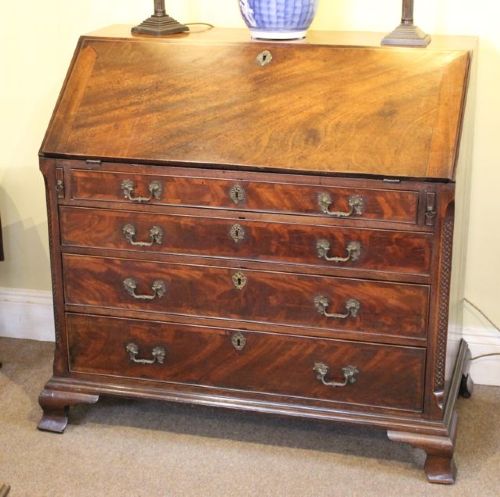
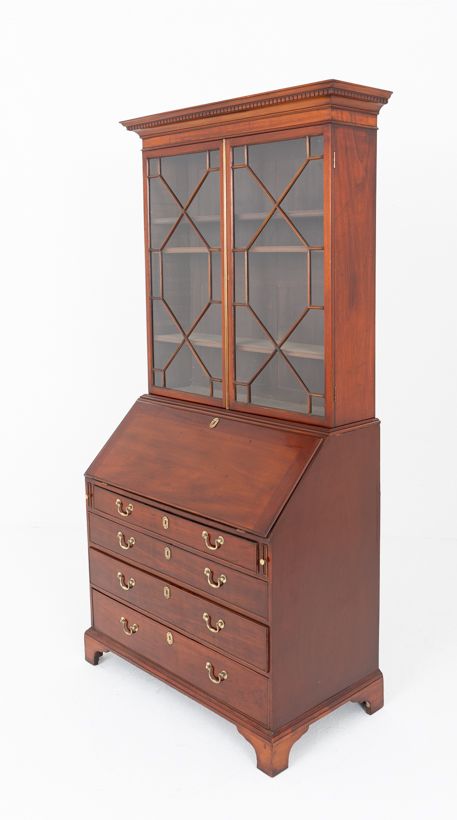
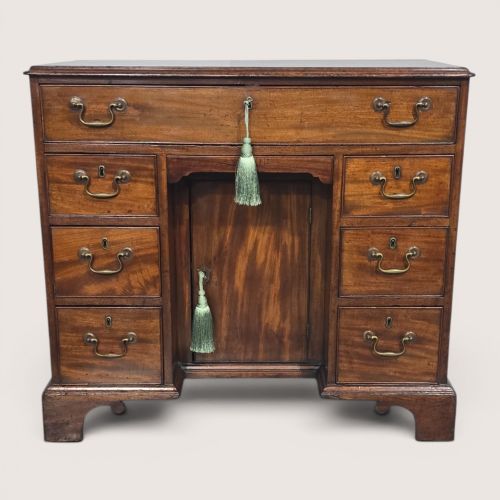
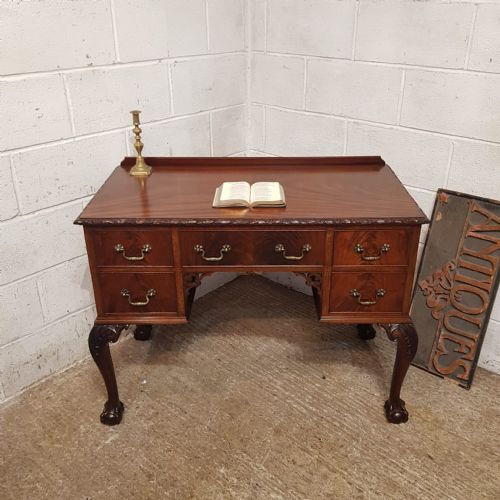
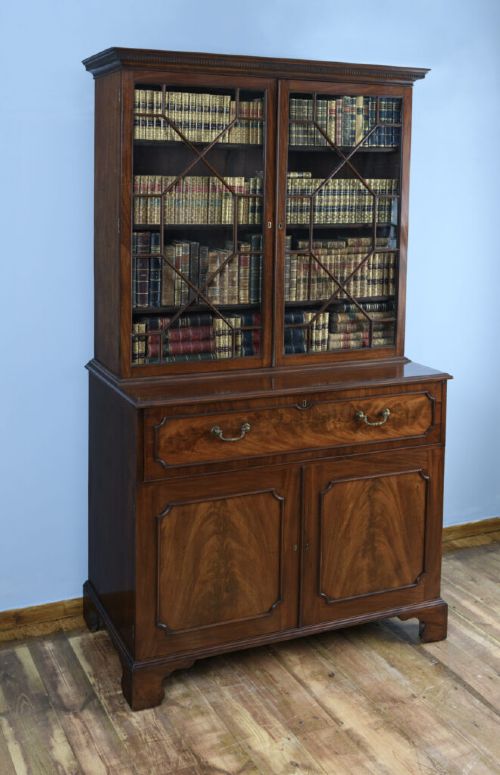
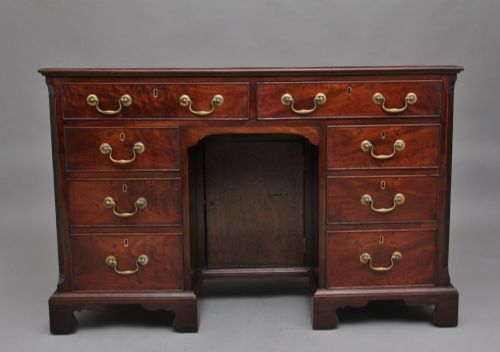
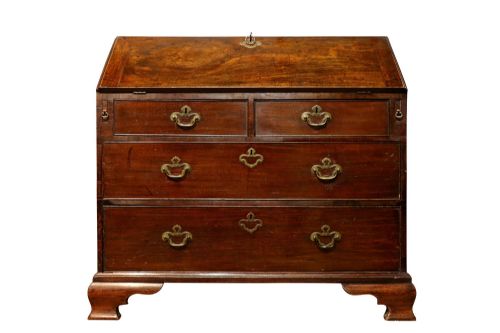
The primary forms on this page include tall bureau bookcases with glazed upper cabinets, kneehole desks, and bureau chests featuring fitted internal pigeonholes and small secret drawers. Many pieces display distinct regional or stylistic traits, including Chinese Chippendale fretwork and serpentine fronts.
These items were originally commissioned for the libraries, drawing rooms, and studies of wealthy country houses and town residences. They served as the primary administrative centres for estate management and personal correspondence before the invention of modern office furniture.
How they were made
Makers constructed these desks primarily from solid and veneered mahogany, supported by secondary timbers like oak and pine for drawer linings and internal framing. Timber selection focused on rich natural grain figures, complemented occasionally by intricate marquetry inlay work.
Brass hardware such as swan-neck handles, drop pulls, and escutcheons anchored the drawer fronts, while gold leaf frequently embellished finer decorative mouldings or associated leather writing surfaces. Glass panels were hand-blown and fitted into timber lattice frames for the upper bookcase sections.
The listings here span multiple periods, ranging from mid-eighteenth-century Georgian originals to early twentieth-century Chippendale Revival pieces.
What varies in quality
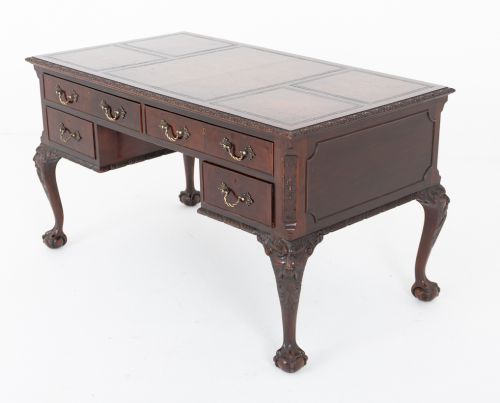
Quality in these desks depends heavily on the crispness of the hand-carved decorative details, such as blind fretwork, acanthus leaves, and claw-and-ball feet. Superior pieces exhibit precise joinery where drawer dividers and internal pigeonholes retain their original tight tolerances.
The depth of colour and figure in the mahogany surface distinguishes high-status commissions from utilitarian workshop output. Original brasses, intact mirrored or glazed upper doors, and well-preserved interior writing surfaces elevate a piece far above heavily restored alternatives.
Gillows·Edwards and Roberts
The Chippendale Mahogany Bureau Desk Glossary
- Bureau
- A desk featuring a sloping fall-front lid that opens to reveal a fitted interior of small drawers and pigeonholes. It often sits upon a chest of drawers or a dedicated stand.
- Secretaire
- A cabinet or chest incorporating a dedicated writing drawer with a drop-front or sliding mechanism. It conceals a fitted desk interior while maintaining the exterior appearance of a standard case piece.
- Kneehole desk
- A compact pedestal desk featuring a central recessed opening for the user's legs, flanked by banks of small drawers. This form became particularly popular during the Georgian period.
- Serpentine front
- A furniture front curved in three sections, bending outward in the centre and inward at the sides. This technique requires considerable cabinetmaking skill to execute in solid mahogany.
Chippendale Mahogany Bureau Desk: Frequently Asked Questions
How do I spot a revival desk?
Revival desks produced around nineteen hundred often display machine-sawn timber elements and standardised internal fixtures that differ from eighteenth-century hand-cut construction methods. Examine the secondary woods inside the drawers for clues to the period.
Secondary timbers like pine or oak can reveal nineteenth or twentieth-century milling marks that are absent on earlier Georgian workshop pieces.
What is a bureau bookcase?
A bureau bookcase combines a sloping desk base with an enclosed upper shelving unit, usually protected by wooden doors or glass panels. These tall hybrid items provided dual storage for both books and writing materials.
They stood against the walls of gentleman's libraries to serve as the administrative core of a large household.
Are the writing surfaces always leather?
Writing surfaces on these desks are frequently lined with leather, though many examples utilise polished mahogany across the fall-front flap itself. When leather is present, it is often tooled with gold leaf borders.
Original leather surfaces show authentic patination from decades of use, while replacements are usually crisper and cleaner in tone.
How should I clean the mahogany?
Maintenance requires gentle dusting with a dry, soft cloth to prevent abrasive particles from scratching the aged finish. Avoid modern silicone sprays that can penetrate old polish and damage the timber.
Occasional applications of microcrystalline wax help protect the surface without building up excessive grease or altering the natural sheen.