


Chippendale Ladderback Chairs
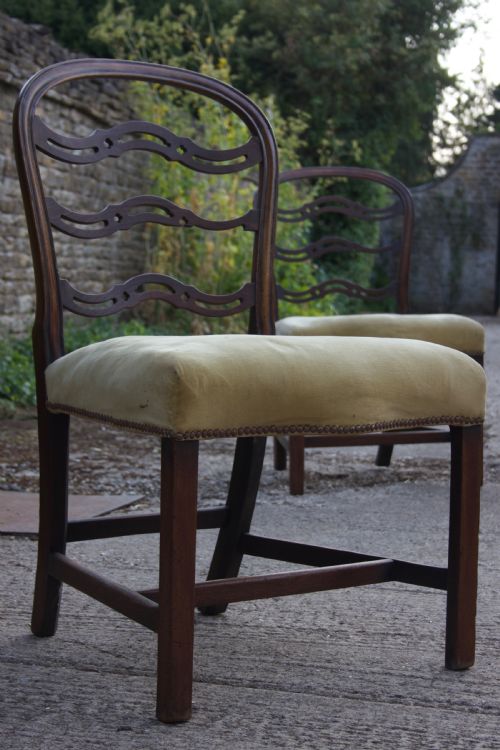
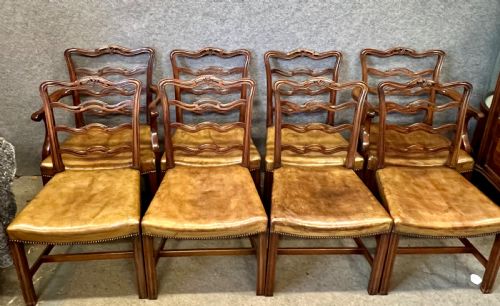
These chippendale ladderback chairs combine sturdy timber framing with pierced horizontal slats, offering a practical seating option for traditional dining rooms.
Chippendale Ladderback Chairs
When you examine chippendale ladderback chairs, you encounter seating built primarily during the eighteenth and nineteenth centuries, alongside later revival pieces. The core inventory spans Georgian originals to Victorian and Edwardian interpretations, appearing singly, in pairs, or in larger dining sets.
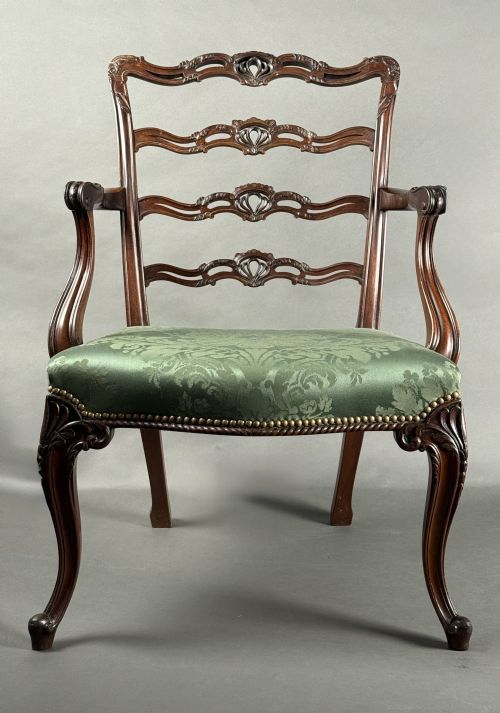
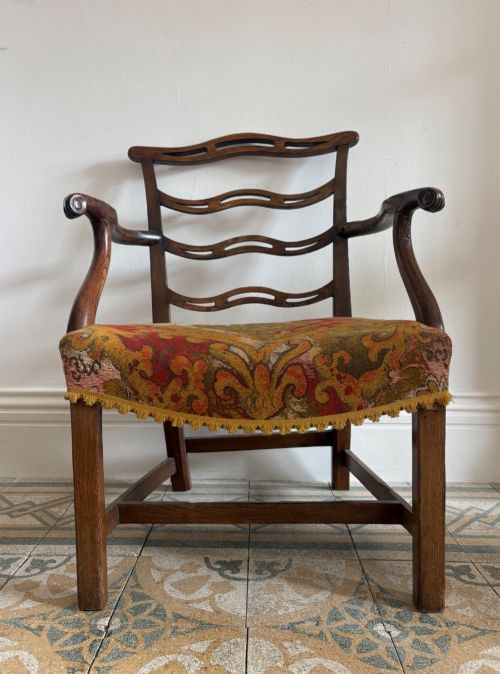
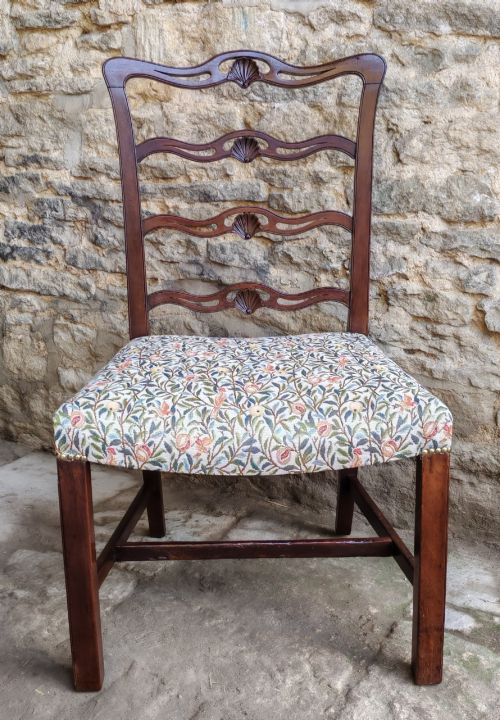
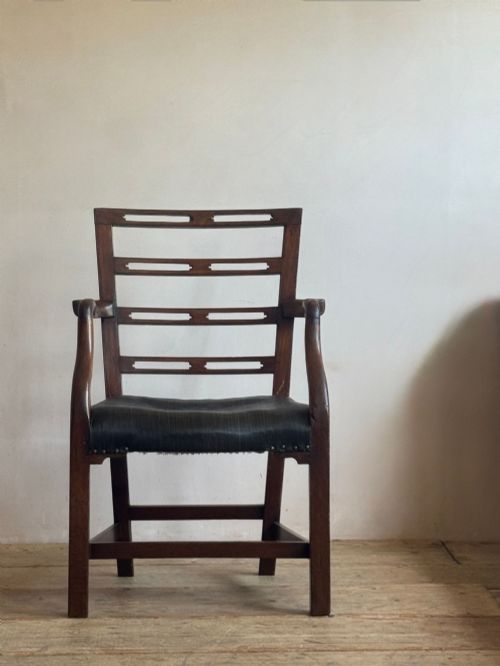
Forms range from single side chairs to open armchairs, carvers, desk chairs, and occasional settees. The defining feature remains the series of pierced or shaped horizontal slats rising up the backrest between upright posts.
Originating in British cabinet-making traditions, these pieces frequently surface in mahogany or elm, reflecting both formal urban workshops and country vernacular production.
Materials and construction
Makers relied heavily on solid mahogany for formal urban seating, whilst regional cabinet-makers utilised elm for sturdy country variants. Timbers were selected for grain density and structural strength, particularly for the slender curved members of the back ladder.
Upholstered drop-in seats and fixed pads incorporate materials such as leather, velvet, brass studding, tapestry, and woven fabric. Joints relied on traditional mortise and tenon construction, secured without modern adhesives.
Recorded forms include single dining chairs, open armchairs, desk chairs, conversational settees, and matched sets numbering up to ten pieces.
Quality differences
Superior examples display crisp, hand-carved detailing along the top rail and ladder slats, whereas lesser pieces show softer, more generalised moulding profiles. The depth of the timber carving and the symmetry of the pierced fretwork distinguish master craftsmanship from standard output.
Frame integrity and timber selection dictate longevity, with tight joinery and well-matched grain patterns separating finer dining chairs from utilitarian workshop productions.
The Chippendale Ladderback Chairs Glossary
- Ladderback
- A chair back featuring a series of horizontal wooden slats stacked vertically between the upright posts. This design provides robust lower back support.
- Carver
- An armchair, traditionally placed at the head of a dining table, featuring supportive armrests. These pieces match the design of accompanying side chairs.
- Drop-in seat
- A removable upholstered wooden frame that fits snugly into the seat rails of a chair. This construction allows for straightforward reupholstery.
- Mortise and tenon
- A traditional woodworking joint where a projecting tongue fits tightly into a matching cavity. It forms a durable connection without relying on metal fasteners.
Chippendale Ladderback Chairs: Frequently Asked Questions
Are these chairs comfortable for daily dining?
Most variants offer upright support tailored for traditional dining use. The contoured slats fit the curve of the spine while padded seats provide adequate cushioning.
Seat heights and depths reflect period proportions, which tend to be slightly lower and shallower than modern equivalents.
How do I identify a true Georgian piece?
Examine the timber patina, joinery methods, and tool marks visible on the underside of the frame. Eighteenth-century pieces exhibit hand-cut components and dense, aged mahogany or elm.
Revival pieces from later centuries often display machine tooling and more uniform timber characteristics that lack early wear patterns.
Can I mix different sets around a table?
Combining single chairs with matching carvers at the table ends follows historical precedent. Matching timber tones and similar ladder slat designs create a cohesive arrangement.
Minor variations in carving depth are common in period dining sets due to hand-production methods.
What maintenance do leather and fabric seats need?
Leather surfaces benefit from occasional conditioning to prevent drying and cracking over time. Fabric and tapestry seats require gentle vacuuming and prompt attention to spills.
Avoid placing antique timber frames in direct sunlight or near heat sources to protect the wood and joints.