




Chippendale Gallery Tray Table
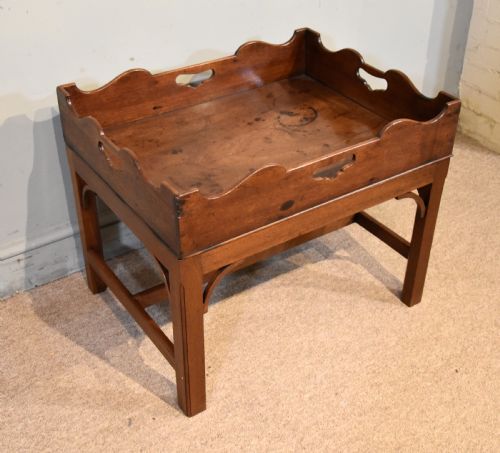
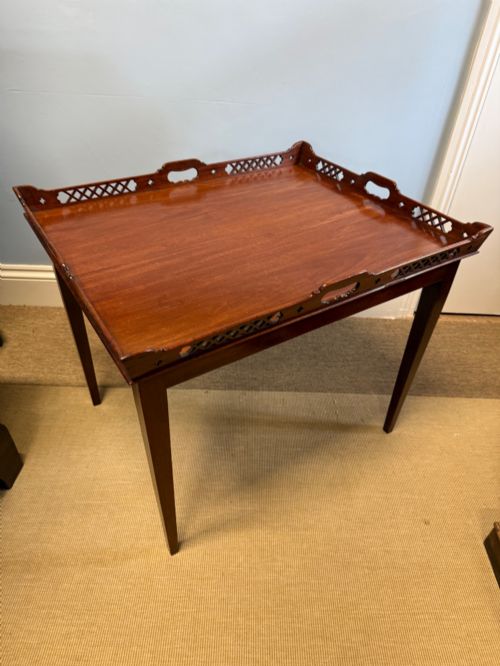
A Chippendale gallery tray table brings eighteenth-century elegance into a modern room, combining refined woodwork with a removable surface.
Chippendale Gallery Tray Table
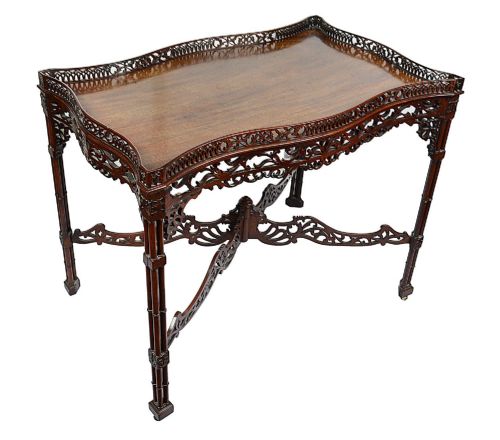
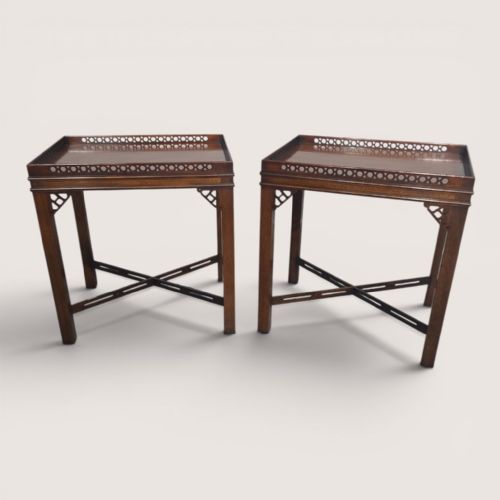
The chippendale gallery tray table category encompasses practical serving furniture and decorative side pieces rooted in the eighteenth century. Buyers seeking this form encounter authentic period examples alongside later revivals from the nineteenth and early twentieth centuries.
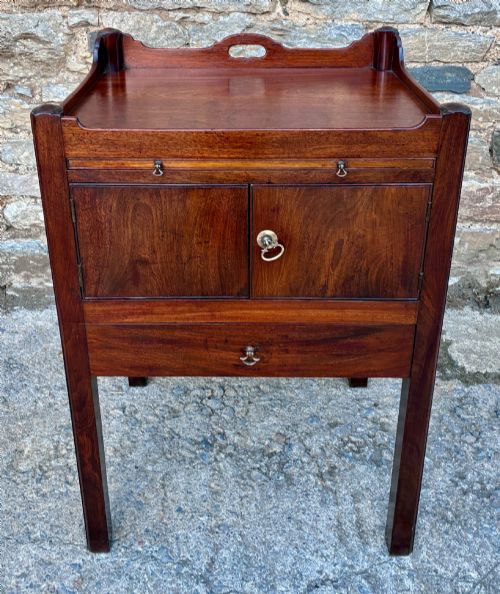
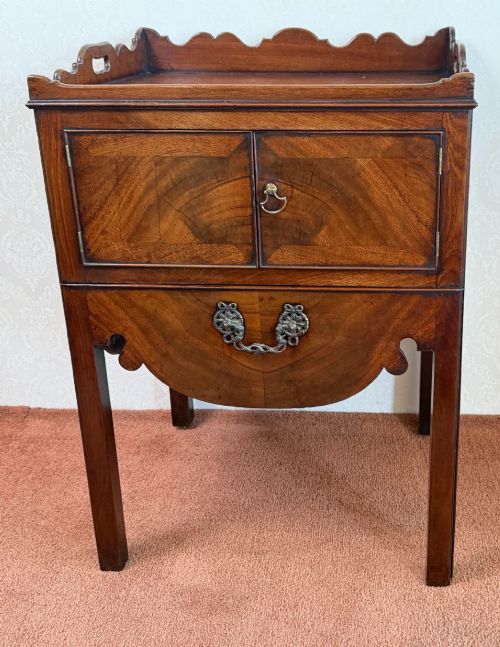
The selection on this page ranges from compact bedside night tables and commodes to larger silver tables and occasional wine tables. Most pieces emerge in rich mahogany, though rarer black lacquered walnut variants also appear.
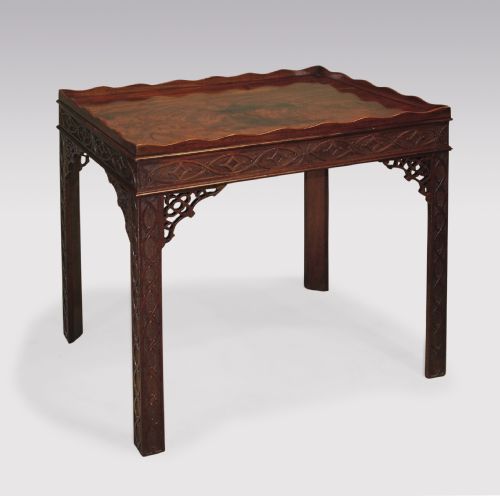
Forms span several distinct functions, including butlers trays on stands, gallery top cabinets, and central standing silver tables. Georgian and Edwardian interpretations dominate the selection, showing how cabinetmakers adapted the style across generations.
Materials and Construction
Makers relied primarily on solid mahogany and walnut, shaping timber to create sturdy frames and raised tray edges. Brass hardware frequently appears on drawers and mounts, adding functional contrast to the dark timber.
Cabinetmakers utilised traditional joinery techniques to construct the galleries and stands, ensuring the removable trays fitted securely. Lacquer finishes were occasionally applied to walnut surfaces, demonstrating decorative ambition beyond standard polished wood.
Chippendale Gallery Tray Table Retail Price Guide 2026
Typical asking prices for chippendale gallery tray table among the pieces listed under this phrase on Sellingantiques today, from the lower quarter to the upper quarter. They describe what is for sale here now, not the wider market.
Some tray tables feature secret compartments designed to keep family silver safe from light-fingered guests during grand Victorian dinner parties.
Assessing Quality and Craftsmanship
The distinction between standard and superior pieces rests on the crispness of the woodwork and the integrity of the timber. Finer examples display delicately pierced galleries and finely turned supports that reflect close attention to original proportions.
Age and period execution also influence the standing of a piece, with eighteenth-century originals holding a different status to Edwardian revivals. The choice of secondary woods and the subtlety of the carved details further separate workshop output.
The Chippendale Gallery Tray Table Glossary
- Gallery
- A raised wooden or metal border around the edge of a table top designed to prevent items from sliding off. This feature defines the tray table form.
- Silver table
- A specialised display table from the Georgian period used for serving tea or displaying silver. These pieces often feature raised galleries and slender legs.
- Commode
- A low cabinet or chest of drawers, frequently enclosing storage space behind doors or beneath a tray top. Georgian versions often served multiple domestic functions.
- Chippendale Revival
- A later stylistic movement spanning the Victorian and Edwardian eras that reinterpreted eighteenth-century designs. Makers during this period produced faithful copies of earlier forms.
Chippendale Gallery Tray Table: Frequently Asked Questions
How do I date a mahogany tray table?
Dating relies on examining the timber characteristics, construction methods, and joinery details visible beneath the frame. Eighteenth-century pieces show specific wear patterns and tool marks distinct from later revival periods.
Comparing the style against known Georgian and Edwardian design patterns helps clarify the likely decade of manufacture.
Where should I place a silver table?
A silver table suits placement beside a sofa or as a freestanding accent piece in a drawing room or hallway. The finished surfaces and decorative galleries make them ideal for displaying lamps or decorative objects.
Keep these tables away from direct heat sources and strong sunlight to protect the polished mahogany or walnut finish.
What is the difference between Georgian and revival pieces?
Georgian pieces were built during the eighteenth century for contemporary domestic use, carrying the direct influence of period cabinetmakers. Revival pieces were manufactured later, notably during the Edwardian era and the late nineteenth century.
While both share stylistic roots, the older items carry centuries of handling history and distinct period construction traits.