

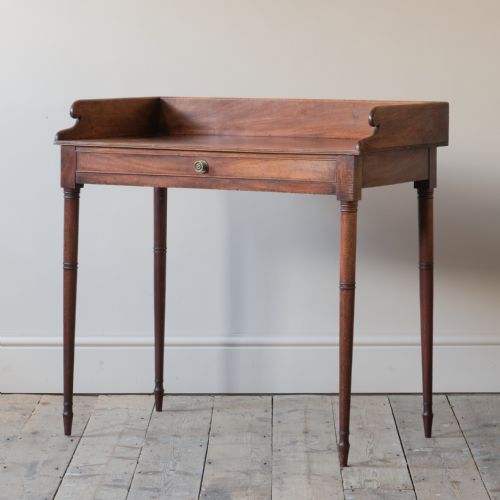
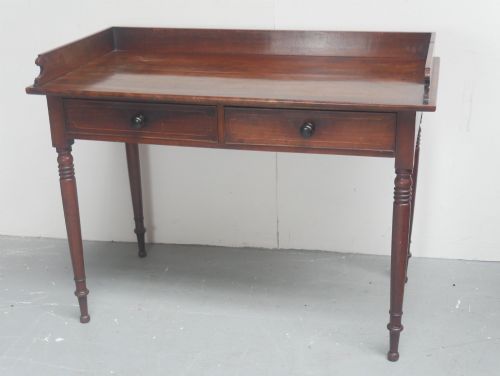
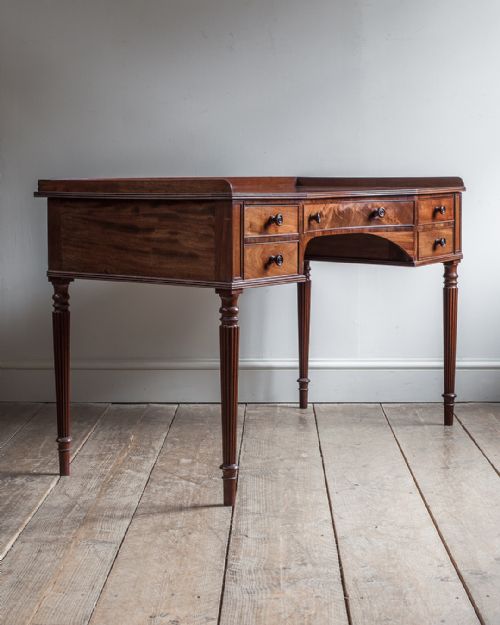
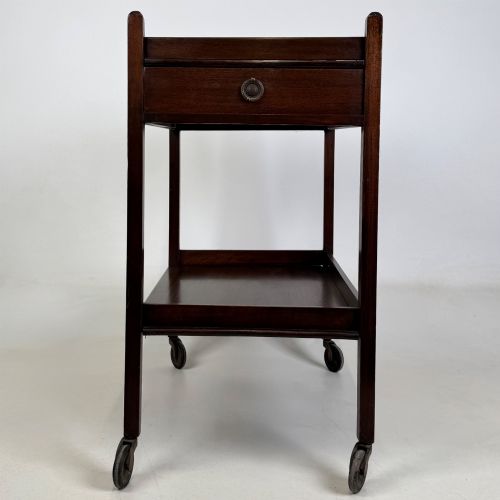
Dark Wood Gallery Table
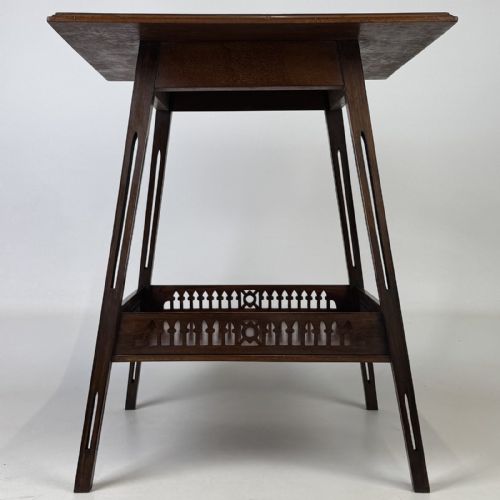
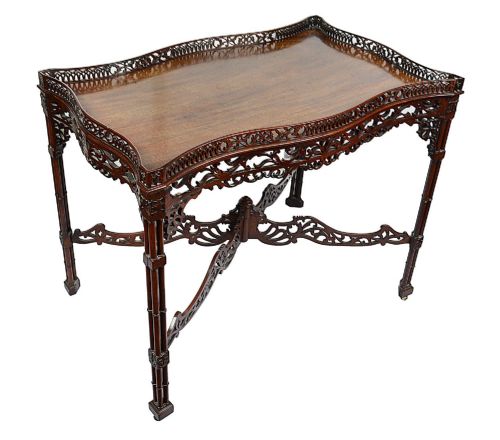
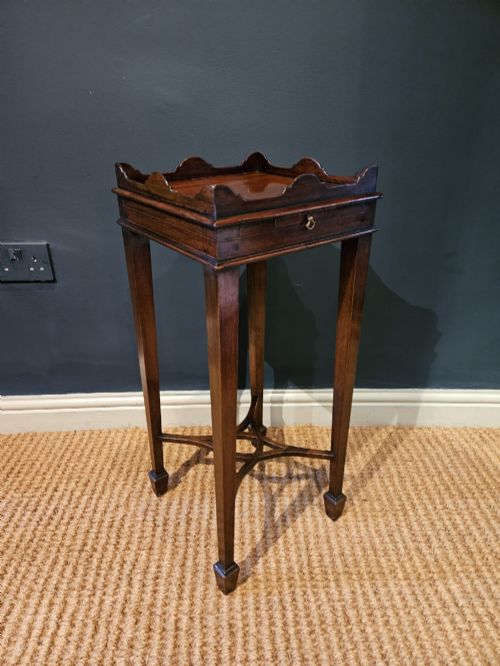
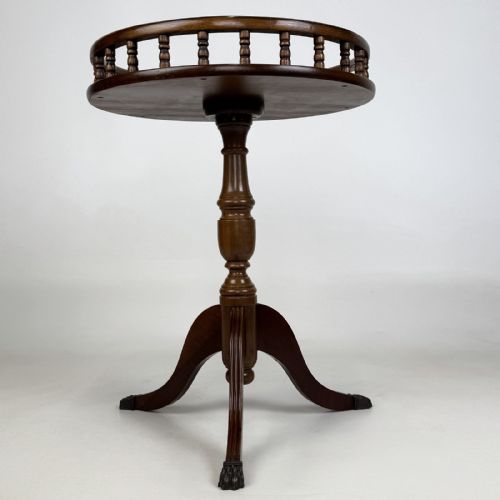
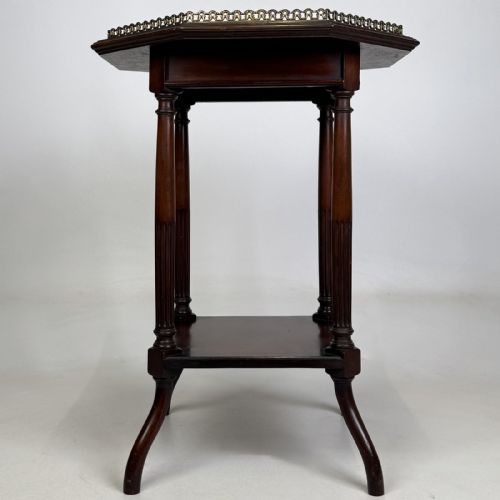
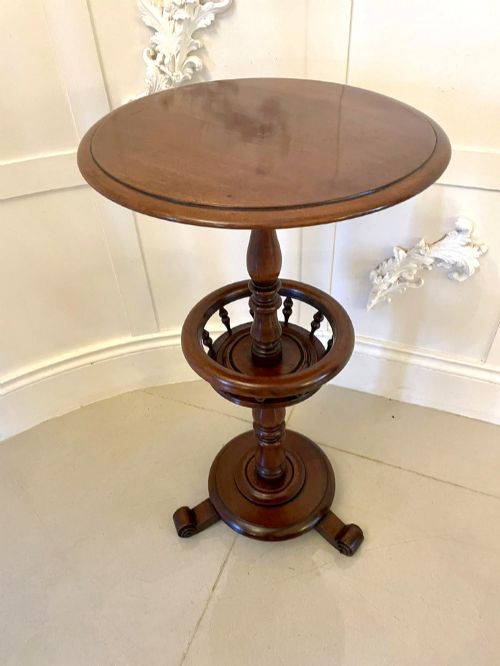
A dark wood gallery table brings rich mahogany and rosewood tones into a room, offering practical surfaces raised on elegant historical frames.
Dark Wood Gallery Table
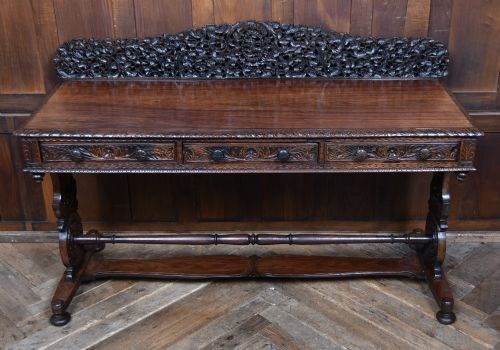
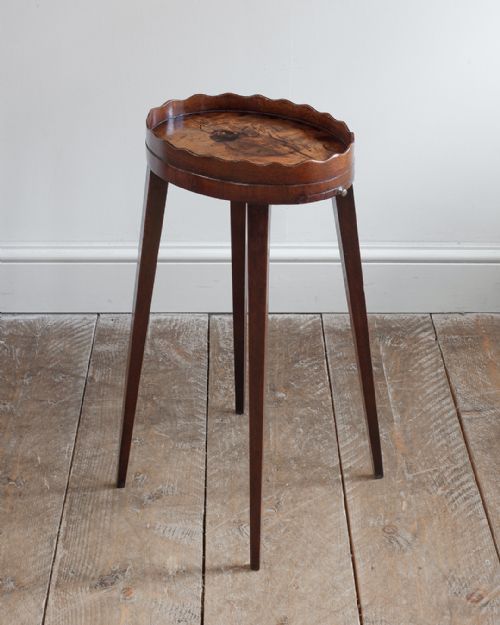
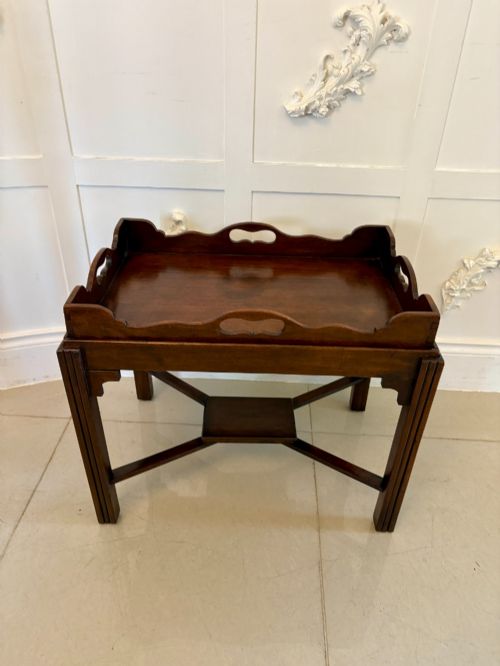
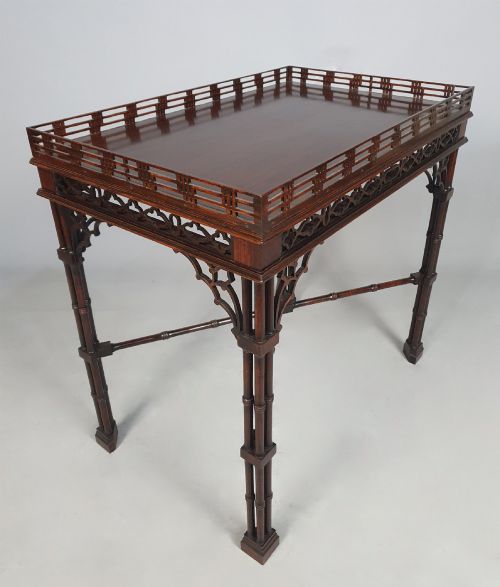
When you search for a dark wood gallery table, you encounter a selection of occasional tables, side tables, writing desks, and tray-top pieces originating from the eighteenth, nineteenth, and early twentieth centuries. These pieces encompass styles ranging from Georgian and Regency to Victorian and Anglo-Indian designs.
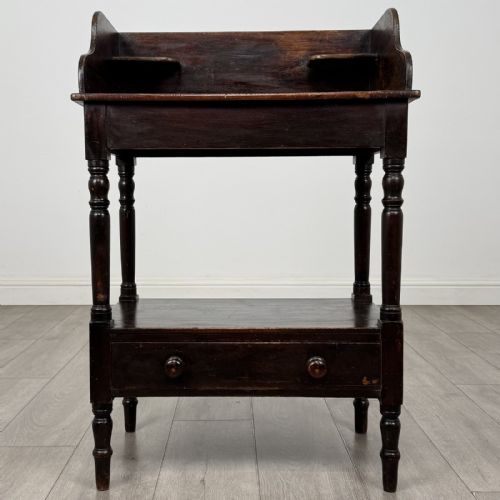
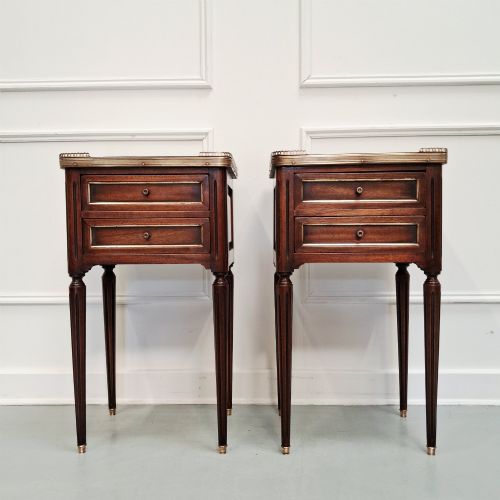
Mahogany and rosewood dominate the selection, often accompanied by brass hardware, boxwood inlay, and secondary timbers such as oak and pine. Forms vary from simple bedside cabinets and washstands to tiered etagères, silver tables, and games tables.
The specific items listed here demonstrate the versatility of these dark timber furnishings, spanning standard domestic uses to specialised items like butler's trays and telescopic occasional tables.
How they were made
Cabinet makers utilised dense, durable timbers like mahogany, rosewood, and padauk as the primary structural materials, selecting them for both strength and rich grain patterns. Secondary woods such as oak and pine often reinforced internal frames, drawers, and cabinet interiors.
Construction relied on traditional joinery techniques combined with decorative enhancements, including boxwood inlay and cast brass fittings such as handles, castors, and gallery rails. Surfaces were finished to highlight the deep natural colour of the dark hardwoods.
Dark Wood Gallery Table Retail Price Guide 2026
Typical asking prices for dark wood gallery table among the pieces listed under this phrase on Sellingantiques today, from the lower quarter to the upper quarter. They describe what is for sale here now, not the wider market.
The listings include pieces from the Georgian, Regency, and Victorian periods, constructed primarily in mahogany and rosewood.
What varies in quality
Quality rests in the selection of the timber figures, the crispness of carved details such as barley twists or Chippendale frets, and the integration of decorative elements like boxwood inlay. Superior examples display thoughtful proportions and harmonious grain matching across primary surfaces.
The integrity of the original hardware, drawer linings, and structural joints distinguishes finer examples from later alterations or heavily restored pieces. Attention to the finishing of unseen secondary parts also marks the standard of the workshop.
Holland & Sons·Mack Williams And Gibton
The Dark Wood Gallery Table Glossary
- Gallery table
- A low table or stand featuring a raised raised rail or border around the edge of the top surface to prevent items from sliding off.
- Etagère
- A French term for a piece of furniture with multiple open shelves for displaying or holding small objects, commonly seen in tiered occasional tables.
- Butler's tray
- A removable wooden tray, often with hinged sides, designed to sit upon a folding or fixed X-frame stand for serving.
- Padauk
- A heavy, durable exotic hardwood displaying a deep reddish-brown colour, utilised in fine cabinet making and Anglo-Indian pieces.
- Tripod table
- A small freestanding table supported by a pillar above three spreading legs.
Dark Wood Gallery Table: Frequently Asked Questions
What is a gallery table used for?
These tables served various domestic purposes, from holding tea services and silver to supporting bedside items and writing materials.
The raised border kept delicate objects secure while moving or using the table in reception rooms and bedchambers.
How do I identify a Regency table?
Regency pieces often display classical architectural influences, bold rosewood or mahogany grains, and restrained brass or inlay decoration.
They frequently date from the early nineteenth century and reflect the taste for archaeological and classical revival styles.
Are these tables made of solid wood?
The listings show primary surfaces and frames constructed from dense hardwoods like mahogany, rosewood, and padauk.
Secondary timbers such as pine and oak commonly appear in drawer linings, panel backs, and internal framing.
How do I care for antique dark wood?
Protect the timber by keeping pieces away from direct heat sources and strong sunlight, which can fade the rich dark finishes.
Clean surfaces gently with a soft cloth and maintain the wood using appropriate traditional waxes rather than modern silicone polishes.