


Chippendale Fall Front Desk
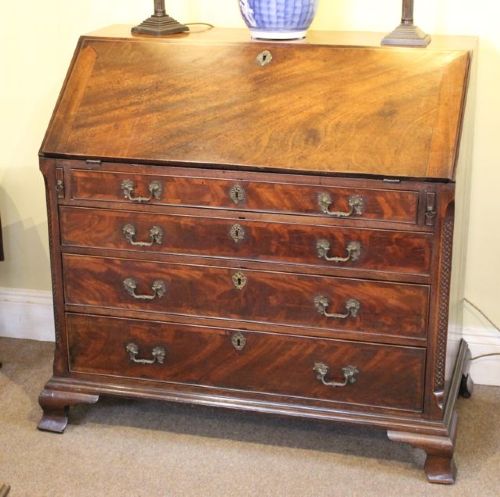
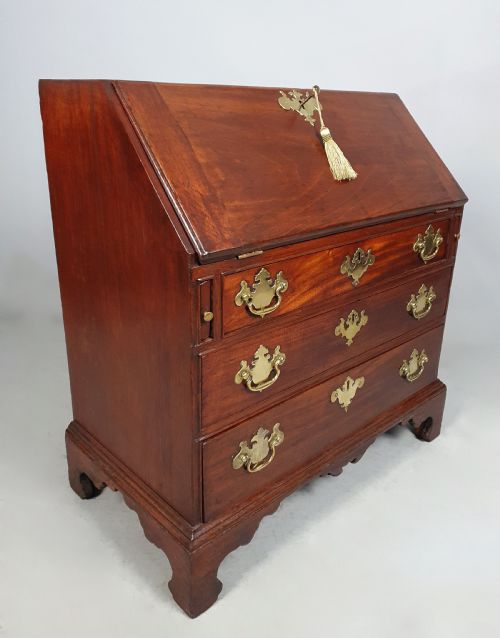
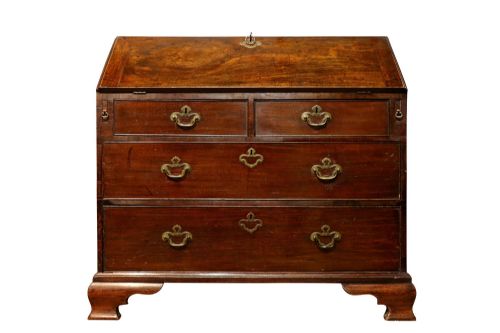
A chippendale fall front desk brings eighteenth-century cabinet-making into the room, offering a sloping fall that drops to reveal fitted drawers and pigeonholes.
Chippendale Fall Front Desk
A chippendale fall front desk is a form of writing furniture designed for domestic study and correspondence, appearing here in various historical iterations. Buyers searching this phrase encounter both eighteenth-century pieces and later revivals from the early twentieth century.
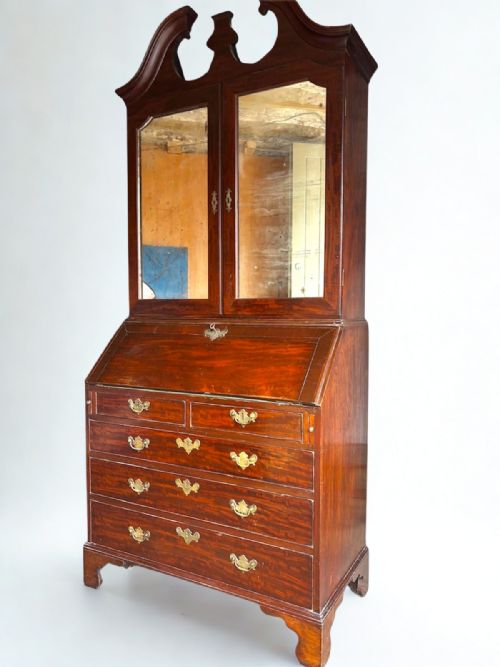
The primary forms include standalone bureaux, desks on stands, and larger bureau bookcases featuring upper storage compartments with mirror panels. Most examples are constructed from mahogany, though fruitwood and cedarwood appear among the earlier pieces.
The styling encompasses Georgian and George II periods alongside Chippendale Revival works. Interiors often contain fitted compartments characteristic of the aesthetic.
How they were made
Makers utilised solid timbers and veneers, predominantly mahogany supported by secondary woods like fruitwood and cedarwood. Surface decoration relied on natural figure, marquetry inlay, and occasionally gold leaf details.
Construction involved bracket feet, fitted interior compartments behind the fall front, and brass hardware such as drop handles and escutcheons. Bureau bookcases incorporated glass or mirror panels into the upper doors.
Some miniature mahogany examples were built by apprentices to prove their joinery skills before joining the guild.
What varies in quality
Timber selection dictates visual appeal, with superior examples displaying rich natural colour and pronounced grain figure in the mahogany. Finer pieces demonstrate meticulous interior carpentry within the bureau section.
Revival items from the twentieth century differ from eighteenth-century originals in construction depth and patina accumulation. Hardware execution and the intricacy of the fitted interior compartments further distinguish the range.
GILES GRENDY
The Chippendale Fall Front Desk Glossary
- Fall-front
- A writing surface hinged at the bottom that drops down from a vertical position to provide a flat slant for writing. This panel conceals an arrangement of small drawers and pigeonholes.
- Bureau bookcase
- A combination piece comprising a writing desk with a fall front below and an enclosed set of shelves or cabinets above. Upper doors frequently incorporate glass or mirror panels.
- Marquetry inlay
- Decorative patterns formed by fitting contrasting pieces of wood veneer into a prepared surface. This technique adds ornamental detail to the exterior panels.
- Bracket feet
- Simple furniture supports shaped like an L-corner bracket, commonly found on eighteenth-century case pieces. They lift the cabinet body slightly off the floor.
- Secretaire cabinet
- A tall case piece containing a pull-out or drop-down writing drawer disguised as a standard drawer or panel. It serves a similar function to the standard bureau.
Chippendale Fall Front Desk: Frequently Asked Questions
What is a chippendale fall front desk?
A chippendale fall front desk is a writing cabinet featuring a sloping lid that lowers to create a desk surface. These pieces house internal compartments for correspondence and papers.
Origins span the eighteenth century and later revival periods, predominantly constructed in mahogany with brass hardware.
How do I date a bureau bookcase?
Dating relies on timber characteristics, construction methods, and hardware styles. Eighteenth-century pieces display period joinery and natural patina.
Twentieth-century revival examples reflect later manufacturing techniques while imitating Georgian and Chippendale styles.
What is the difference between a bureau and a secretaire?
A traditional bureau utilises a sloping fall front that conceals an internal writing station. A secretaire often integrates the writing surface into a drawer pull-out.
Both forms provide concealed storage for letters and writing implements within domestic interiors.
Where should I place a desk with mirror panels?
Desks featuring mirror panels in the upper bookcase section benefit from placement near natural light sources. The reflective glass brightens surrounding spaces.
Ensure adequate clearance in front of the piece for the fall-front flap to open completely.