
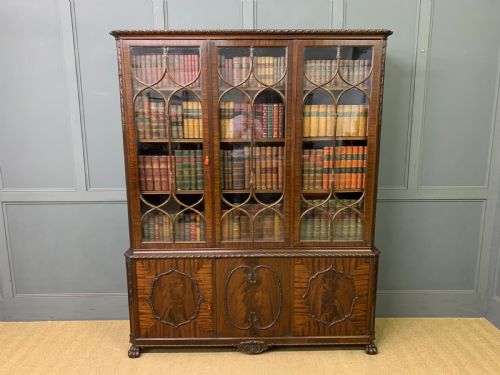
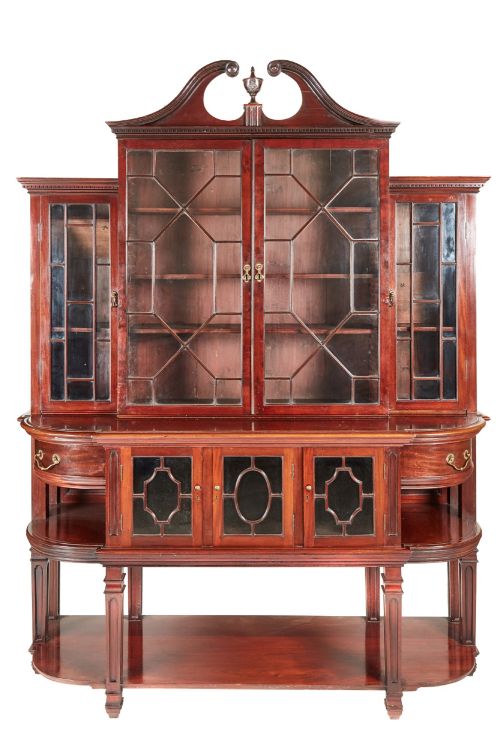
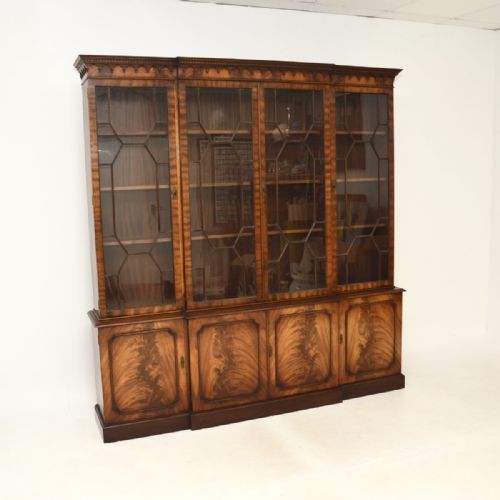


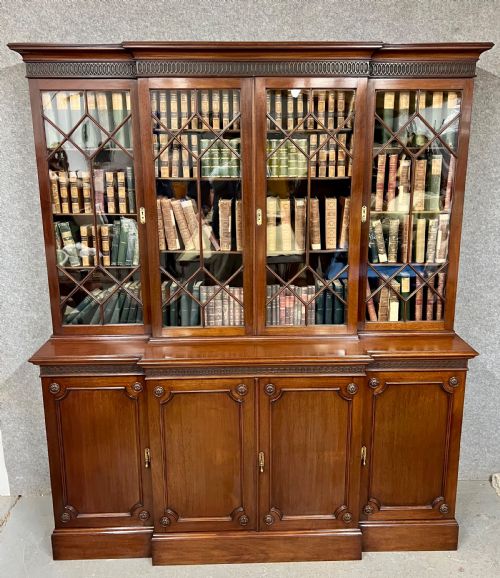


Chippendale Breakfront Bookcase
A chippendale breakfront bookcase commands a room with architectural proportion and rich timber, offering serious collectors both display and storage.
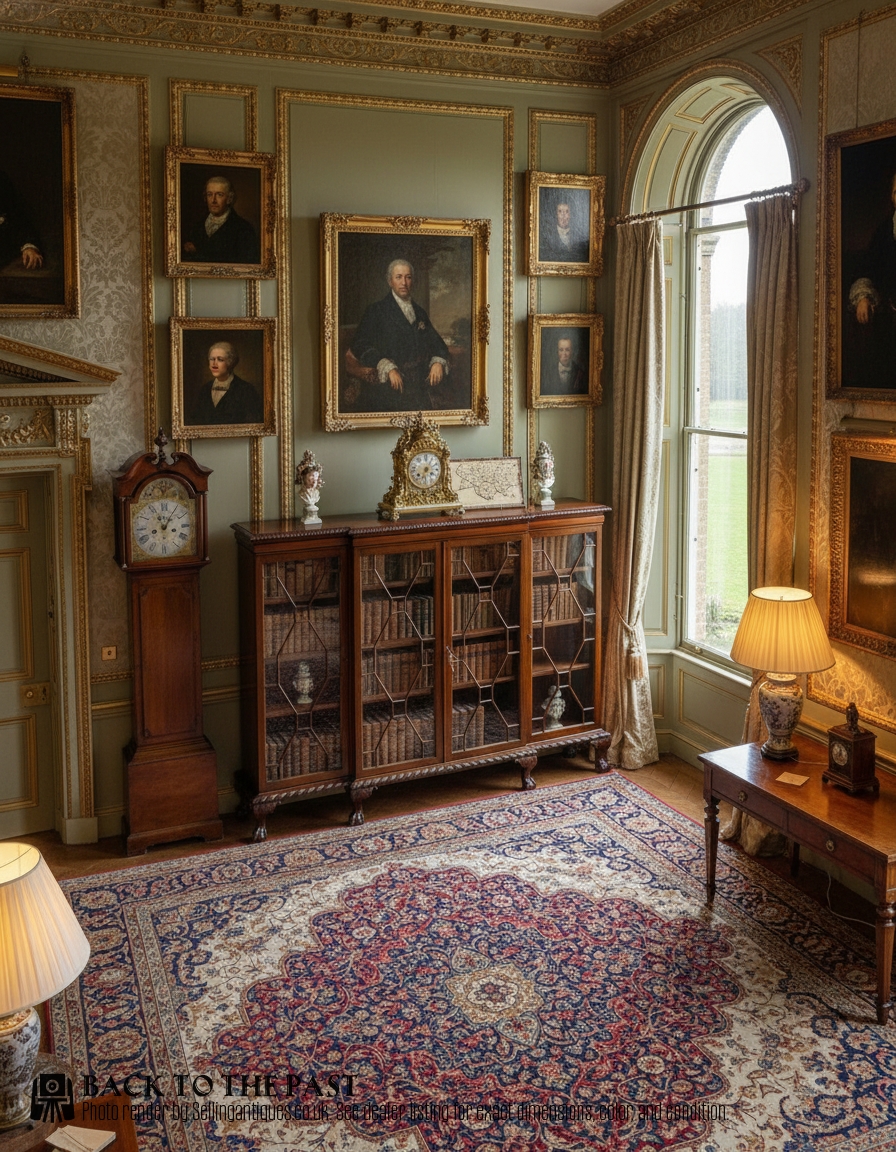
Chippendale Breakfront Bookcase
A chippendale breakfront bookcase is a grand storage piece featuring a central section that projects forward from the flanking wings. These architectural bookcases appear in eighteenth-century periods as well as later revival iterations.
The pieces on this page span genuine eighteenth-century examples alongside Victorian, Edwardian, and twentieth-century revival interpretations. Buyers encounter four-door configurations, secretaire variations, and display cabinets sharing mahogany construction.
Makers and workshops across the Georgian, Victorian, and Edwardian eras adapted Thomas Chippendale's design vocabulary into large library bookcases and smaller display cabinets. The projecting centre breaks the flat line of the wall, creating depth and shadow in a formal room.
Materials and construction
Solid mahogany and mahogany veneers form the primary body of these bookcases, providing a dense, dark substrate for carving and polishing. Brass hardware, including drop handles and escutcheons, punctuates the timber doors and drawers.
Glazing bars divide the glass upper doors into geometric panes, while glazed or mirrored panels reveal the book shelves or display areas within. Carved details such as blind fretwork or astragal mouldings define the distinct Chippendale and Chinese Chippendale styles.
Listings feature mahogany construction paired with glass, brass, and mirror across eighteenth-century and revival periods.
Assessing quality and finish
The depth and crispness of the carving distinguish standard production from superior cabinet work, particularly on blind fretwork and cornice mouldings. Timber selection also dictates grade, with figured mahogany veneers showing rich grain patterns across the primary surfaces.
Original brasses, intact glass panes, and the smooth operation of secretaire drawers separate unaltered period pieces from heavily restored or later constructed examples. Structural integrity in the breakfront joints and the weight of the timber determine how well the bookcase stands over time.
Hille·Maple and Co
The Chippendale Breakfront Bookcase Glossary
- Breakfront
- A cabinet facade where the central section projects forward past the flanking sides. This architectural arrangement creates shadow and depth in large library furniture.
- Astragal
- A small semi-circular moulding used in cabinet making to divide glass panes on bookcase doors. These wooden bars form geometric patterns across the upper cabinet front.
- Secretaire
- A desk drawer fitted with a drop-front writing flap and interior pigeonholes or small drawers. It hides a compact writing surface within the waist of the bookcase.
- Fretwork
- Openwork or relief carving applied to furniture surfaces in geometric or pierced designs. Chinese Chippendale examples frequently utilise this decorative technique.
- Glazing
- The fitting of glass into doors or panels to enclose the bookcase interior. Astragal glazed doors protect books while keeping them visible.
Chippendale Breakfront Bookcase: Frequently Asked Questions
How do I spot an 18th century piece?
Examine the secondary timbers inside the drawers and carcass, such as oak or pine, which match period joinery methods. Eighteenth-century examples display hand-cut dovetails and patination built up over generations of polish and use.
Check the glass panes for slight bubbles and thickness variations typical of early cylinder or crown glass production. The proportions and carving style will also align with Georgian design manuals rather than later revival movements.
What is Chinese Chippendale style?
Chinese Chippendale incorporates Asian-inspired motifs such as pagoda pediments, lattice fretwork, and angular geometric patterns into traditional British furniture forms. This style gained popularity during the Georgian period and returned during Edwardian revivals.
Cabinets in this style feature intricate pierced wood panels on the glazing bars or cornices. The timber remains mahogany, but the decorative vocabulary shifts toward lighter, linear ornamentation.
How do I care for the mahogany?
Keep mahogany furniture away from direct sunlight and heat sources to prevent the timber veneers from drying out and splitting. Maintain a stable room temperature and humidity level to protect the antique polish and structural joints.
Apply a traditional beeswax polish sparingly and buff with a soft cloth to nourish the grain. Avoid silicone-based sprays that build up and dull the historic finish over time.