
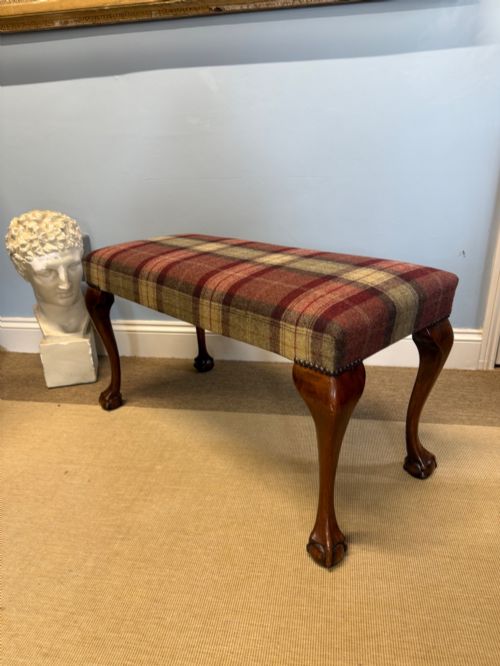
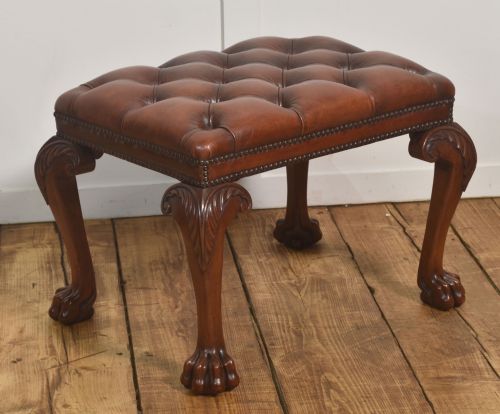
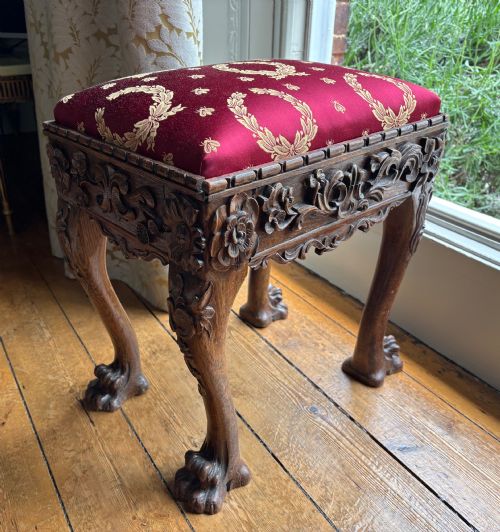
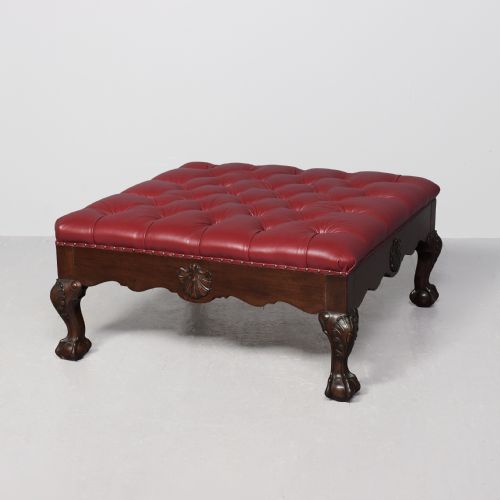
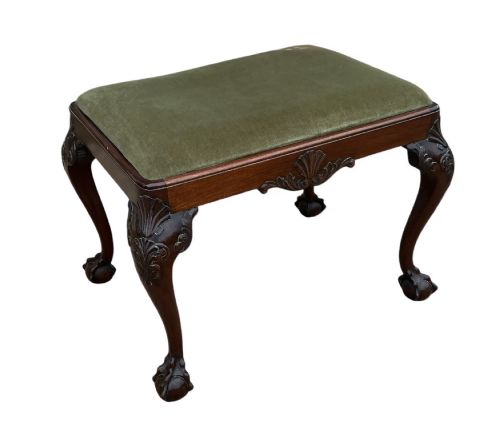
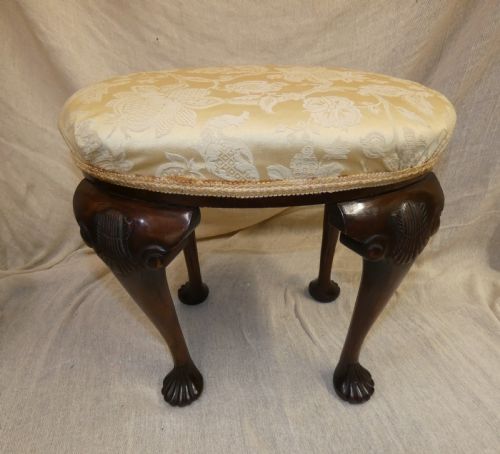

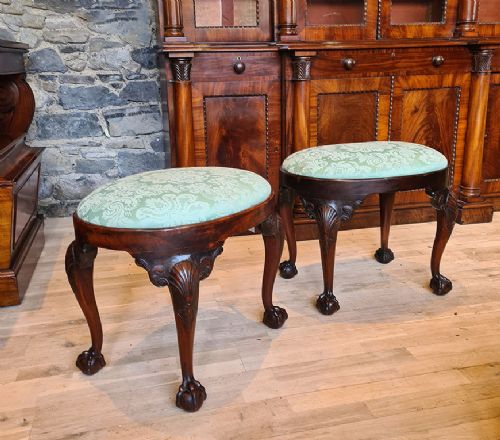


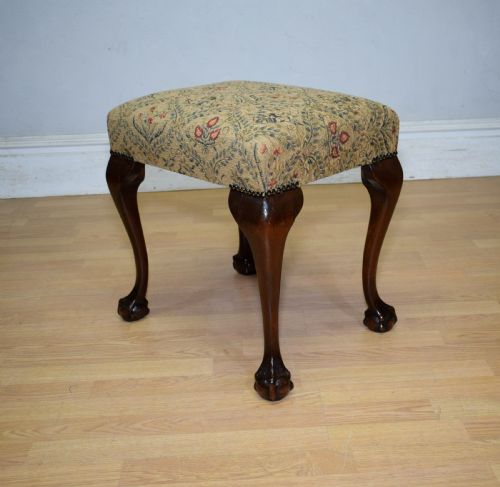


Chippendale Ball Claw Footstool
These chippendale ball claw footstool items combine solid timber framing with traditional upholstery to anchor a room.
Chippendale Ball Claw Footstool
A chippendale ball claw footstool is typically encountered as a mahogany-framed seat, drawing on Georgian style and later revival periods from the eighteenth century through to the early twentieth century. You will frequently find these listed as dressing stools, centre stools, or long stools depending on their proportions and intended placement in a home. The overarching aesthetic relies heavily on Chippendale style elements, particularly the characteristic carved foot detail.
The pieces on this page span several eras, encompassing nineteenth-century production alongside twentieth-century revivals. Makers working in the Georgian style and later Victorian periods often produced these stools with carved wooden legs ending in the distinctive ball and claw foot. Variations in form range from compact single-seat footstools to large rectangular benches intended for use as centrepieces or dressing furniture.
Materials and Construction
Mahogany and walnut form the primary timber framework for these stools, providing the structural strength needed for carved legs and detailed frame moulding. Craftsmen utilised these dense hardwoods to execute the intricate carving seen on the ball and claw feet and cabriole legs.
Upholstery materials vary from traditional leather and hide to woven textiles, fabric, wool, velvet, and cream damask. These softer elements are secured over padding to the wooden frames, completing the functional seating surface.
The footstools wear their wooden claws proudly, refusing to let go of the eighteenth century.
Assessing Quality and Execution
The depth and crispness of the carving on the ball and claw feet distinguish finer examples from simpler production. Superior pieces exhibit confident hand-carved detail in the timber frame, whereas lesser items show softer or more mechanical moulding.
The choice of upholstery materials and the quality of the timber frame define the overall standard. Denser hardwoods like mahogany combined with substantial hide or fine damask upholstery mark the upper tier of these items.
The Chippendale Ball Claw Footstool Glossary
- Ball and claw
- A furniture foot motif depicting a bird's talon clutching a ball, commonly carved into the timber at the base of cabriole legs.
- Chippendale style
- An aesthetic derived from the eighteenth-century cabinet maker Thomas Chippendale, characterised by carved mahogany and classical motifs.
- Georgian style
- Design elements originating during the reigns of the first four Georges, favouring proportion, symmetry, and mahogany construction.
- Centre stool
- A large freestanding stool designed to sit in the middle of a room or serve as an ottoman rather than against a wall.
- Damask
- A reversible figured fabric traditionally used for upholstery, featuring woven patterns that catch the light.
Chippendale Ball Claw Footstool: Frequently Asked Questions
What is a ball and claw footstool?
A ball and claw footstool is a traditional seating piece featuring carved wooden legs that terminate in a distinctive talon gripping a sphere.
These items range from compact footstools to large benches, often executed in mahogany following Georgian design principles.
How do I date a mahogany stool?
Dating relies on examining the timber grain, the sharpness of the carving, and the overall construction methods used in the frame.
Pieces span the eighteenth century through the nineteenth and twentieth-century revival periods, with revival items often showing distinct machine-age touches.
Where should I place a centre stool?
Centre stools work well as flexible seating or as alternative coffee tables when topped with a rigid tray.
Their finished frames and upholstered tops allow them to anchor a room from a central position rather than pushed against a bulkhead.
What is the difference between Georgian and revival styles?
Georgian pieces were made during the eighteenth century, while revival styles were produced later in the nineteenth and twentieth centuries.
Revival makers deliberately copied the earlier aesthetic, meaning timber selection and carving execution help differentiate the exact age.