


Chinoiserie Vase Lamps
Chinoiserie vase lamps bring striking hand-painted porcelain and bronze mounts together to light a room with rich colour.
Chinoiserie Vase Lamps
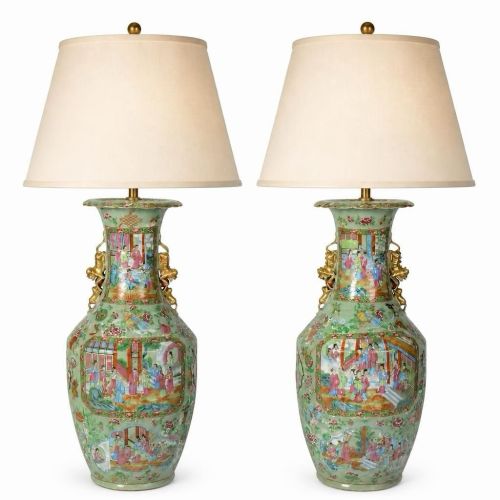
When you search for chinoiserie vase lamps, you find antique vessels transformed into electrical lighting through fitted brass or ormolu mounts. The forms range from simple jars to grand covered urns, with porcelain bodies painted in intricate botanical and figurative scenes. Most examples encountered here originate from the nineteenth century, though eighteenth-century pieces appear alongside early twentieth-century creations.
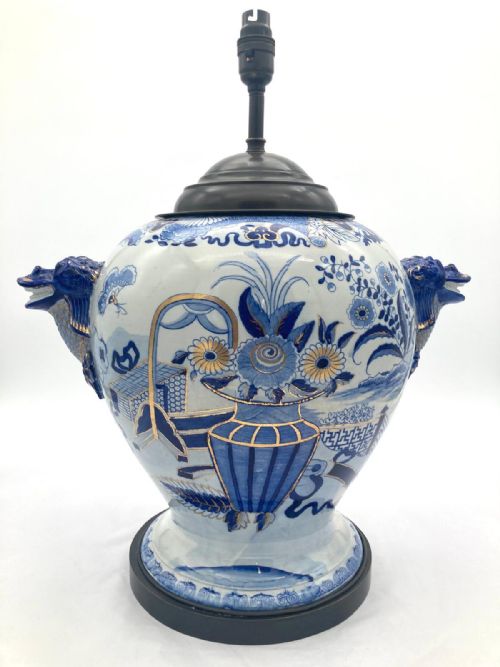
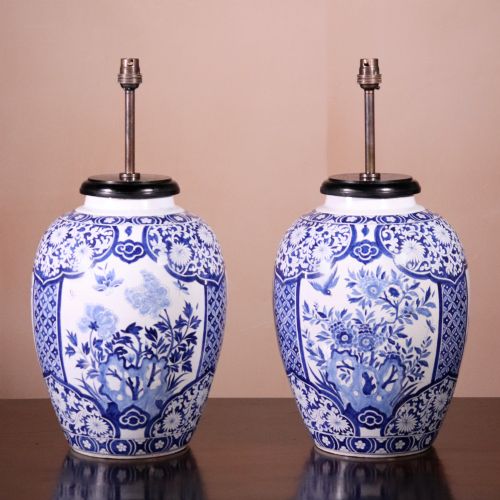
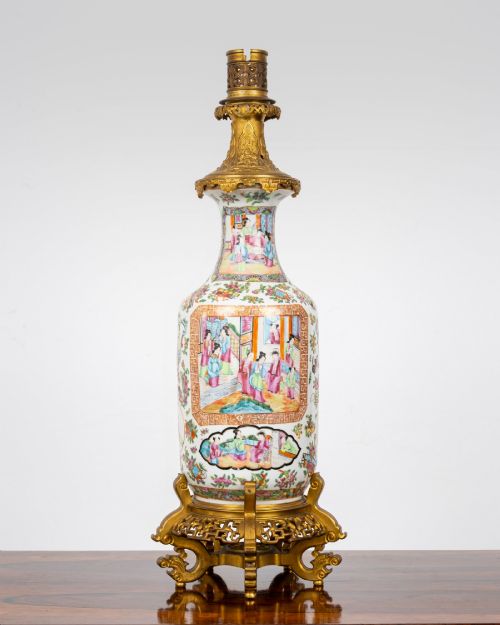
The decorative styles draw heavily upon Chinese export traditions, including Canton famille rose, rose medallion, and blue and white porcelain. Alongside these authentic imports sit European interpretations from Dutch delftware makers and Paris porcelain workshops. Many of these converted vessels retain their original character while serving modern interior lighting needs.
Pairs dominate the selection, offering symmetrical options for mantelpieces or sideboards. Single large table lamps also appear, providing a strong focal point within a room. The combination of ceramic bodies with gilt bronze or brass components defines the visual weight of these pieces.
Materials and Construction
Potters shaped the ceramic bodies from porcelain, ironstone, or earthenware before applying detailed hand-painted enamels or underglaze blue. Cloisonné examples utilise metal wire cells soldered to a base to contain vibrant enamel pastes. Once fired, skilled artisans often fitted these vases with cast ormolu and gilt bronze mounts to elevate their status.
Conversion into lamps typically involved drilling the ceramic base or securing internal brass rods to support electrical fittings without damaging the structural integrity of the antique vessel. Silk and fabric shades complete the construction, complementing the rich tones of the porcelain and enamel surfaces below.
Listings feature pieces spanning the eighteenth, nineteenth, and early twentieth centuries, incorporating porcelain, brass, and enamel materials.
Evaluating Quality
Quality rests upon the crispness of the hand-painted detail and the depth of the porcelain glaze. Superior examples display finely rendered facial expressions on figures and precise botanical brushwork rather than mechanical transfer prints. The weight and chasing of the ormolu mounts also signal higher craftsmanship, showing sharp definition rather than soft, muddy casting.
The harmony between the original vase and the metal mounts indicates the skill of the conversion. Top-tier pieces integrate the brass or gilt bronze components seamlessly into the design, whereas lesser examples look bolted together without regard for the balance of the vessel.
Hicks and Meigh·Samson Porcelain
The Chinoiserie Vase Lamps Glossary
- Famille Rose
- A palette of opaque enamels dominated by pink, introduced in Chinese ceramics during the Qing dynasty. This technique allows for subtle shading of floral and human subjects.
- Ormolu
- Gilt brass or bronze applied to furniture and decorative objects. The technique involves treating base metal with a mercury and gold amalgam.
- Cloisonné
- An enamelling technique where metal wire forms small compartments on a surface. Artisans fill these cells with vitreous enamel before firing the piece at high temperatures.
- Crackware
- Ceramic glaze featuring a network of fine decorative cracks intentionally formed during the cooling process. This finish appears frequently on traditional blue and white vessels.
- Decalcomania
- A decorative technique involving the transfer of printed designs onto glass or ceramic surfaces. It provides an alternative to hand-painted decoration on nineteenth-century pieces.
Chinoiserie Vase Lamps: Frequently Asked Questions
How do I clean a porcelain vase lamp?
Dust the ceramic body gently with a dry microfibre cloth to remove everyday particles. Avoid harsh chemical cleaners that might damage the hand-painted enamels or gilt mounts.
Keep fabric shades separate when cleaning by brushing them lightly from top to bottom. Ensure the lamp remains unplugged throughout the cleaning process.
Can I replace the lampshade?
Modern shades fit easily onto these lamps provided the brass harp and fitter match the original wiring structure. Choose neutral silk or linen to let the detailed porcelain patterns remain the focal point of the room.
Ensure the weight of a new shade balances correctly with the heavy ceramic base. Proportion matters when pairing a large vase with an appropriately sized shade.
How do I date a ceramic vase lamp?
Examination of the glaze, base wear, and painting style reveals the period of manufacture. Nineteenth-century pieces often display characteristic ironstone weight or distinct famille rose enamel palettes.
Metal mounts provide additional clues, as Regency and Victorian ormolu casting techniques differ notably. Comparing the potting style to known export wares helps narrow down the decade.