




Chinoiserie Pottery Dish
These chinoiserie pottery dish examples bring together centuries of oriental-inspired ceramic design for domestic display and service.
Chinoiserie Pottery Dish
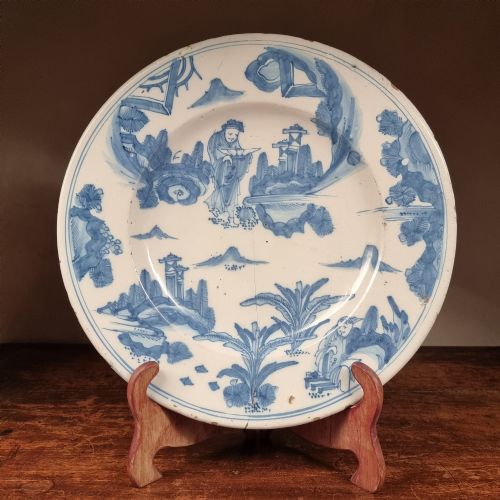
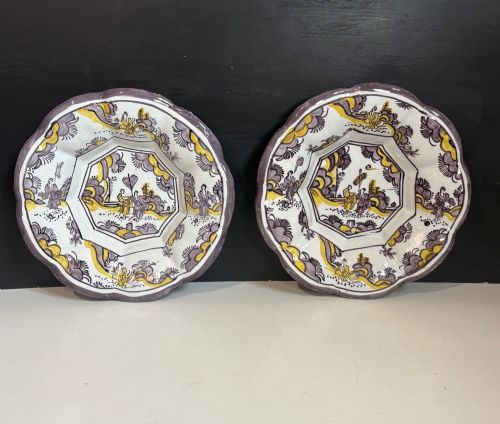
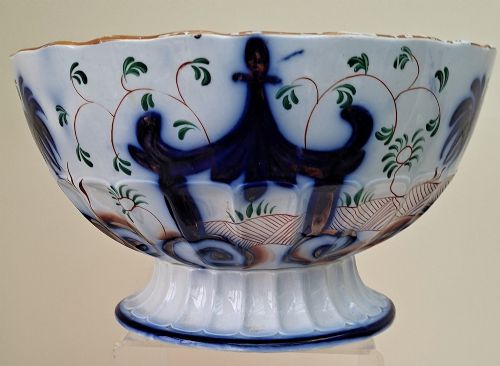
A chinoiserie pottery dish encompasses decorative plates, chargers, serving platters, and footed bowls originating primarily across the eighteenth and nineteenth centuries. The selection on this page relies heavily on early British delftware, pearlware, and ironstone produced in factories and potteries during the Georgian and Victorian periods.
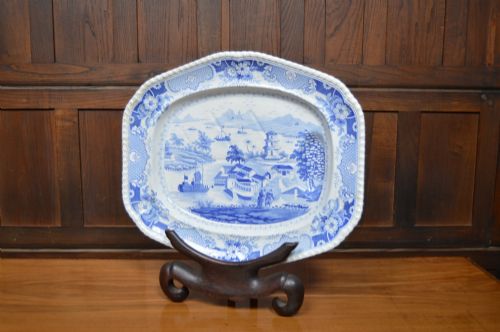
Buyers will frequently encounter eighteenth-century tin-glazed earthenware dishes alongside nineteenth-century blue and white transfer-printed meat plates. Forms range from small spoon trays and trefoil dishes to large decorative chargers bearing oriental pagoda, elephant, and garden patterns.
Materials and Technique
Potters built these vessels using earthenware, pearlware, ironstone, and stoneware, applying tin glaze or clear glaze over ceramic bodies. Cobalt pigment and polychrome enamels provided the colour palette for hand-painted and transfer-printed oriental motifs.
Techniques evolved from early tin-glazed earthenware production in seventeenth and eighteenth-century workshops to nineteenth-century transfer printing on pearlware and heavy ironstone bodies. Firing methods determined the depth of the glaze and the permanence of the blue and white or multi-coloured designs.
Elephants and pagodas wander across these plates, proving that eighteenth-century potters imagined Asia as a delightfully crowded wonderland.
Judging Quality
Quality rests upon the crispness of the transfer print or the brushwork control in hand-painted polychrome and blue delft pieces. Strong definition in pagoda, bridge, and figures indicates skilled execution by the potter or decorator.
The stability of the ceramic body and the evenness of the tin glaze or enamel surface distinguish superior specimens. Early potting thickness, glaze pooling, and successful kiln deployment dictate the overall visual weight and preservation of the dish.
John Ridgway·Wedgwood·John Rogers and Son·Elkin Knight and Bridgwood·Daisy Makeig-Jones
The Chinoiserie Pottery Dish Glossary
- Delft
- Tin-glazed earthenware produced in England, Holland, and other regions, known for its opaque white surface and blue or polychrome painted decoration. It formed the primary medium for eighteenth-century decorative plates.
- Transferware
- Pottery decorated by applying a printed design from an engraved copper plate onto tissue paper and transferring it to the unglazed or bisque ceramic body. This technique allowed intricate oriental scenes to be replicated rapidly during the nineteenth century.
- Pearlware
- A refined fine earthenware developed by Josiah Wedgwood and other potters in the late eighteenth century, featuring a thin glaze with a faint bluish tint that pooled in crevices. It superseded earlier creamware for blue and white tableware.
- Ironstone
- A heavy, durable type of feldspathic stoneware patented in the nineteenth century to withstand hard domestic use while mimicking oriental porcelain. Factories such as Mason's utilised it extensively for large chargers and serving dishes.
- Charger
- A large ornamental or serving plate, typically measuring over thirty centimetres in diameter, designed to be displayed on sideboards or hung on walls rather than used for regular dining.
Chinoiserie Pottery Dish: Frequently Asked Questions
How do I date a delft dish?
Eighteenth-century delft dishes typically show tin glaze application over a soft earthenware body with hand-painted blue or polychrome oriental motifs.
Examination of the foot ring, glaze crawling, and baseline stacking marks helps distinguish early pieces from later Victorian reproductions.
Were these dishes used for dining?
Many large chargers and platters served practical functions for meat and side dishes on formal dining tables during the Georgian and Victorian eras.
Smaller examples, such as spoon trays and shallow plates, fulfilled specialised domestic tasks before transitioning purely to decorative display.
What is transfer printing?
Transfer printing is a method where an engraved copper plate transfers ink onto tissue paper, which is then pressed onto the ceramic body.
This technique permitted intricate chinoiserie landscape patterns to cover large plates and serving dishes with remarkable consistency.
How should I display a charger?
Large chargers and serving platters suit wall mounting with secure plate hangers or stable display stands on heavy wooden sideboards.
Keeping them away from direct sunlight protects the integrity of the tin glaze and enamel pigments over time.