




Chinoiserie Porcelain Table Lamp
A chinoiserie porcelain table lamp brings centuries of ceramic artistry into domestic lighting, combining painted orientalist motifs with structural elegance.
Chinoiserie Porcelain Table Lamp
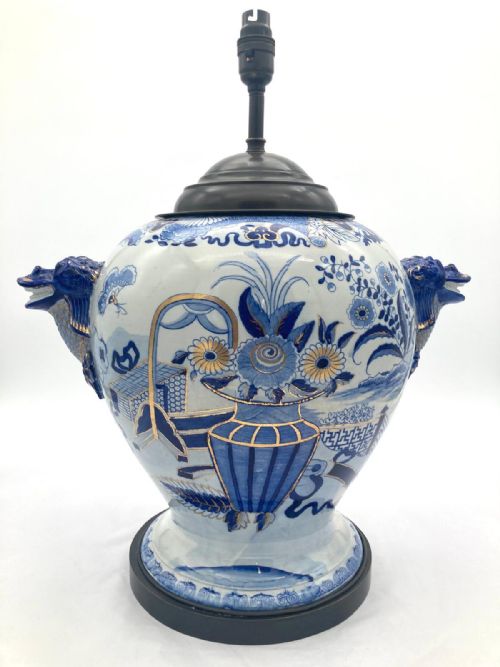
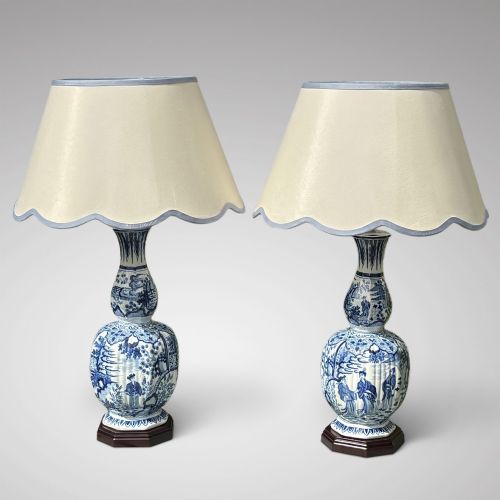
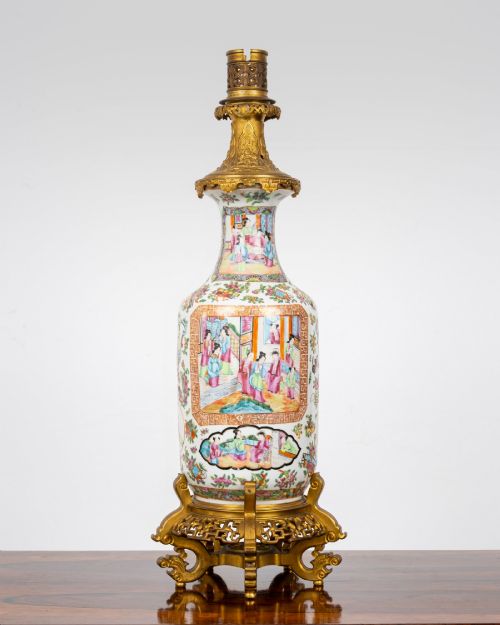
A chinoiserie porcelain table lamp takes older ceramic vessels, such as ginger jars, sleeve vases and rouleau forms, and adapts them for domestic illumination. Buyers examine examples spanning the eighteenth, nineteenth and early twentieth centuries, originating from Chinese kilns, Japanese workshops and European potteries producing Delftware or Paris porcelain.
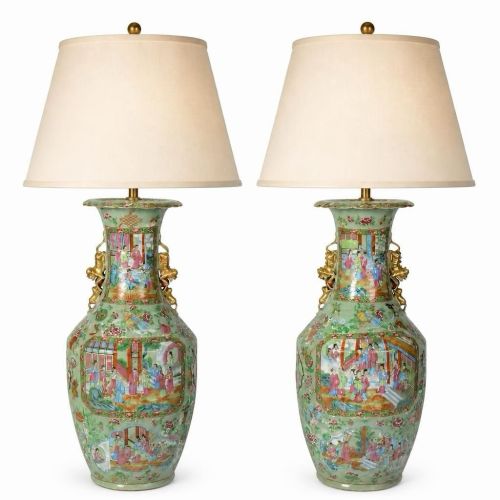
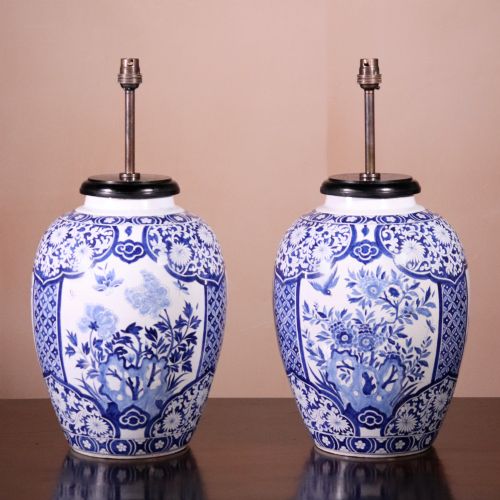
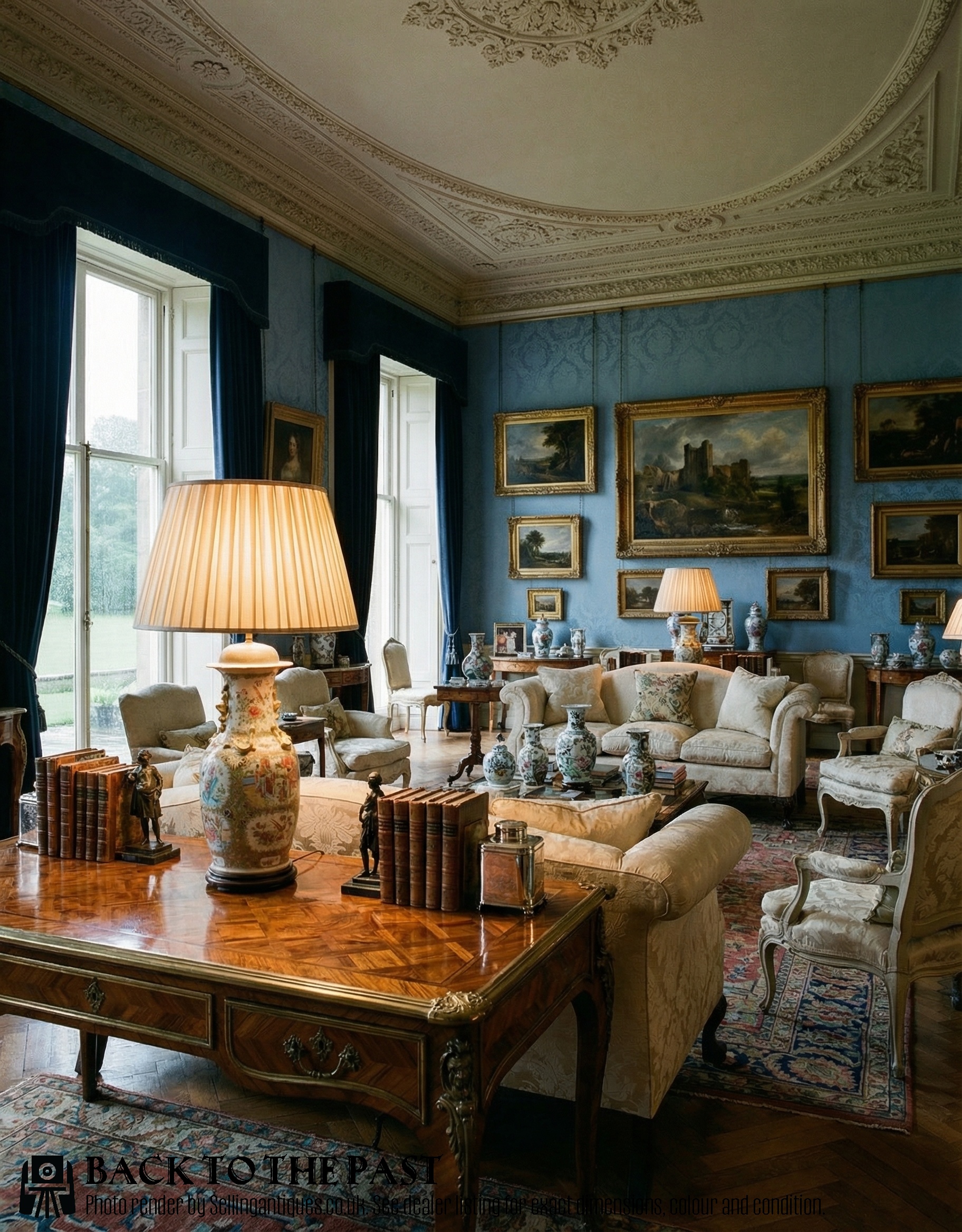
The most frequently encountered versions on this page are converted nineteenth-century vases, particularly Chinese Canton famille rose, blue and white wares and rose medallion pieces. Many appear in matched pairs, utilising ginger jars or beaker vases fitted with electrical components while retaining their original hand-painted botanical or figural decoration.
Materials and Construction
The foundation of a chinoiserie porcelain table lamp is high-fired ceramic bodywork, decorated with cobalt underglaze, polychrome enamels and gilded highlights. Artisans combined these fragile ceramic cylinders with structural metal elements, securing the vases onto heavy bases made from brass, gilt bronze or ormolu to ensure stability.
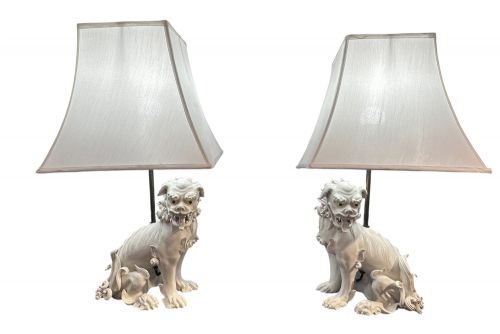
Several lamps feature serene Foo dogs or Shi lions standing guard at the base, ready to ward off mischievous spirits.
Factors of Quality
Quality rests upon the crispness of the hand-painted ceramic decoration and the integrity of the porcelain body, distinguishing finely detailed Canton enamelwork from simpler painted surfaces. Superior pieces display deep, vibrant cobalt or polychrome glazes executed with confident brushwork by skilled painters.
The grade of the metal mounts contributes heavily to the overall merit, separating simple turned brass fittings from chased ormolu and gilt bronze mounts of substantial weight. Harmony between the proportions of the ceramic jar and its metal base determines the visual balance of the finished object.
Hicks and Meigh·Samson Porcelain
The Chinoiserie Porcelain Table Lamp Glossary
- Famille rose
- A major palette of Chinese ceramic enamels introduced in the eighteenth century, dominated by opaque pink or rose colours.
- Ormolu
- Finely ground high-carat gold applied to a bronze base, frequently utilised for decorative mounts on European and converted Asian ceramics.
- Ginger jar
- A wide-shouldered ceramic storage vessel originally used for spices, frequently adapted into the body of a table lamp.
- Crackware
- A type of ceramic glaze marked by a network of deliberate fine cracks or crazing across the surface for decorative texture.
- Blanc de Chine
- White porcelain produced at Dehua in Fujian province, known for its milky glaze and often moulded into figural lamp bases.
Chinoiserie Porcelain Table Lamp: Frequently Asked Questions
Are these lamps converted from old vases?
Many examples are indeed historic vases, ginger jars or cisterns that have been expertly fitted for modern electrical wiring. This practice preserves the artistry of nineteenth-century ceramics while giving them a functional role in contemporary interiors.
Makers often secured these vessels with brass or gilt bronze mounts to stabilise the height and weight required for a stable domestic light source.
How do I identify a nineteenth-century lamp?
Dating relies on examining the characteristics of the porcelain body, the style of the hand-painted enamelwork, and the type of metal mounts used in the construction. Nineteenth-century pieces frequently display Canton famille rose or blue and white designs typical of the Qing dynasty.
Handling the base often reveals patinated brass or ormolu consistent with Victorian or Regency conversion techniques rather than modern manufacturing methods.
Can I find matching pairs of lamps?
Matched pairs are a common feature among these listings, often created from symmetrical vases or twin ginger jars produced together in the same workshop. These dual assemblies offer balanced symmetry when placed on sideboards, chests or large side tables.
Collectors prize pairs for their decorative versatility in formal rooms where balanced lighting design is essential.
What styles of decoration appear most often?
The dominant decorative styles draw upon traditional Chinese motifs, including blue and white floral patterns, intricate rose medallion scenes, and vibrant famille verte palettes. European interpretations such as Dutch Delftware and French chinoiserie also represent significant stylistic variations.
These designs reflect a long history of European fascination with Eastern aesthetics, adapted through successive periods from the eighteenth century into the early twentieth century.