

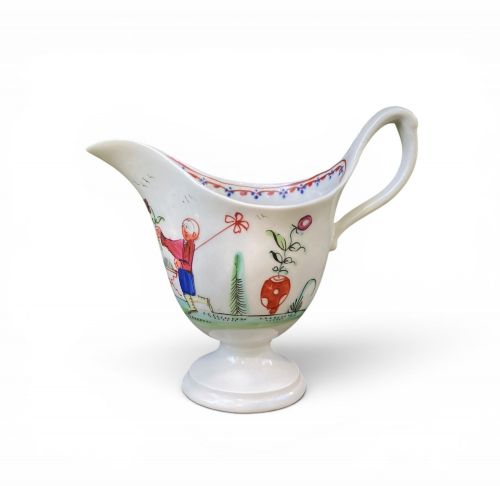


Chinoiserie Pattern Jug
These chinoiserie pattern jug examples bring hand-painted oriental scenes and robust ironstone forms straight to your sideboard or washstand.
Chinoiserie Pattern Jug
A chinoiserie pattern jug combines practical pouring forms with fantastical European interpretations of East Asian motifs, ranging from intimate cabinet pieces to large basin sets. When you search for this phrase, you encounter vessels produced across multiple eras, shaped as slender clip-handled pitchers, faceted containers, and sweeping hydra-handled designs.
The versions most commonly met on this page span the Georgian and Victorian periods, alongside Edwardian wash sets. These range from translucent early porcelain tea service items to heavy ironstone water jugs meant for washstands.
Makers working within these styles drew upon imported lacquers, silks, and porcelains to inspire their transfer-printed or hand-applied decorations. The resulting vessels bridge everyday domestic utility and vibrant interior display.
How they were made
Potters shaped these vessels from ceramic bodies including refined porcelain, ironstone, and earthenware, applying lustrous glazes to seal the porous clay. Ironstone offered exceptional durability, allowing makers to cast thick, heavy walls that withstood daily kitchen or washroom use.
Decoration relied on skilled hand-painting, rich enamel colours, and occasional touches of gold leaf to accentuate intricate oriental scenes. Kiln-firing fixed these pigments beneath or upon the glaze, securing lasting vibrancy for red scale patterns and figural motifs.
Chinoiserie Pattern Jug Retail Price Guide 2026
Typical asking prices for chinoiserie pattern jug among the pieces listed under this phrase on Sellingantiques today, from the lower quarter to the upper quarter. They describe what is for sale here now, not the wider market.
Listings span multiple eras from Georgian porcelain to Edwardian earthenware wash sets, showcasing both delicate tea vessels and heavy ironstone pitchers.
What varies in quality
Quality reveals itself in the crispness of the moulded form and the precision of the painted oriental scenes. Superior pieces exhibit sharp facets on bodies like the hydra jug, clean casting lines, and confident brushwork that stays crisp beneath the glaze.
The complexity of the palette also separates ordinary production from finer output. Vessels featuring richly layered enamel colours and carefully applied gold leaf demonstrate greater artisan investment than plain monochrome transfers.
Mason s·New Hall
The Chinoiserie Pattern Jug Glossary
- Hydra jug
- A distinctive pitcher featuring a serpent- or dragon-shaped handle inspired by classical mythology. This handle style often appears on nineteenth-century ironstone pieces decorated with oriental motifs.
- Ironstone
- A dense, durable type of earthenware patented in the nineteenth century to imitate porcelain. It provides a heavy, resilient body suitable for large water jugs and basin sets.
- Clip-handled jug
- A vessel featuring a handle attached closely to the rim and body in a distinct looped profile. This configuration frequently occurs on eighteenth-century porcelain tea and table wares.
- Enamel
- Opaque vitreous pigment fused to the ceramic surface during firing to add bright colours. Enamels allow makers to introduce vibrant reds, blues, and greens over the base glaze.
- Wash set
- A matched collection comprising a large jug and a deep basin designed for bedroom hygiene. These comprehensive sets frequently date from the Edwardian and Victorian eras.
Chinoiserie Pattern Jug: Frequently Asked Questions
What is a chinoiserie pattern jug used for?
These vessels originally served practical household functions ranging from pouring hot water at the tea table to supplying washing water in a bedroom suite. Larger multi-piece sets paired the pitcher with a matching basin for daily personal grooming.
Today, collectors deploy them primarily as decorative focal points on sideboards, open shelving, or mantelpieces. Their bold oriental scenes bring vibrant colour and historic character to traditional and modern interiors alike.
How do I distinguish Georgian from Victorian jugs?
Georgian examples often utilise delicate porcelain bodies, refined clip handles, and lighter proportions suited to tea service or intimate display. They reflect the earlier, lighter-hearted European fascination with oriental aesthetics.
Victorian and later nineteenth-century pieces typically employ robust ironstone, heavier potting, and bolder shapes like the hydra handle. These sturdier vessels were built to endure the rigours of busy household washstands.
Are these jugs safe for daily use?
While these pieces were originally constructed for functional domestic tasks, antique ceramics require gentle handling today. Historic glazes and enamel decorations can be sensitive to modern dishwashers and harsh detergents.
Most collectors choose to exhibit them safely away from heavy traffic areas. If utilised for fresh flowers, inspect the interior first and line or handle the vessel with care.
What does ironstone mean on a listing?
Ironstone refers to a patented ceramic paste created to bridge the gap between expensive porcelain and ordinary earthenware. It yields a remarkably dense, heavy body that resists chipping better than standard pottery.
This material allowed potteries to manufacture large, durable jugs and basins that survived decades of hard domestic labour. Its weight and opacity remain key indicators for identifying nineteenth-century utility wares.