


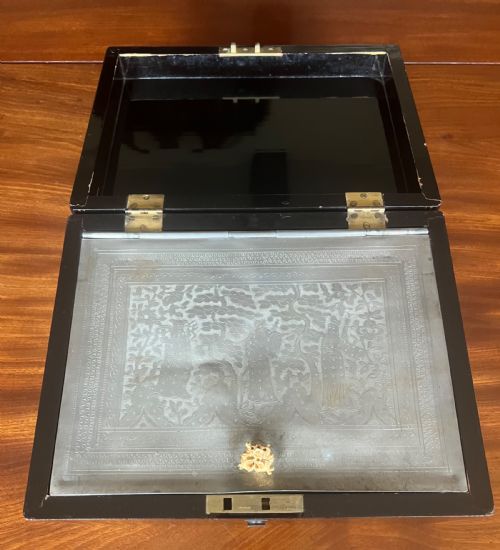


Chinoiserie Lacquer Box
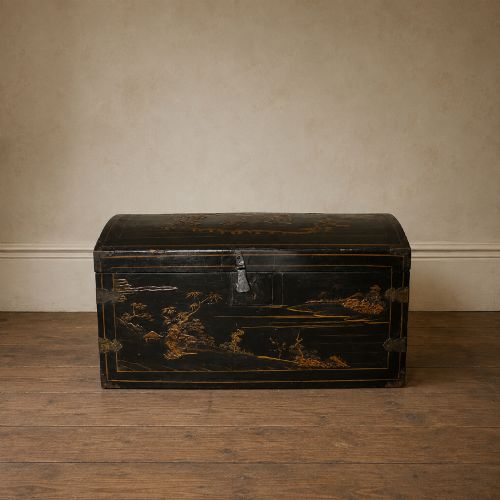
A chinoiserie lacquer box brings hand-gilded scenes and rich dark surfaces into a room, offering both decorative presence and small-scale storage.
Chinoiserie Lacquer Box
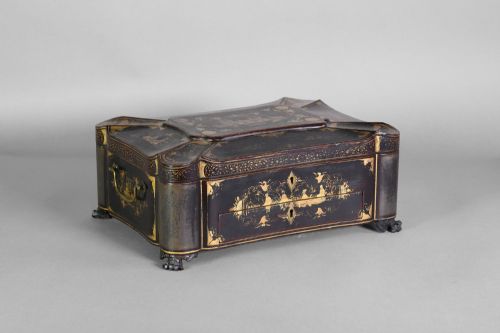
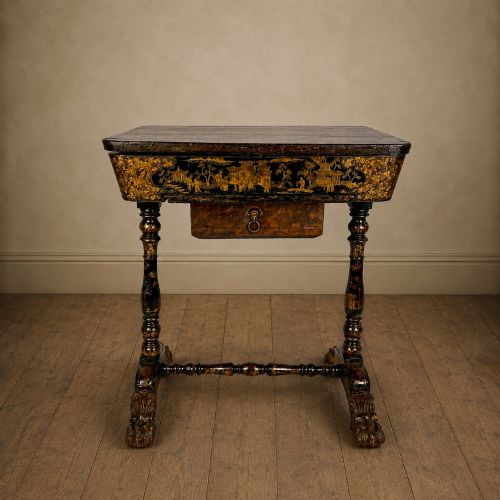
A chinoiserie lacquer box spans multiple centuries of craftsmanship, appearing in periods from the eighteenth century through the early twentieth century. Buyers encounter tea caddies, sewing tables, jewellery boxes, and larger storage chests created in styles such as Regency, Chinese Export, and Georgian Chinoiserie.
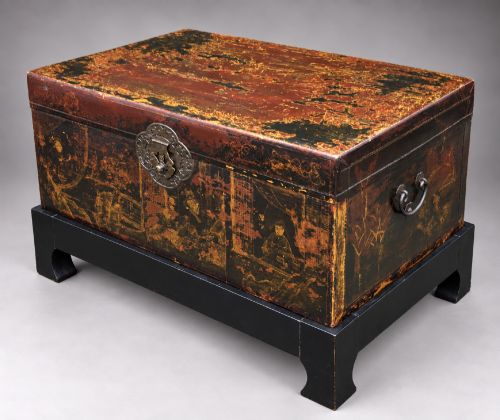
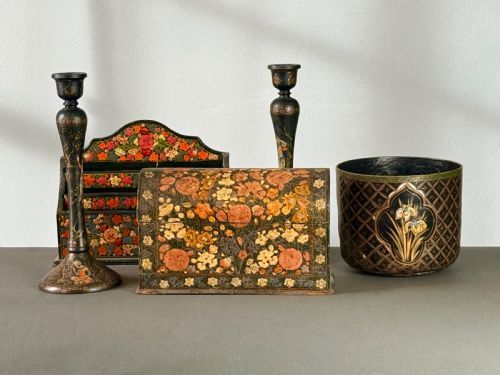
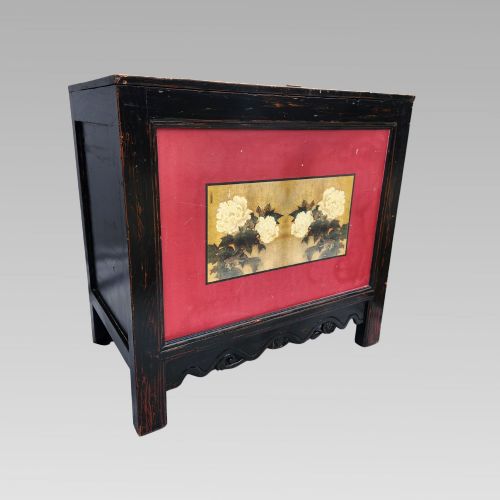
The objects take many functional shapes, ranging from miniature desk accessories and letter racks to substantial blanket boxes on stands and table cabinets. Chinese Export pieces sit alongside English penwork variations and Japanese interpretations.
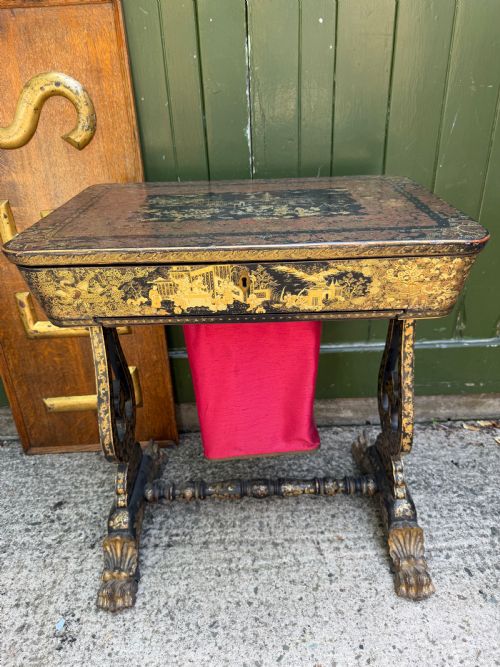
Smaller tabletop boxes for tea and trinkets emerge frequently, alongside more complex pieces like worktables and toilet mirrors fitted with miniature bureau bases.
Materials and Construction
Lacquered wood forms the primary body for these items, providing a stable foundation for intricate surface decoration. Artisans applied layers of lacquer to create deep black or yellow finishes.
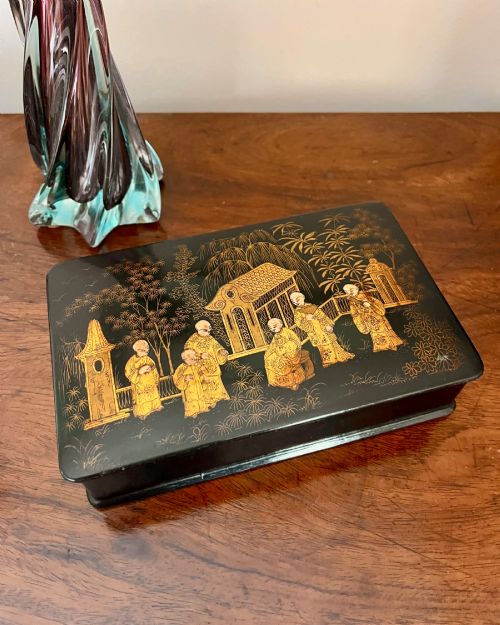
Gold leaf and gilt paint supplied the contrasting ornamentation, delineating figures, landscapes, and floral motifs across the panels. Additional elements like brass hardware, bone fittings, and camphor wood appear within the construction.
Some nineteenth-century workboxes double as miniature sewing stations, hiding tiny bone thread spools and ivory measuring tapes inside.
Judging Quality and Execution
The refinement of the gilded decoration separates ordinary examples from superior ones, with finer pieces displaying meticulous detail in figures and foliage. The depth of the lacquer finish and the stability of the underlying wood determine the structural integrity of each box.
Workmanship in specialised internal fittings, such as fitted compartments in tea caddies or nesting trays in workboxes, indicates the skill invested in the creation.
The Chinoiserie Lacquer Box Glossary
- Chinoiserie
- European imitation and adaptation of Chinese and East Asian artistic traditions. This style heavily influences the pictorial motifs found on these boxes.
- Tea Caddy
- A container designed for storing loose tea leaves. Many period examples feature internal lidded canisters and mixing bowls.
- Penwork
- A decorative technique utilising India ink on wood to simulate more costly inlay or lacquer work. It appears frequently on Regency boxes.
- Japanned
- European lacquerwork imitating Asian export pieces. The method involves applying multiple coats of varnish and heat-curing the surface.
- Qing Dynasty
- The last imperial dynasty of China, spanning from sixteen forty-four to nineteen twelve. Many export pieces originate from this era.
Chinoiserie Lacquer Box: Frequently Asked Questions
How do I care for lacquer boxes?
Keep the box out of direct sunlight and away from rapid temperature changes to prevent the wood and lacquer from cracking. Dust gently with a dry, soft cloth without using liquid polishes or chemical cleaners.
Maintaining stable indoor humidity helps preserve the delicate gilt decoration and prevents the surface from drying out over time.
What were tea caddies used for?
Tea caddies held expensive loose tea leaves under lock and key in period households. Servants or homeowners dispensed the tea for each social gathering.
Inside, the containers often divided into distinct compartments with small fitted lids to separate green and black teas.
Where were Chinese Export boxes made?
Chinese Export boxes were produced in workshops located in coastal trading hubs like Guangzhou for European and American markets. Craftsmen combined traditional Asian lacquering techniques with European furniture forms requested by Western traders.
These pieces arrived via maritime trade routes, bringing authentic Oriental ornamentation into Georgian and Regency interiors.