



Chinoiserie Folding Screen
A chinoiserie folding screen brings painted narrative and architectural division to a room, spanning grand eight-fold panels and intimate hearth guards.
Chinoiserie Folding Screen
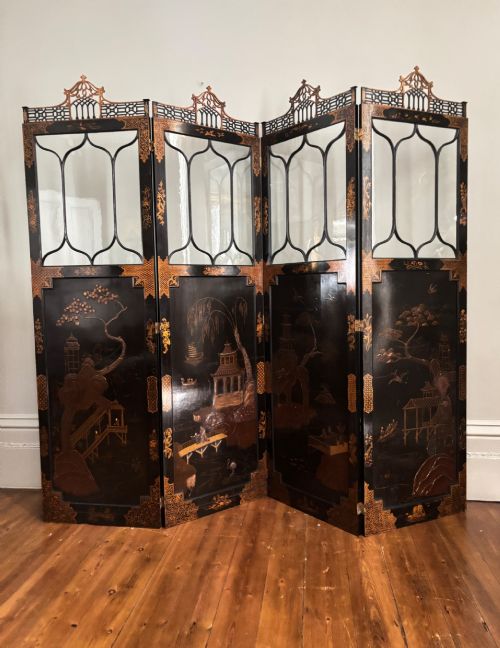
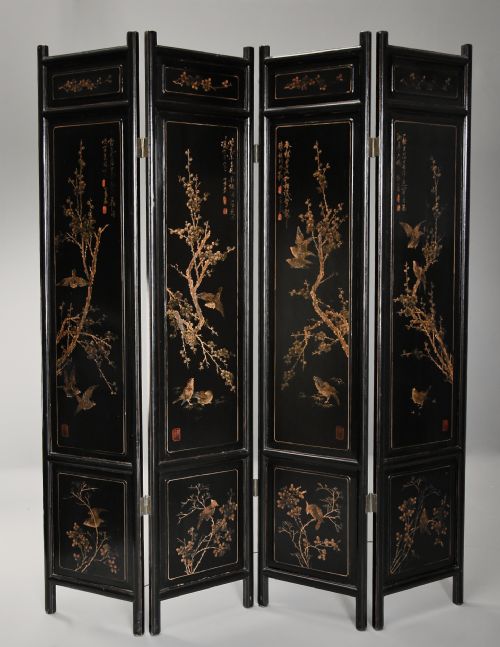
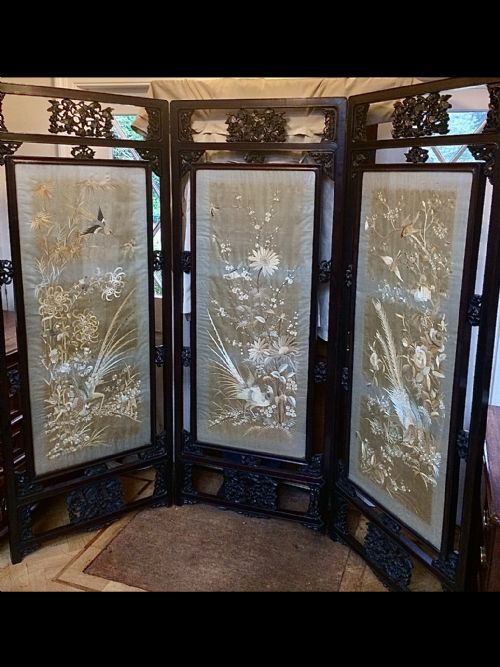
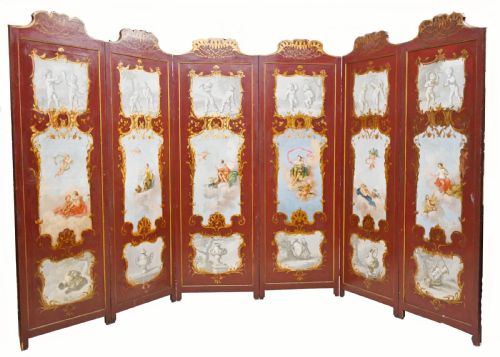
A chinoiserie folding screen functions as a room divider, dressing screen, or fire screen, appearing in configurations from three to eight panels. These pieces divide interior space while introducing narrative scenes painted or carved onto multiple folds.
The selection here includes examples from the eighteenth, nineteenth, and twentieth centuries, alongside Regency and Victorian interpretations. Forms range from freestanding black lacquered room dividers to painted leather panels and low fire screens.
Origins span Chinese workshops producing coromandel and lacquered wood as well as European makers producing English, Dutch, and Victorian adaptations. Buyers encounter both large multi-panel room dividers and smaller portable dressing screens.
What varies in quality
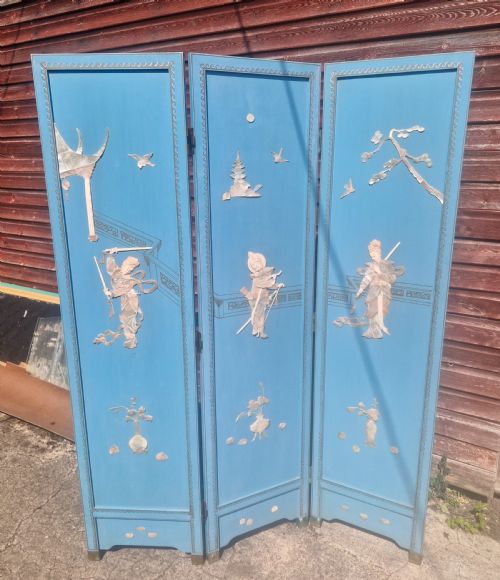
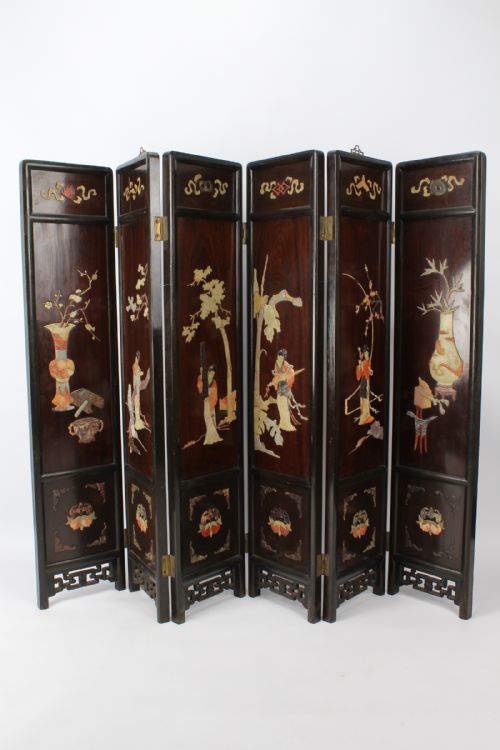
Quality depends upon the depth of the carving and the richness of the lacquering across the panels. Superior examples display meticulous hand-painted detail in gold leaf and precise inlay of mother-of-pearl or hardstone.
The integrity of the hinges and the stability of the individual folds determine the structural caliber of each screen. Heavier eight-fold coromandel pieces require robust joining to support expansive narrative scenes without sagging.
Chinoiserie Folding Screen Retail Price Guide 2026
Typical asking prices for chinoiserie folding screen among the pieces listed under this phrase on Sellingantiques today, from the lower quarter to the upper quarter. They describe what is for sale here now, not the wider market.
Listings feature periods from the eighteenth century to the mid-twentieth century, alongside Regency and Victorian eras.
The Chinoiserie Folding Screen Glossary
- Coromandel
- A type of Chinese incised lacquerware where designs are cut into a dark ground and filled with colours or left natural. This technique creates a rich textured surface across multi-fold screens.
- Lacquer
- A durable resin finish applied in multiple coats to wood or papier-mâché substrates. It provides a glossy protective base for painted and gilt decoration.
- Fire screen
- A small portable screen designed to protect occupants from the radiant heat of an open fireplace. These items often feature single panels mounted on feet or stands.
- Dressing screen
- A multi-fold privacy screen utilised in bedrooms or dressing areas for changing clothes. They typically measure lower than room dividers to maintain human scale.
- Hardstone
- Minerals such as jade or agate cut and polished for decorative inlay on furniture and screens. These elements provide raised tactile contrast against flat lacquered backgrounds.
Chinoiserie Folding Screen: Frequently Asked Questions
How are these screens used?
These pieces function primarily as room dividers, privacy screens, and decorative focal points within domestic interiors. Large multi-fold panels segment open floor plans while smaller versions serve beside hearths or in dressing rooms.
Placement depends upon the scale and fold count of each individual divider. Eight-fold screens anchor large reception rooms, whereas three-panel dressing screens suit intimate spaces.
What periods do they date from?
The inventory spans the eighteenth century through the mid-twentieth century, including Regency and Victorian eras. Earlier examples often feature coromandel lacquer while later pieces reflect Chinese Chippendale and Victorian tastes.
Nineteenth- and twentieth-century interpretations demonstrate both traditional Asian craftsmanship and European adaptations of East Asian motifs.
Are they freestanding?
Most examples operate as freestanding units supported by hinged panels that angle to maintain stability. The number of folds dictates how the screen is curved and balanced across a floor.
Smaller fire screens often utilise specific base supports or feet to remain upright near a hearth. Multi-fold room dividers rely solely on the articulation of their hinges.
What materials are used?
Construction employs wood, hardwood, papier-mâché, and leather as structural substrates. Surfaces are finished with lacquer, paint, and gold leaf, often incorporating brass hardware.
Decorative additions include mother-of-pearl and hardstone applied to create raised pictorial elements. These varied materials distinguish Chinese imports from European painted leather pieces.