




Chinoiserie Ceramic Desk Light
These chinoiserie ceramic desk light examples bring Eastern ornament and rich ceramic bodies into domestic workspaces through converted antique vessels.
Chinoiserie Ceramic Desk Light
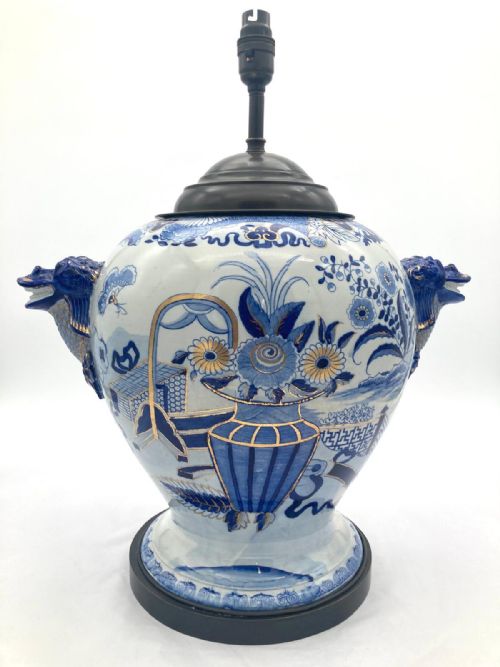
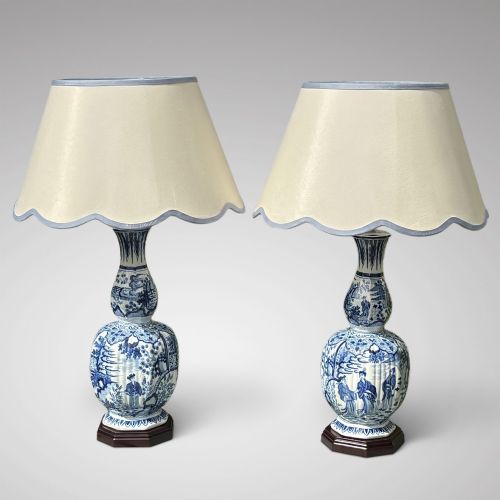
A chinoiserie ceramic desk light sits within the table lamp category, combining historic Far Eastern porcelain and earthenware with electrical fittings for interior illumination. These pieces take the form of converted vases, ginger jars, and figurative sculptures mounted as lamps.
The objects span multiple periods including the 18th century, Regency, Victorian, 19th century, and 1920. Buyers frequently encounter blue and white export ware alongside polychrome enamelled surfaces and blanc de chine figures.
Materials and Construction
Makers utilise porcelain, earthenware, and ironstone as the primary ceramic bodies for these lamp bases. Artisans decorate these vessels with hand-painted underglaze blue, famille verte, famille rose, and turquoise glazes.
Mounts and structural elements incorporate brass, gilt bronze, and wood to support the ceramic bodies. Handmade fabric and silk shades complete the conversion from historic vessel to functional lighting.
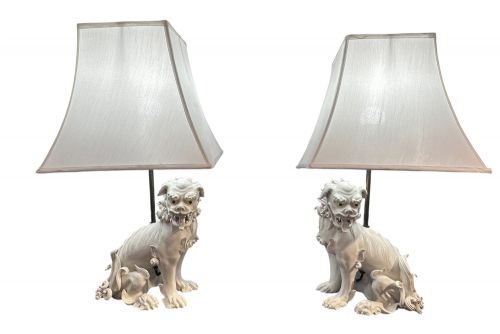
Shi lions guard domestic spaces from atop their ceramic lamp bases, keeping watch over modern desks.
Qualities of Distinction
Quality rests in the crispness of the hand-painted ceramic decoration and the integrity of the original glaze surface, whether crackle ware, powder blue, or intricate polychrome enamels. The weight and casting quality of the metal mounts, such as ormolu or brass bases, separate standard adaptations from finer works.
The harmony between the converted vessel and its supporting hardware dictates the overall visual success of the piece. Matching pairs demonstrate superior provenance compared to single converted vases.
Hicks and Meigh·Samson
The Chinoiserie Ceramic Desk Light Glossary
- Famille Verte
- A ceramic palette dominated by green enamel overglaze painting. This style frequently appears on 19th-century Chinese porcelain lamp bases.
- Imari
- A style of Japanese export porcelain characterised by underglaze blue and iron red with supplementary gold. Pieces from the Arita kilns often display this decorative scheme.
- Blanc de Chine
- White Chinese porcelain produced at Dehua, highly prized for its smooth ivory glaze. These bodies often take the form of figures like Shi Lions.
- Ormolu
- Gilded bronze mounts applied to furniture and ceramics. This material adds a decorative and structural base to porcelain lamp bodies.
- Ginger Jar
- A wide-mouthed storage jar of rounded shape, commonly utilised for conversion into table lamps. These jars often feature blue and white or famille rose decoration.
Chinoiserie Ceramic Desk Light: Frequently Asked Questions
What periods do these lamps date from?
The pieces span several distinct historical eras, including the 18th century, Regency, Victorian, and the 1920s. Each era brings specific decorative styles and mounting techniques to the ceramic bodies.
Buyers will find that 19th-century Chinese and Japanese export wares form the largest group within this selection of converted lamps.
How were these original vases converted?
Historic vessels such as ginger jars and baluster vases receive electrical wiring and mounting hardware to function as table lamps. Many retain their original ceramic integrity while incorporating brass or gilt bronze elements.
This conversion process allows antique vessels to serve practical modern purposes without losing their decorative character.
What ceramic styles are most common?
Blue and white porcelain, famille verte, and famille rose enamels dominate the decorative styles seen on these lamp bases. Japanese Arita Imari and Chinese monochrome glazes also appear frequently.
These diverse styles reflect centuries of Eastern export production adapted for Western domestic interiors.
Are matching pairs commonly available?
Several listings feature matched pairs of vases converted into lamps, particularly from the 19th century. These pairs often share identical motifs and sizing.
Pairs provide symmetrical lighting options for larger desks or side tables within a room.