

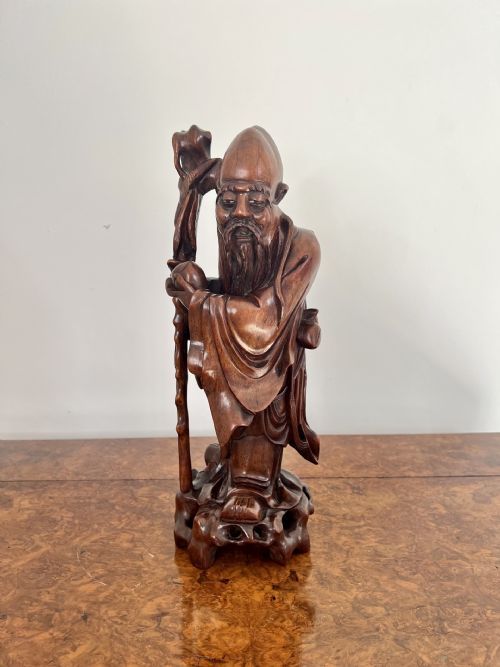


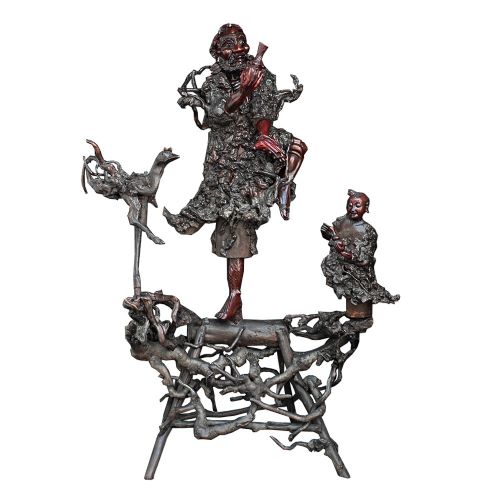


Chinese Wooden Immortal Figures
These chinese wooden immortal figures are substantial hardwood and root wood carvings capturing revered deities, scholars and immortals from past dynasties.
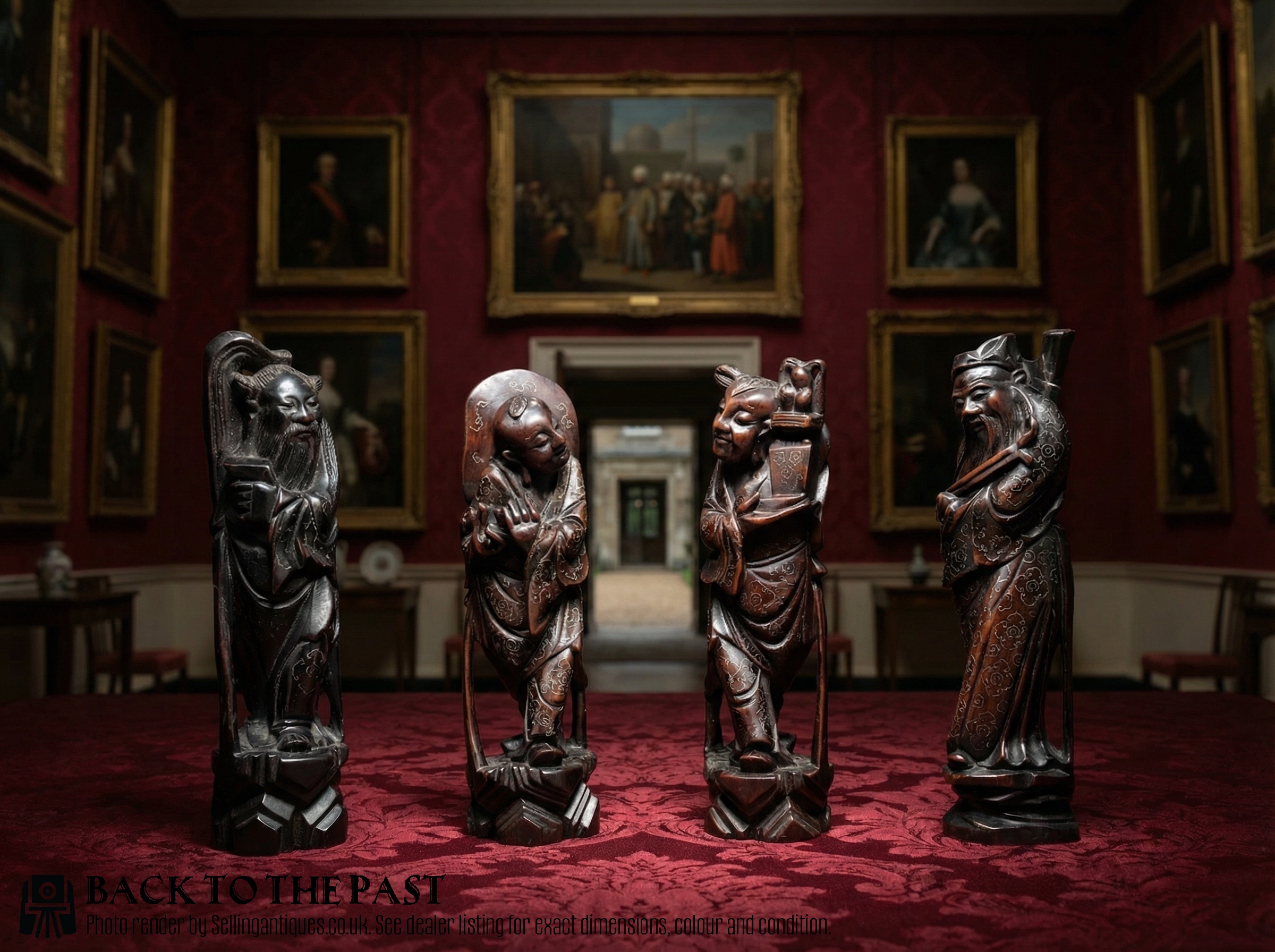
Chinese Wooden Immortal Figures
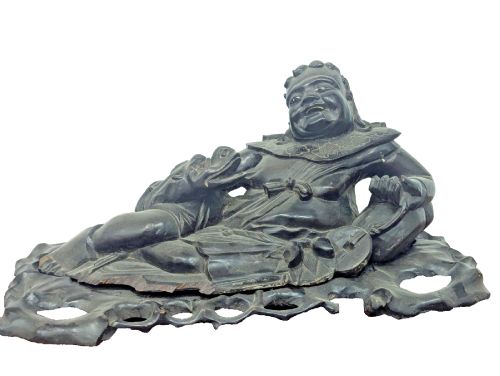
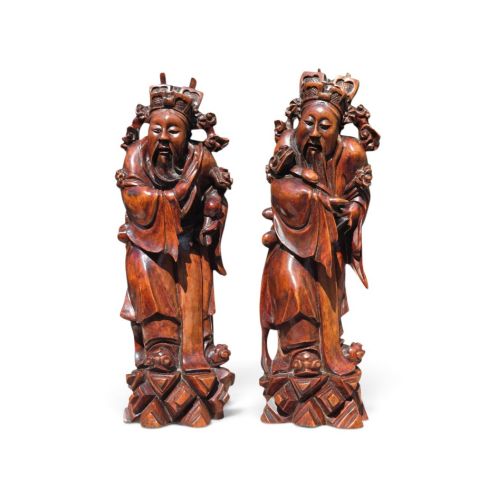
When searching for chinese wooden immortal figures, collectors encounter sculptural representations of Daoist and Buddhist figures carved from dense timbers. The selection spans single standing deities to matched pairs, often depicting specific figures such as Liu Hai or Budai.
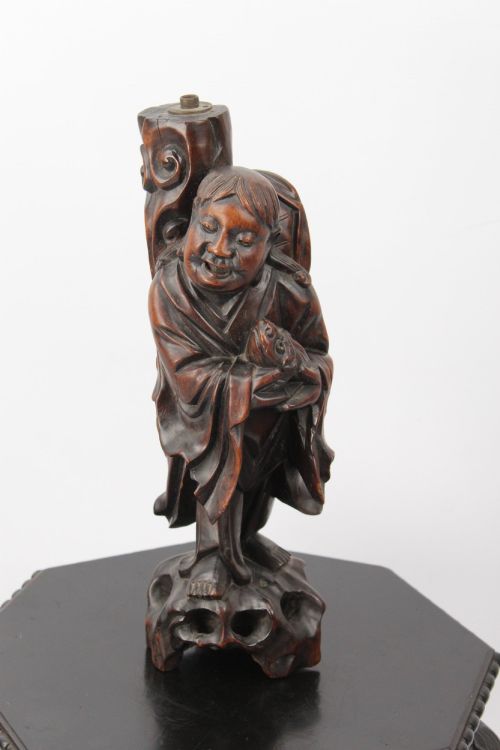
Most examples originate from the Qing Dynasty through to the late nineteenth and early twentieth centuries. Forms range from monumental figures down to scholars and table lamps fashioned from root wood.
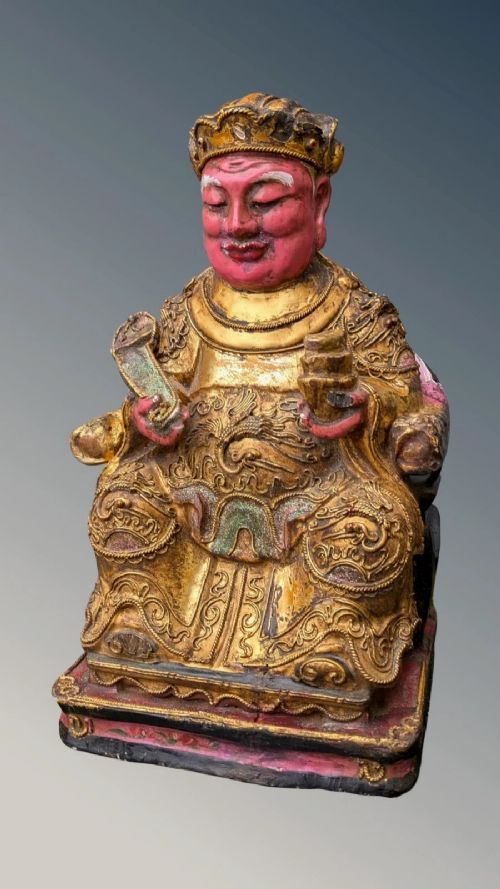
The materials vary from standard hardwoods to burr root wood and gesso with gold leaf accents. Alongside traditional sculptures, related forms include bamboo carvings and table gongs.
What varies in quality
Proportion and stance separate standard production from accomplished work. Figures that maintain balanced posture and expressive detail demonstrate the skill of the carver.
Certain figures carry mythical creatures on their backs, giving immortal deities an unexpectedly heavy piggyback ride.
The Chinese Wooden Immortal Figures Glossary
- Root wood
- Timber sourced from the root system of a tree, prized for its gnarled texture. Carvers utilised these natural twists to form dynamic figures and scholars' objects.
- Hardwood
- Dense, slow-growing timber used for substantial sculptures. This material allowed for sharp, enduring detail that resisted splitting.
- Qing Dynasty
- The final imperial dynasty of China, spanning from sixteen forty-four to nineteen twelve. Many carved figures date from the later decades of this period.
- Gold leaf
- Extremely thin gold beaten into sheets and applied to surfaces. It frequently accented the robes and attributes of deities and immortals.
- Burr root wood
- A growth on a tree where grain has travelled in a deformed manner, creating intricate patterns. This timber provided highly decorative surfaces for figures.
Chinese Wooden Immortal Figures: Frequently Asked Questions
What do these figures represent?
These pieces depict Daoist and Buddhist immortals, deities and scholars associated with good fortune, longevity and wisdom. Figures often hold specific attributes that identify them to the viewer.
Common subjects include Liu Hai with his three-legged toad and the laughing Buddha Budai, reflecting traditional beliefs.
How do I date a wooden figure?
Dating relies on the style of the carving, the choice of timber and surface wear consistent with age. Pieces span the eighteenth century to the early twentieth century.
Examining the tool marks and the patina of the wood helps determine the period of manufacture.
Where were these carvings displayed?
Historically, figures of immortals and deities sat within domestic shrines, scholars' studios and reception rooms. They served as focal points for contemplation and cultural display.
Larger sculptures stood independently, while smaller root carvings sat on wooden bases within interior spaces.
How should I care for root wood?
Root wood requires stable humidity and protection from direct sunlight to prevent timber movement. Dusting with a soft brush maintains the surface without introducing moisture.
Harsh cleaning agents must be avoided to preserve the natural patina developed over decades.