

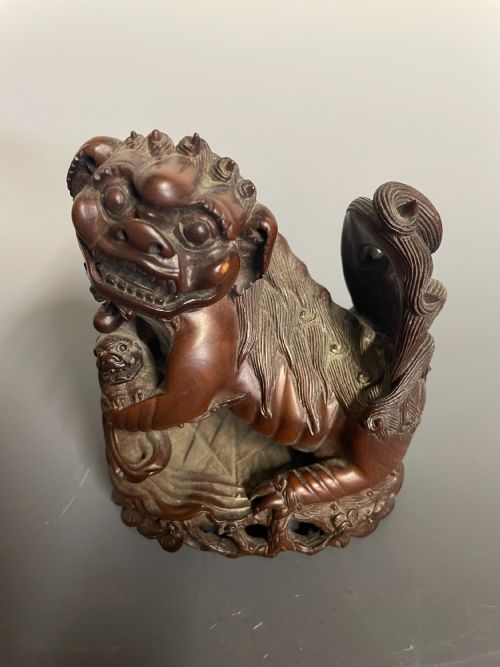


Chinese Temple Lion Figure
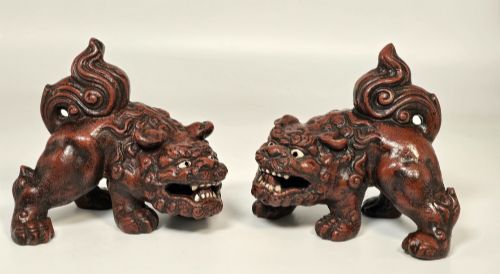
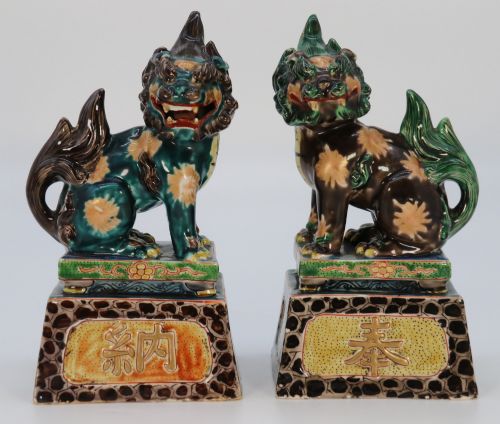
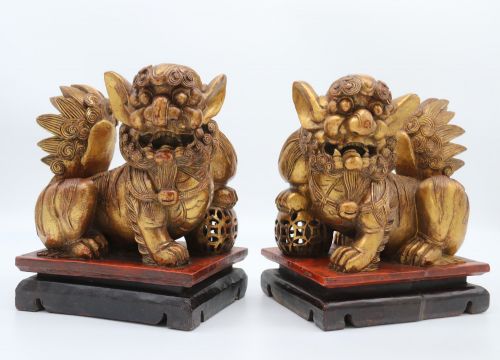
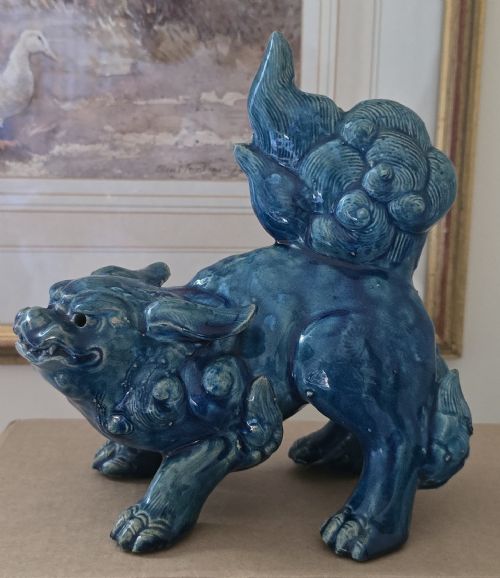
These Chinese temple lion figure examples range from carved boxwood to glazed porcelain, brought home as protective guardians.
Chinese Temple Lion Figure
A Chinese temple lion figure represents the traditional guardian creatures stationed outside thresholds, palaces and sanctuaries. You will encounter pairs most frequently, often described as foo dogs or lion dogs.
The selections here span periods from the nineteenth century to the early twentieth century, taking forms such as ceramic sculptures, decorative objects and carved figures. They reflect diverse regional styles including Qing Dynasty, Tibetan Buddhist art and Japanese Meiji period influences.
Materials vary widely across the inventory, ranging from glazed ceramic and earthenware to boxwood, gilt bronze and cast iron. Each piece serves as a sculptural guardian with distinct historical context.
Materials and Construction
Wood pieces rely on detailed hand carving, utilising boxwood or timber finished with lacquer and gilt. These techniques allow for intricate rendering of manes and expressions.
Ceramic examples employ earthenware or porcelain bodies shaped into sculptures and finished with coloured glazes or enamel work. Bronze and brass versions use metal casting methods to achieve substantial weight and durable detail.
Chinese Temple Lion Figure Retail Price Guide 2026
Typical asking prices for chinese temple lion figure among the pieces listed under this phrase on Sellingantiques today, from the lower quarter to the upper quarter. They describe what is for sale here now, not the wider market.
Recorded periods span the nineteenth century, the Qing Dynasty, the Meiji period and the early twentieth century up to nineteen twenty.
Distinguishing Quality
Quality rests upon the crispness of the carving or the richness of the glaze application. Finer works display purposeful anatomical definition and secure surface finishes rather than flat, uniform textures.
The weight and material substance dictate the presence of the piece, with substantial bronze castings and finely carved hardwoods representing the upper tier of execution.
The Chinese Temple Lion Figure Glossary
- Foo Dog
- A colloquial western term for a Chinese guardian lion, depicting mythical protector beasts rather than actual dogs. They usually appear in pairs flanking a doorway.
- Shiishi
- The Japanese equivalent of the Chinese guardian lion, originating from Buddhist traditions shared across Asia. These appear in Japanese Meiji period metalwork and ceramics.
- Shiwan
- A pottery style originating from southern China, known for heavy earthenware bodies and expressive colourful glazes. Shiwan figures often portray Buddhist lion dogs.
- Qing Period
- The final imperial dynasty of China, spanning from the seventeenth to the early twentieth century. Objects from this era show distinct traditional aesthetic standards.
- Gilt Bronze
- Metal sculpture cast in bronze and subsequently covered with a thin layer of gold leaf or gold wash. This technique adds lustre and protects the metal beneath.
Chinese Temple Lion Figure: Frequently Asked Questions
Where were temple lions placed?
These figures traditionally stood outside the gates of temples, imperial palaces and government offices to ward off negative influences. Pairs typically consisted of a male guarding a ball and a female restraining a cub.
Inside domestic spaces, smaller versions served as decorative guardians on tables or mantels.
How do I identify the material?
Ceramic and porcelain versions display glossy or matte glazes, often in turquoise, green or enamel colours over earthenware. Bronze and brass examples feel heavy and cold to the touch, frequently showing aged patination.
Wood carvings reveal natural grain beneath lacquer or gilt surfaces.
Why do they come in pairs?
Traditional guardian figures are balanced pairs representing yin and yang forces. One paw rests on an embroidered ball representing supremacy, while the other touches a cub representing nurture.
Separated pieces lose this balanced architectural context.