


Chinese Rosewood Urn Stand
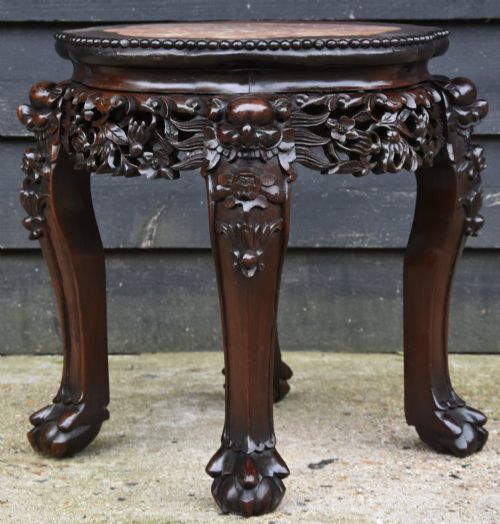
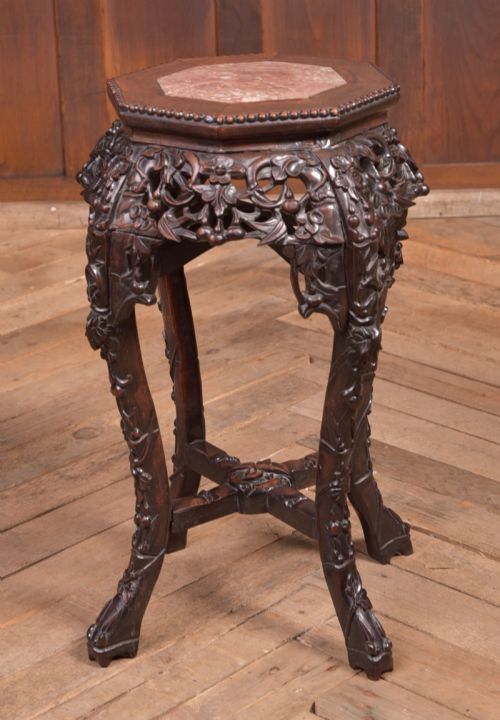
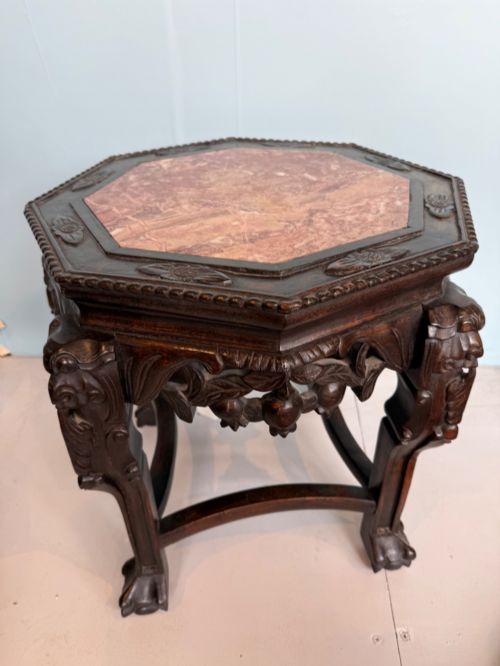
A Chinese rosewood urn stand is a carved timber table designed to elevate heavy vases, jardinières and decorative vessels within a room.
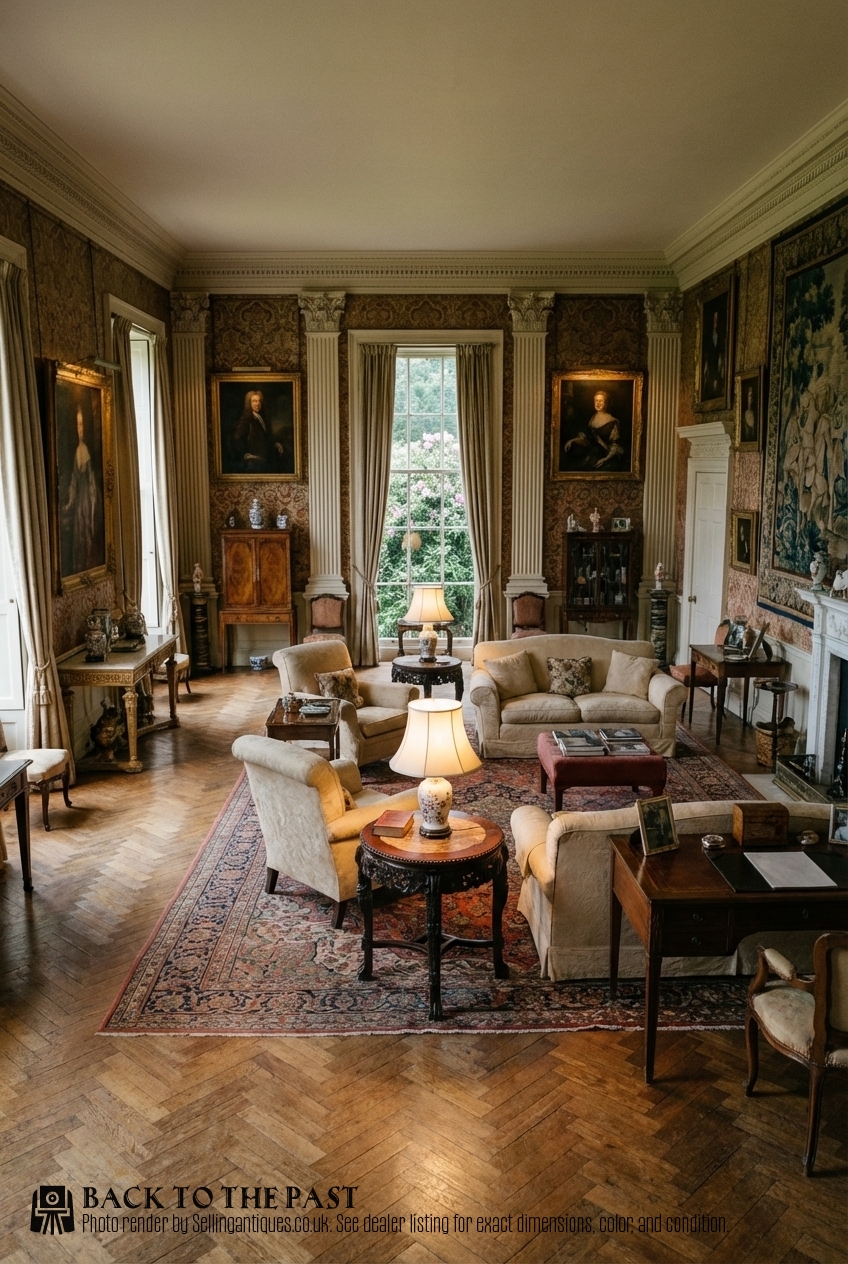
Chinese Rosewood Urn Stand
A Chinese rosewood urn stand serves as an elevated platform for decorative vessels, plants and lamps. These items appear across the nineteenth century and into the early twentieth century, spanning late Qing Dynasty and Edwardian periods.
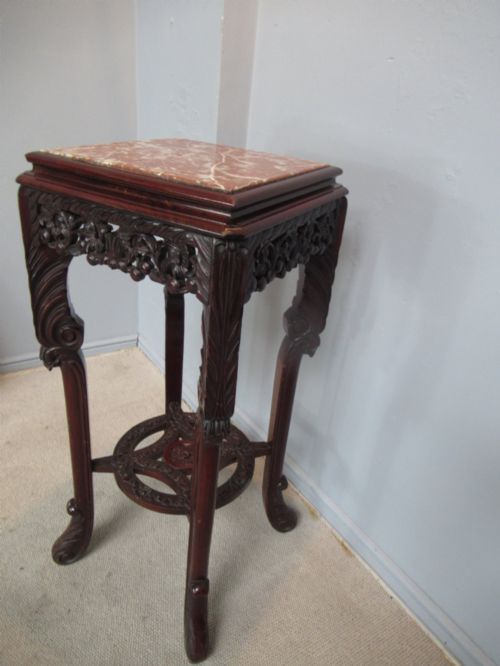
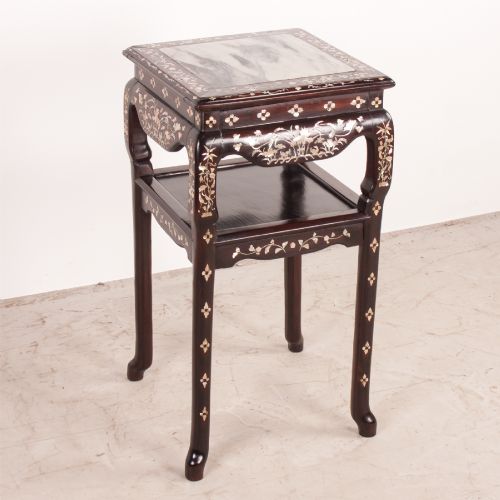
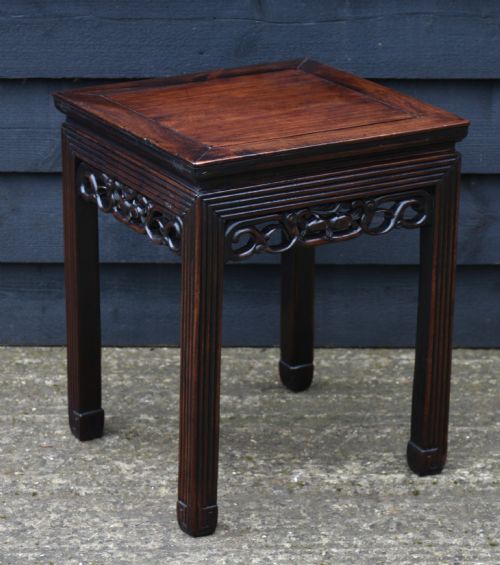
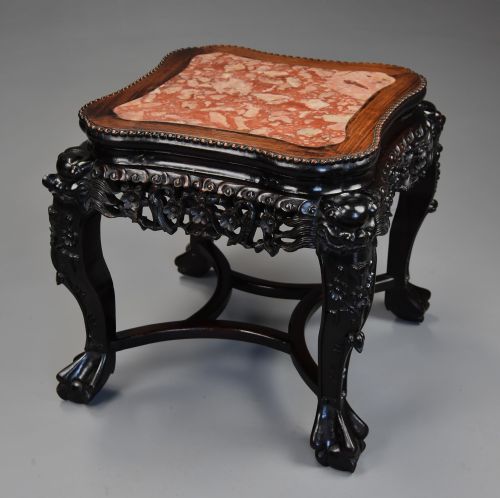
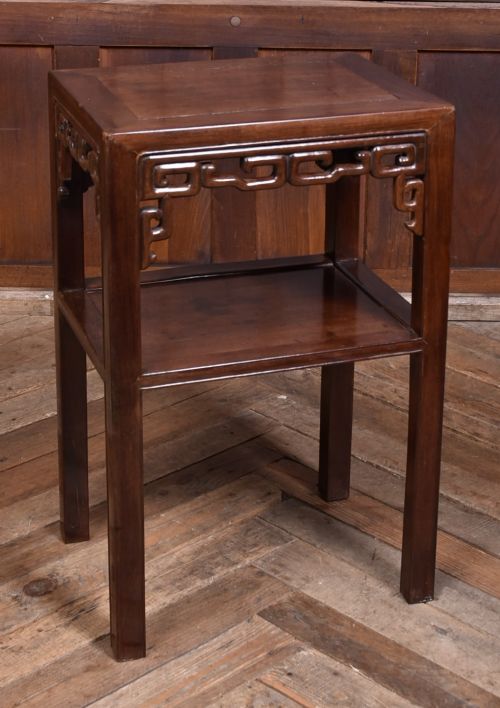
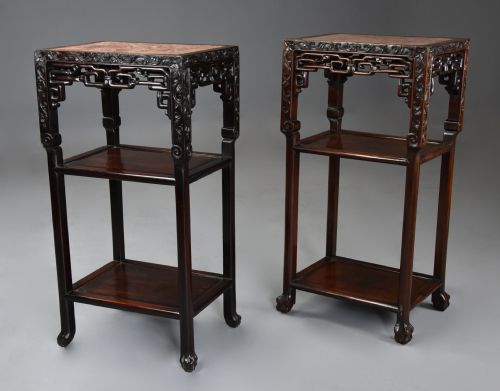
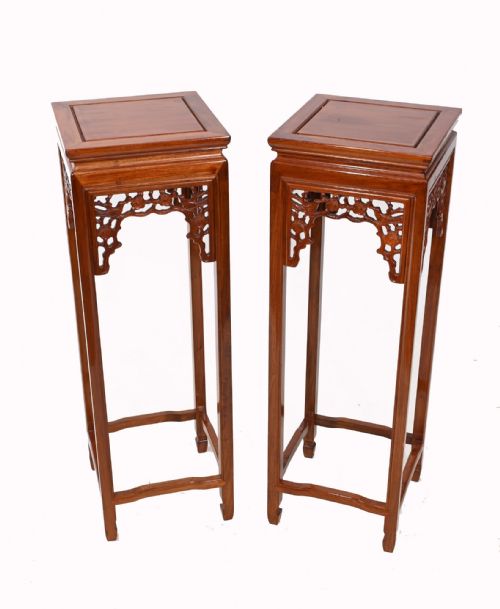
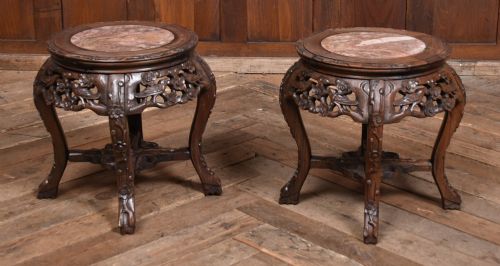
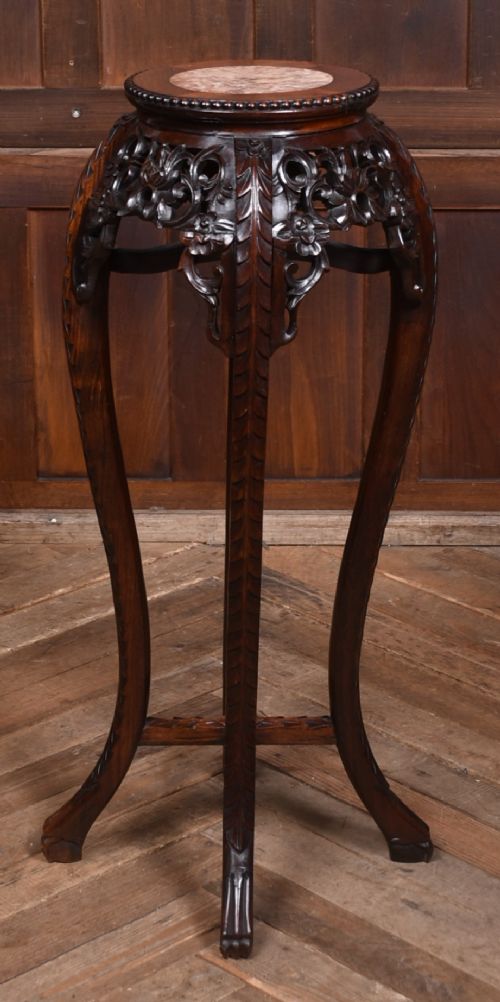
Most examples function as low tables, occasional tables, or tall pedestals designed to support heavy porcelain. The forms vary from rectangular and square shapes to round pot stands and multi-tiered tables.
Makers produced these pieces for both domestic interiors and export markets, frequently matching them in pairs. Buyers frequently encounter surfaces inset with stone panels intended to bear damp flower pots without damaging the timber.
How they were made
Craftsmen utilised dense Asian timbers including rosewood, huali wood, hongmu and padouk to construct sturdy frames capable of supporting weight. These dark woods were joined using traditional woodworking techniques that avoided metal fixings.
Many tables incorporate smooth marble or rouge marble inset tops fitted flush into the wooden framework. Artisans also applied detailed hand-carved motifs and mother-of-pearl inlay to the aprons and legs.
Materials recorded across the listings include hardwood, rosewood, hongmu, padouk, huali wood, marble, and mother-of-pearl.
What varies in quality
The density and selection of the timber dictate the structural integrity and weight of an individual stand. Heavier, tightly grained hardwoods demonstrate superior material choice compared to lighter, plain alternatives.
Depth and crispness in the hand-carved ornamentation separate standard utility pieces from finer decorative examples. The quality of the fitted marble insert, its veining, and how tightly it sits within the wooden rebate also indicate the standard of production.
The Chinese Rosewood Urn Stand Glossary
- Jardiniere stand
- A tall or low table specifically built to hold heavy plant pots and ceramic planters. These surfaces often incorporate marble inserts to resist moisture.
- Hongmu
- A dense traditional Chinese hardwood translated literally as red wood. It provides a heavy, durable base for carved furniture.
- Huali wood
- A prized fragrant hardwood utilised in high-status Chinese furniture. It displays distinct grain patterns and rich natural colouration.
- Marble insert
- A smooth polished stone slab fitted into the centre of a table top. This feature provides a cool, non-porous surface for displaying heavy vases.
- Torchere stand
- A tall slender pedestal designed originally to support a candle lamp or torch. In later interiors, these accommodated decorative floral arrangements.
Chinese Rosewood Urn Stand: Frequently Asked Questions
How were Chinese rosewood urn stands used?
These tables supported heavy porcelain vases, decorative urns, and potted plants within formal reception rooms. Their sturdy construction allowed them to bear substantial weight safely.
Over time, owners also repurposed them as low side tables, lamp tables, or occasional tables beside seating.
What woods were used for these stands?
Cabinetmakers utilised heavy Asian hardwoods including rosewood, hongmu, padouk, and huali wood. These dense timbers provided the structural strength required for supporting heavy stone and ceramic objects.
Surfaces often combined these dark woods with contrasting inset marble panels.
How do I care for marble top stands?
Wipe the wooden frame with a dry cloth and avoid harsh chemical polishes that can damage the antique finish. Keep the timber away from direct heat sources to prevent shrinkage.
The marble insert can be cleaned gently with a damp cloth and dried immediately to preserve the polished surface.
Are these stands usually found in pairs?
Makers frequently produced these tables in matching pairs to balance symmetrical interior layouts. Single stands were equally common for individual display corners.
Matching pairs appear regularly alongside standalone pieces in nineteenth-century inventories.