




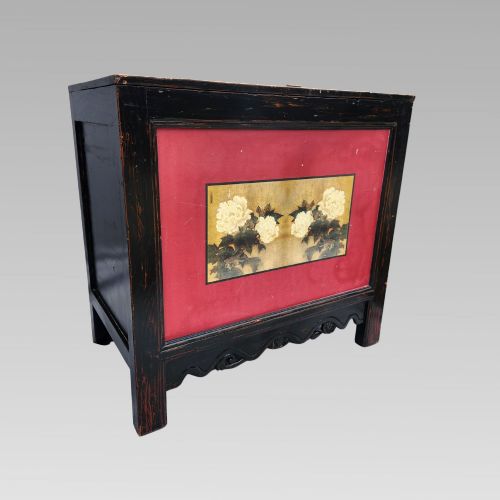


Chinese Painted Chest
A chinese painted chest brings vibrant pigment, lacquer, and brass into a room while offering deep, practical storage.
Chinese Painted Chest
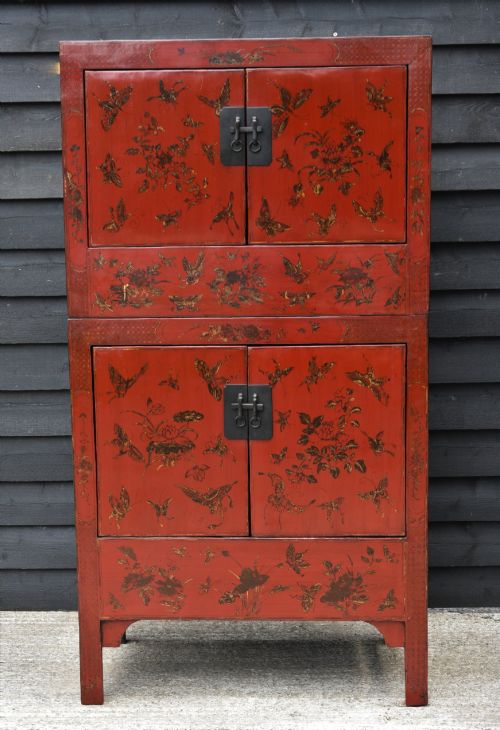
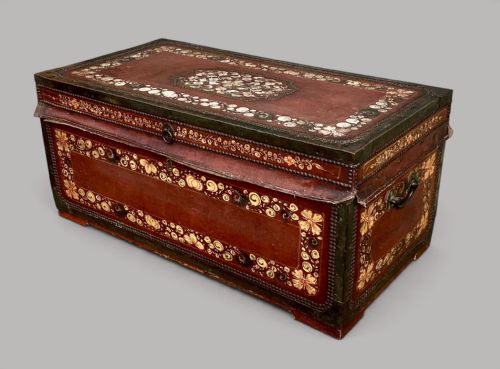
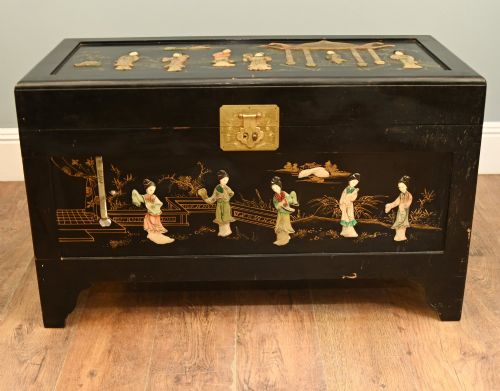
A chinese painted chest encompasses a diverse range of storage forms, including trunks, wedding chests, coffers, and campaign boxes produced for export and domestic use. These pieces bridge utilitarian function and decorative art, serving as focal points in period and contemporary interiors alike.
The versions most commonly met on this page date from the nineteenth century into the early twentieth century, spanning Qing Dynasty traditions, Republic Period works, and Chinoiserie interpretations. They frequently combine sturdy timber construction with painted, lacquered, or leather-covered surfaces.
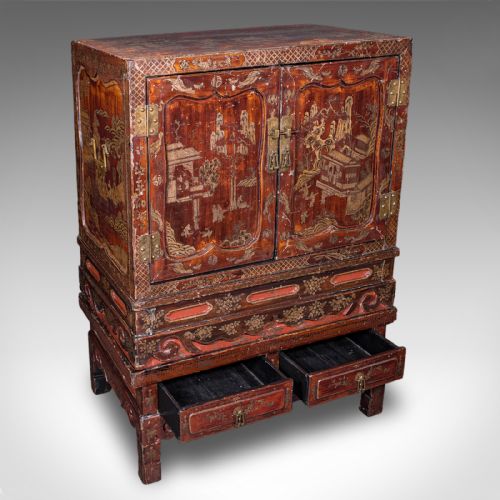
Forms vary from large camphor wood travel trunks bound in brass to smaller side cabinets, tea caddies, and drawer chests. Each object reflects the rich heritage of Chinese craftsmanship adapted for trade, travel, and grand household storage.
Materials and technique
Makers utilised resilient timbers such as camphor wood, which provided natural insect-repellent properties ideal for travel trunks and storage boxes. Surfaces were frequently treated with layers of dark or red lacquer, then embellished with intricate pigment painting, gold leaf, and decorative leather.
Hardware played an essential structural and decorative role, with heavy brass mounts, straps, and corner brackets securing the wooden joints. Artisans also incorporated soapstone details and carved stands to elevate the presence of cabinets and coffers.
Chinese Painted Chest Retail Price Guide 2026
Typical asking prices for chinese painted chest among the pieces listed under this phrase on Sellingantiques today, from the lower quarter to the upper quarter. They describe what is for sale here now, not the wider market.
Listings feature items dated across the nineteenth and early twentieth centuries, incorporating camphor wood, brass, lacquer, and leather.
What separates the grades
Quality reveals itself in the depth of the lacquer finish, the crispness of the painted floral or figurative scenes, and the integration of the decorative elements. Superior examples display meticulous brushwork and richly layered pigments that retain their vibrancy over time.
The integrity of the construction, the weight and finish of the brass mounts, and the preservation of original leather or wood surfaces distinguish finer pieces. Hand-carved stands and intact interior compartments further elevate the distinction of a chest.
The Chinese Painted Chest Glossary
- Camphor wood
- A fragrant timber native to Asia, traditionally utilised for chests and trunks to protect stored garments from insects.
- Chinoiserie
- European artistic interpretation of Chinese and East Asian decorative styles, prominent in furniture decoration and lacquerwork.
- Lacquered
- Treated with natural varnish sap to produce a hard, durable, and glossy protective surface finish.
- China Trade
- Goods manufactured in China specifically for export to Western markets during the eighteenth and nineteenth centuries.
- Coffer
- A chest or box, typically hinged at the top, used for storing valuables, textiles, or documents.
Chinese Painted Chest: Frequently Asked Questions
What were chinese painted chests used for?
These chests originally served multiple purposes, from securing valuable garments and wedding dowries to holding personal luggage during long journeys.
Trunks and coffers protected contents from dampness and insects, particularly when constructed from aromatic woods like camphor.
How do I live with a painted chest?
A painted chest functions effectively as a coffee table, a bedroom blanket box, or a statement storage piece in a hallway.
Keep these pieces away from direct sunlight and extreme temperature fluctuations to protect the delicate lacquer, leather, and pigment finishes.
How do I tell periods apart?
Nineteenth-century pieces often display heavier brass hardware and robust camphor wood construction intended for trade or travel.
Later works from around nineteen hundred to the nineteen-thirties frequently incorporate refined lacquer finishes, carved stands, and decorative Chinoiserie motifs.
Are these chests durable?
The combination of solid timber framing and substantial brass mounting gives these chests strong structural integrity for everyday use.
Care should be taken with the decorative painted and lacquered surfaces to prevent scratching or moisture damage.