



Chinese Marble Urn Stand
A Chinese marble urn stand is a sturdy, decorative pedestal designed to elevate heavy vases and plants.
Chinese Marble Urn Stand
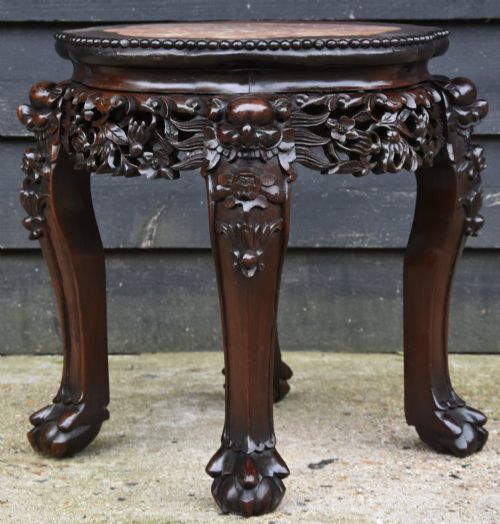
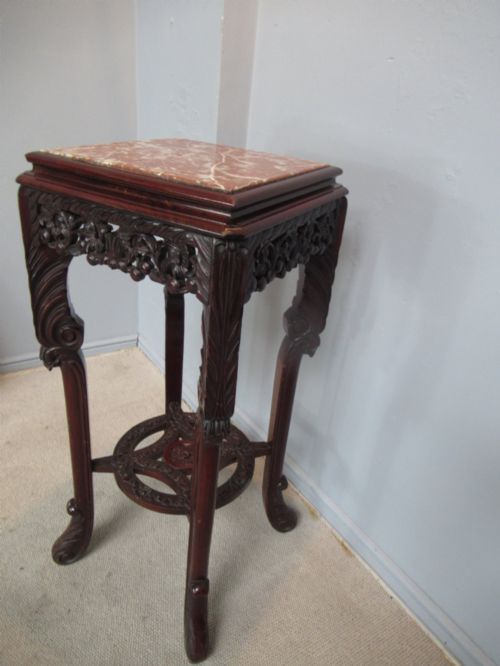
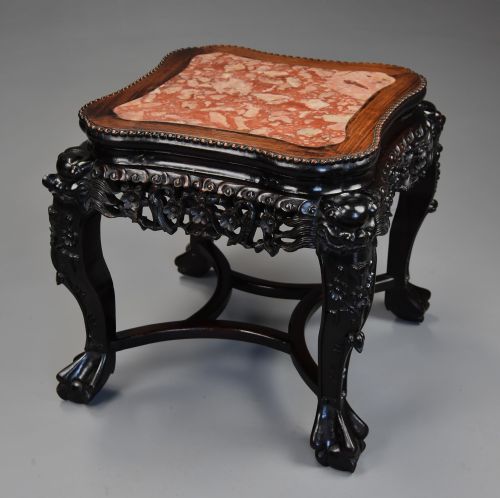
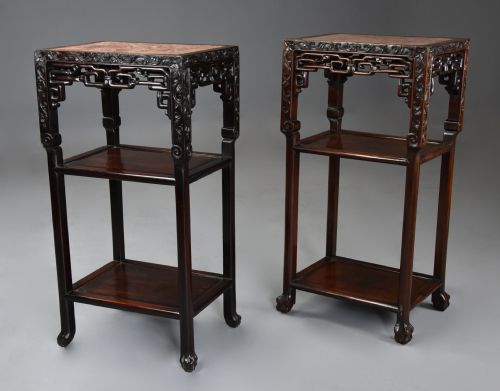
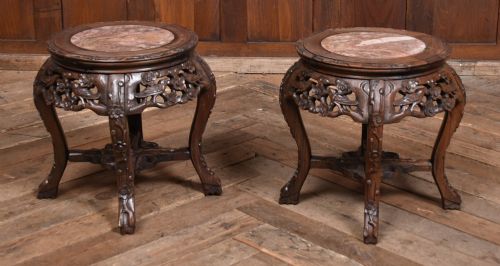
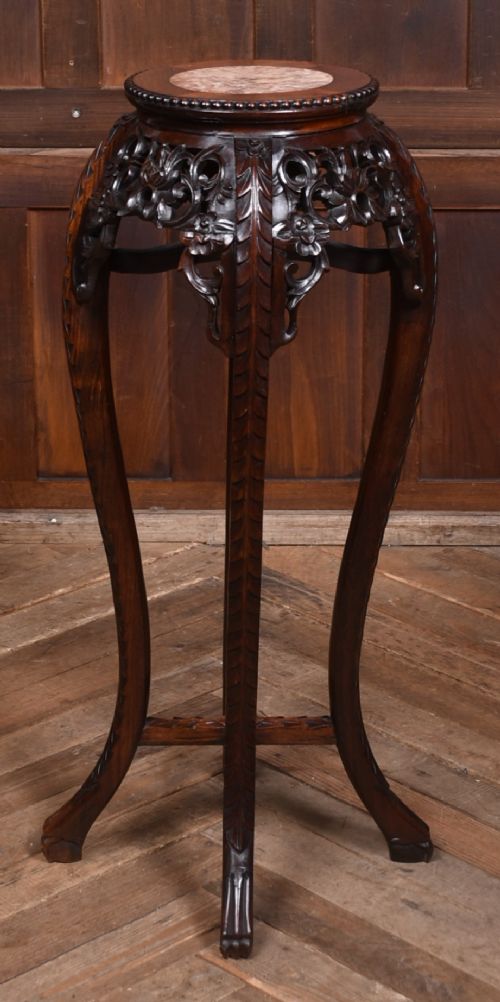
A chinese marble urn stand is typically encountered as a heavy, low or tall pedestal table utilised to display jardiniere pots, vases, and urns. These pieces originate predominantly from the nineteenth century, including the Victorian and Edwardian periods, aligning with Qing dynasty and Chinese export traditions.
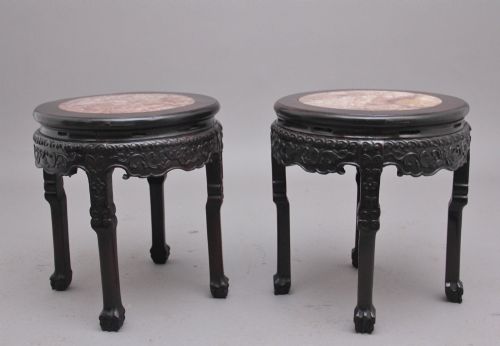
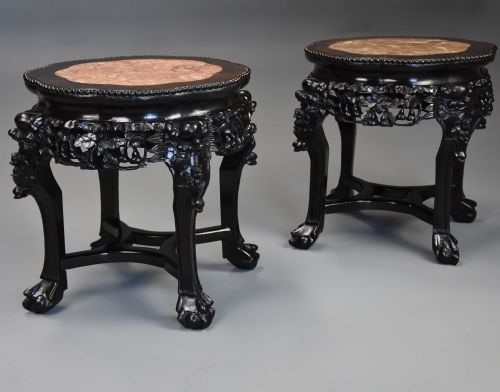
The inventory demonstrates a variety of forms beyond dedicated urn stands, including plant stands, side tables, occasional tables, and low jardiniere tables. Many appear as matched pairs, constructed with distinct inset stone tops intended to handle heavy ceramic vessels.
How they were made
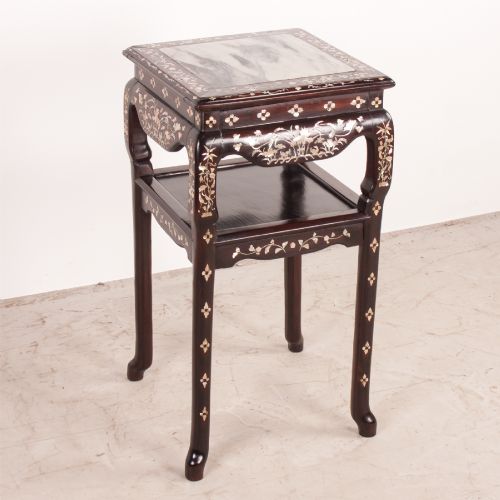
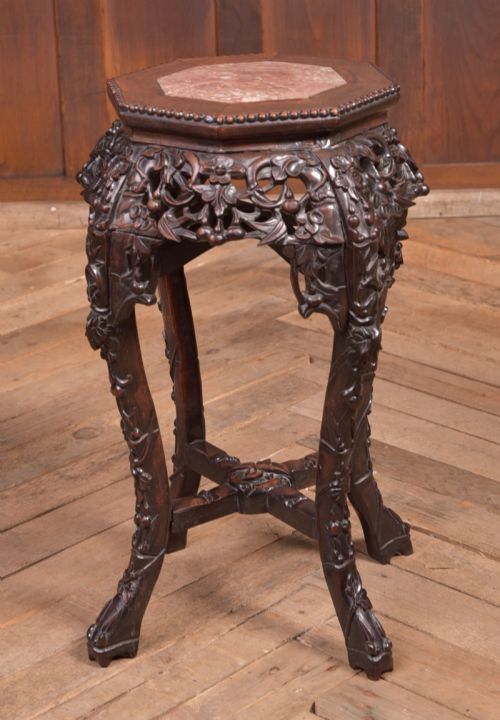
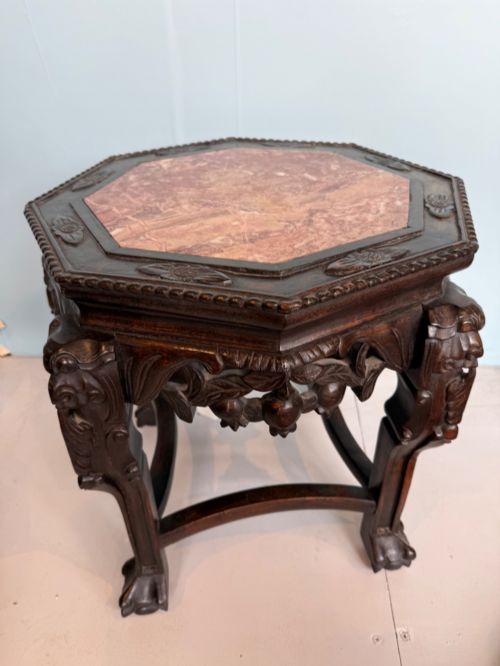
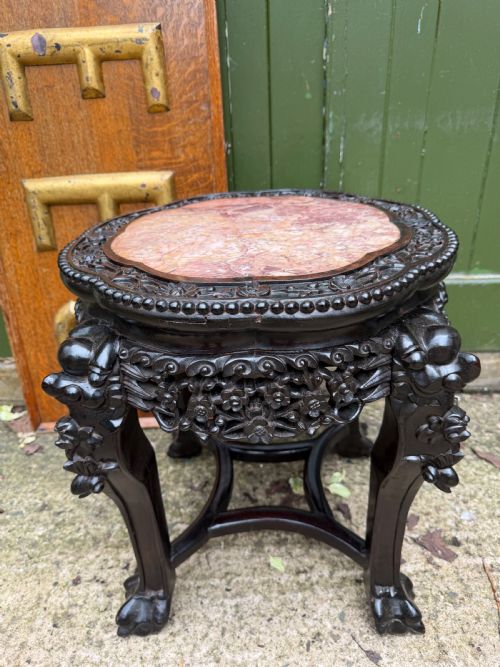
Construction relies heavily upon dense Asian hardwoods such as rosewood, padouk, and hongmu, alongside ebonised timber and occasional mother-of-pearl inlay. Carpenters shaped these dark woods into intricate frames featuring carved details.
The defining feature of these pieces is the inset stone surface, predominantly utilising variegated rouge marble or pink marble fitted snugly into the wooden framework to provide a cool, flat display area.
Several stands feature subtle mother-of-pearl inlays that catch the light unexpectedly in a dimly lit corner.
What varies in quality
Quality rests upon the depth and crispness of the wood carving, the selection of dense timbers like hongmu or rosewood, and the quality of the inset marble top. Pieces with rich figuring in the marble and substantial weight in the timber represent the higher end of the range.
Construction methods also dictate grade, where tight joinery and well-matched pairs command greater attention than simple utility tables. The complexity of the floral or geometric carving around the apron separates standard planters from superior examples.
The Chinese Marble Urn Stand Glossary
- Hongmu
- A dense, heavy tropical hardwood used in traditional Chinese furniture making. It translates literally to red wood.
- Jardiniere
- A large ornamental pot or container for holding flowers or plants, often set upon a dedicated low stand.
- Padouk
- A durable, heavy timber with a reddish hue utilised in fine nineteenth-century Chinese cabinetwork.
- Rouge marble
- A decorative limestone featuring deep reddish and pink tones with prominent veining, frequently chosen for tabletop inserts.
- Qing Dynasty
- The final imperial dynasty of China, spanning from the seventeenth to the early twentieth century, whose stylistic traditions heavily influence these stands.
Chinese Marble Urn Stand: Frequently Asked Questions
What is a chinese marble urn stand used for?
These sturdy tables serve as elevated platforms for heavy ceramic vessels, large flower pots, and decorative urns. Their solid construction prevents tipping when supporting weighty objects.
Beyond botanical displays, they function as occasional side tables or lamp stands within a room. The stone inset surface provides a practical, heat-resistant top for everyday items.
How do I date a nineteenth century urn stand?
Dating relies upon examining the timber density, the style of the carving, and the specific characteristics of the marble insert. Pieces from the late nineteenth century often reflect Victorian or late Qing dynasty design motifs.
Construction techniques, such as traditional joinery without modern metal fasteners, also help determine age. Comparing the piece to documented examples from the eighteen-eighties and nineties clarifies its era.
Are these stands strong enough for heavy plants?
These pedestals are built specifically to bear substantial weight from large ceramic planters and stone urns. The combination of dense rosewood, padouk, or hongmu provides exceptional structural integrity.
The heavy marble inset further strengthens the centre of the table, ensuring the top remains rigid under pressure. Consequently, they handle heavy floral arrangements with ease.
How do I care for the marble top?
The stone surface requires only simple dusting and occasional wiping with a damp cloth to maintain its finish. Avoid harsh chemical cleaners that might etch or dull the polished marble.
Treat the surrounding hardwood frame with a suitable wax or polish appropriate for dense timbers. This routine preserves both the wood and the stone over years of daily use.