

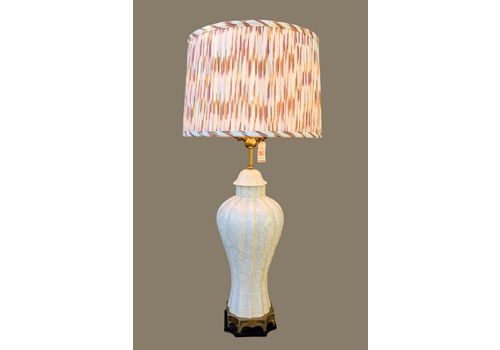
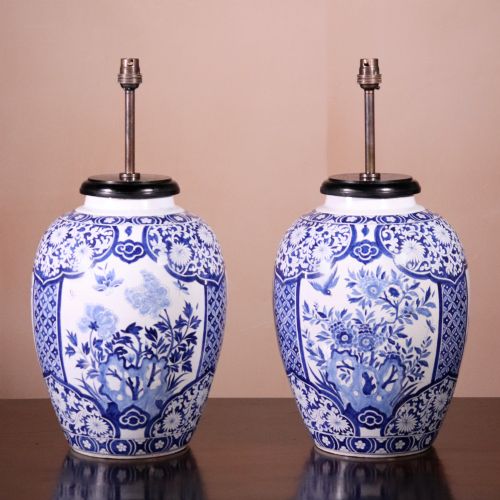


Chinese Jar Table Lamp
A chinese jar table lamp brings porcelain history into a room, offering warm light through hand-painted floral motifs and ginger jar forms.
Chinese Jar Table Lamp
When you search for a chinese jar table lamp, you encounter conversion pieces built from nineteenth-century porcelain vessels and ginger jars. These domestic fixtures combine Far Eastern ceramic traditions with period European lighting adaptations.
The most common form on this page pairs a blue and white porcelain ginger jar with brass or wood components. Collectors frequently meet examples bearing famille rose or celadon palettes alongside prunus blossom patterns.
Vessels span the nineteenth century, including specific dates around eighteen eighty and nineteen hundred. Many survive as pairs or substantial monumental single lamps.
Markers of distinction
The finest examples display crisp hand-painted detail across the porcelain surface, whether in delicate blue and white or polychrome famille rose. Rich depth in the glaze and well-preserved enamel colours elevate certain pieces above standard export wares.
Proportion and mounting quality also dictate worth, particularly when ormolu or cast brass elements integrate seamlessly with the jar. Matched pairs command greater presence than single lamps due to the difficulty of finding symmetrical antique vessels.
Chinese Jar Table Lamp Retail Price Guide 2026
Typical asking prices for chinese jar table lamp among the pieces listed under this phrase on Sellingantiques today, from the lower quarter to the upper quarter. They describe what is for sale here now, not the wider market.
Ginger jars once stored spices before finding a second life holding brass lamp fittings.
Samson Porcelain
The Chinese Jar Table Lamp Glossary
- Famille Rose
- A polychrome ceramic palette dominated by opaque pink enamel introduced during the Qing dynasty. This colouring technique allows for subtle shading on floral and figurative subjects.
- Celadon
- A pale green jade-like glaze fired over a high-iron clay body. It creates a subtle translucent finish characteristic of classical Far Eastern ceramics.
- Ginger Jar
- A broad-shouldered ceramic storage vessel with a domed lid. These utilitarian pots frequently serve as the primary body for converted table lamps.
- Ormolu
- Gilded bronze used for decorative mounts and bases. It provides a bright metallic contrast to nineteenth-century porcelain bodies.
- Chinoiserie
- European artistic interpretation of Chinese decorative motifs. This style heavily influenced the mounting and display of export porcelain in period interiors.
Chinese Jar Table Lamp: Frequently Asked Questions
How do I choose a lampshade?
Select a shade that matches the widest diameter of the porcelain jar below it. Silk or neutral linen fabrics complement the intricate hand-painted patterns without competing for attention.
Ensure the height of the shade leaves the upper neck and mount of the jar visible. Traditional proportions keep the lighting balanced against the decorative ceramic body.
Can these lamps be rewired safely?
Most antique lamps accommodate modern electrical wiring through their existing central brass piping. Professional rewiring preserves the original ceramic body while meeting current safety standards.
Consult a qualified electrician to check the internal brass fittings and switch mechanisms. This protects the historic porcelain from stress during the update.
Are ginger jar lamps stable?
The heavy porcelain bodies provide a naturally low centre of gravity. Fitted brass, wood, or ormolu bases further anchor the structure against accidental knocks.
Position the lamp on a solid side table or sideboard away from busy walkways. Their substantial weight helps them stand securely despite their height.
How do I date these ceramics?
Examine the base, glaze characteristics, and cobalt blue tones for nineteenth-century manufacturing traits. Crackleware finishes and specific export styles point toward the late Qing period.
Compare the mounting hardware and wiring access points with established period examples. Brass components and mounting styles often corroborate the age of the ceramic body.