



Celadon Porcelain Table Lamps
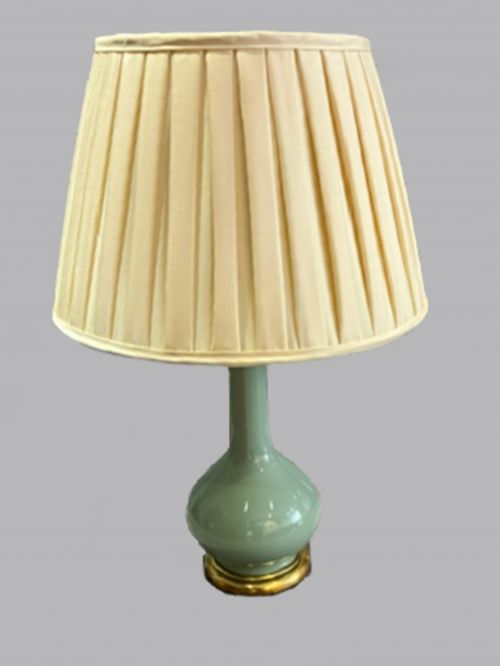
Celadon porcelain table lamps bring soft jade green tones and sculptural presence to an interior, drawn from Chinese export vessels and French nineteenth century designs.
Celadon Porcelain Table Lamps
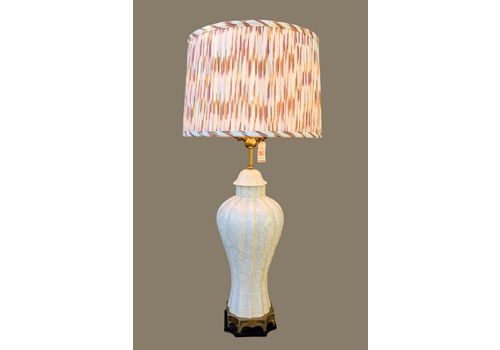
These pieces combine historical ceramic vessels with lighting fittings, creating functional objects that retain their original sculptural form. When searching for celadon porcelain table lamps, buyers encounter both Chinese export vases and nineteenth century French interpretations.
The selection on this page centres on items from the nineteenth century, including specific dates such as 1880, 1890, and 1930, alongside Qing Dynasty influences. Forms range from monumental single vessels to balanced pairs mounted for domestic illumination.
Materials and construction
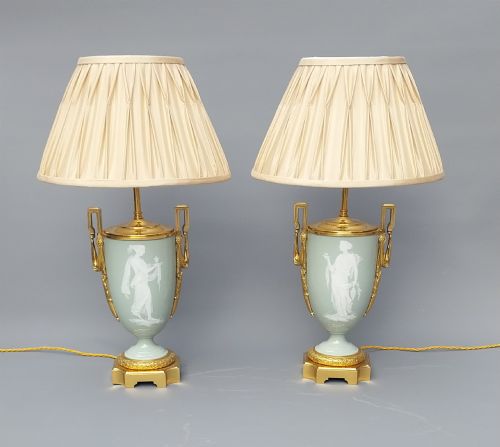
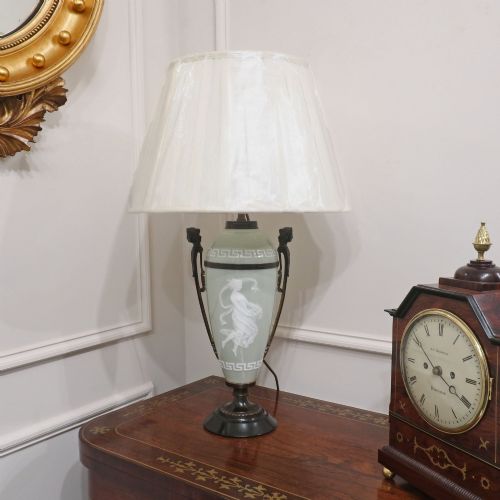
Ceramic bodies carry a distinctive celadon glaze, often complemented by hand applied blue decoration or pate sur pate detailing. These glazed surfaces provide the characteristic pale green coloration associated with the tradition.
Metal mounts in brass, bronze, and gilt bronze secure the ceramic bases and incorporate electrical or lighting components. Wooden and fabric elements complete the assembly, pairing structural support with shades suited to table placement.
Celadon Porcelain Table Lamps Retail Price Guide 2026
Typical asking prices for celadon porcelain table lamps among the pieces listed under this phrase on Sellingantiques today, from the lower quarter to the upper quarter. They describe what is for sale here now, not the wider market.
Some vessels began life holding water centuries ago before quietly retiring to illuminate nineteenth century drawing rooms as towering electric lamps.
Assessing quality
Quality rests upon the depth and evenness of the celadon glaze across the porcelain body, alongside the crispness of any supplementary pate sur pate work or blue decoration. The integration of metal mounts also matters greatly.
Gilt bronze and brass mounts that fit the ceramic contours precisely demonstrate superior craftsmanship compared to loose or heavy handed additions. Furthermore, the overall proportion of the vessel dictates how successfully it translates into a lamp.
The Celadon Porcelain Table Lamps Glossary
- Celadon glaze
- A transparent green glaze fired over a porcelain body, producing subtle variations in tone from grey green to seafoam. This finish originates from long established East Asian ceramic traditions.
- Pate sur pate
- A ceramic decorating technique where liquid clay is built up in successive layers on a contrasting body to create a low relief cameo effect. French makers utilised this method extensively in the nineteenth century.
- Gilt bronze
- Copper alloy cast and finished with a layer of gold, providing a bright decorative mount for ceramic bases. It appears frequently on French nineteenth century pieces.
- Chinese export
- Porcelain manufactured in China specifically for Western markets, adapting traditional forms and glazes to European tastes. These pieces form a significant portion of the available lamp bodies.
- French neoclassical style
- A design movement drawing inspiration from classical antiquity, characterised by symmetry, restrained ornamentation, and formal mounts. This style influences many nineteenth century European adaptations.
Celadon Porcelain Table Lamps: Frequently Asked Questions
What periods do these lamps come from?
The listings span the nineteenth century and extend into the early twentieth century, specifically incorporating items dated around 1880, 1890, and 1930. These dates reflect both the age of the original ceramic vessels and the subsequent period of mounting.
Design influences range from Qing Dynasty production to French neoclassical interpretations of the late nineteenth century. Each piece bridges historical ceramic traditions with later adaptation for interior lighting.
Are these lamps sold as pairs?
Many listings comprise matched pairs of lamps created from corresponding vases, whilst others stand as single monumental pieces. Pairs provide symmetry for sideboards or mantelpieces.
Single lamps offer a strong focal point for desks or smaller tables. Both configurations utilise the substantial presence of celadon vessels.
How do I identify French versus Chinese pieces?
Chinese pieces typically feature traditional celadon glazes on export vases dating from the nineteenth century or earlier Qing Dynasty eras. Their forms follow classic vessel shapes adapted later into lamps.
French pieces often incorporate distinct elements such as gilt bronze mounts and pate sur pate decoration, reflecting nineteenth century European craftsmanship applied to imported or emulated ceramics.
What materials make up these lamps?
The primary material is ceramic finished with a celadon glaze, sometimes featuring blue painted decoration or layered pate sur pate work. This ceramic body forms the core of the lamp.
Supporting elements include brass, bronze, gilt bronze, wood, and fabric used for mounts, fittings, and shades. These secondary materials complement the ceramic colour and weight.