



Chinese Hardwood Vase Table
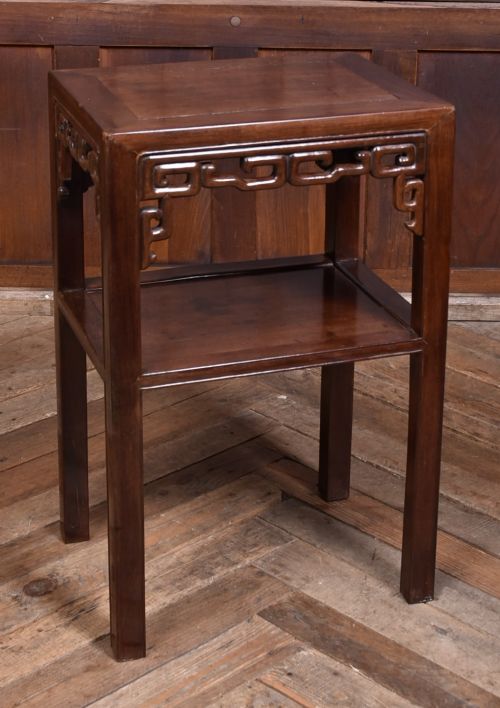
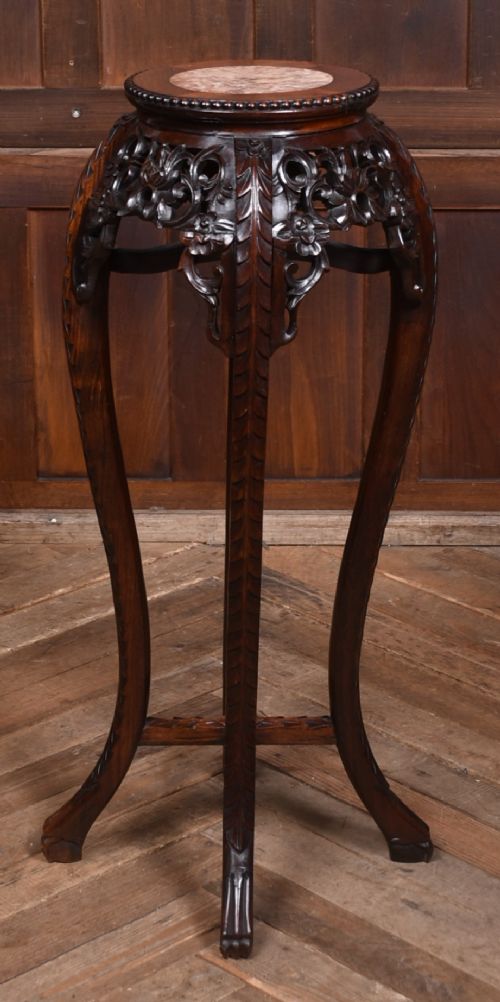
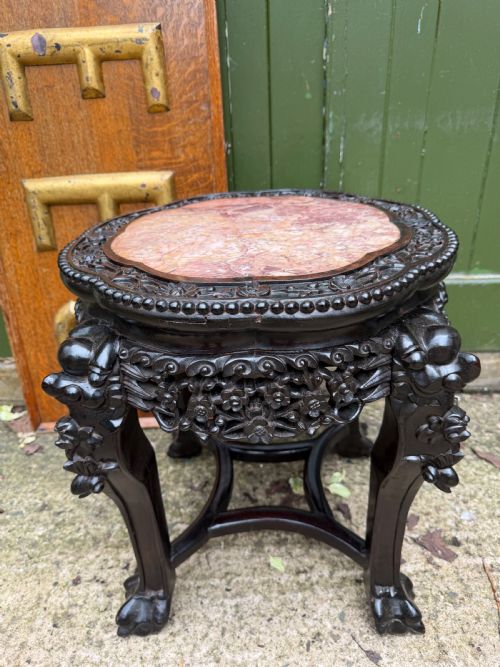
These Chinese hardwood vase tables are solid timber stands designed to elevate decorative vessels, appearing here in nineteenth-century and early twentieth-century forms.
Chinese Hardwood Vase Table
A Chinese hardwood vase table serves primarily as a sturdy pedestal or display support for planters, urns, and jars within domestic interiors. These low tables and plant stands arrive in various formats, ranging from simple occasional tables to highly carved hexagonal lamp tables and low jardiniere stands.
The pieces encountered on this page span the nineteenth century through to the Edwardian era and the nineteen-thirties, reflecting both late Qing Dynasty traditions and Chinese Export production. Buyers commonly meet items described as plant stands, urn stands, or display stands alongside standard vase tables.
Forms vary from square low tables to hexagonal surfaces and traditional pillar pedestals. Many examples incorporate inset marble tops designed to protect the timber surface from dampness and moisture when holding living plants or filled vases.
Materials and construction
Construction relies heavily on dense timbers such as rosewood, huali wood, hongmu, mahogany, and ebonised wood, often finished with traditional lacquer techniques. These durable woods provide the structural strength required to support heavy stone and ceramic vessels without warping.
Carving is a central technique seen across the stock, utilising intricate hand-carved detailing on aprons and legs in the Chinese traditional and Qing styles. Inset variegated rouge marble tops are fitted directly into the timber frames to create a contrasting, resilient display surface.
Several stands double happily as wine tables, proving that nineteenth-century artisans anticipated the modern need for a handy spot for a glass.
Distinctions in quality
Quality rests primarily on the density and choice of timber, with dense hardwoods like huali and hongmu sitting at the higher end compared to standard mahogany or ebonised timber. The crispness and depth of the hand carving on the aprons and legs further separate standard production pieces from finer studio work.
The integration of the inset marble top matters greatly, particularly the quality and colour variation of the rouge stone and how flush it sits within the surrounding wood. Proportion and structural stability also define the better examples, ensuring the stand remains balanced when holding a heavy vase.
The Chinese Hardwood Vase Table Glossary
- Hongmu
- A dense, dark traditional Chinese hardwood used extensively for fine furniture and display stands. It translates literally to red wood and is prized for its weight and rich tone.
- Huali wood
- A prized fragrant hardwood from the rosewood family utilised in traditional Chinese furniture making. It exhibits striking grain patterns that respond well to detailed carving.
- Jardiniere stand
- A tall or low table specifically constructed to hold a flower pot or decorative plant container. These often feature water-resistant tops such as inset marble.
- Qing Dynasty
- The last imperial dynasty of China, lasting from seventeen-sixteen forty-four to nineteen-twelve. Many pieces on this page date from the late nineteenth century of this period.
- Chinese Export
- Goods manufactured in China specifically for Western markets during the nineteenth and early twentieth centuries. These items often blend traditional Eastern construction with styles favoured by European buyers.
Chinese Hardwood Vase Table: Frequently Asked Questions
What were Chinese vase tables used for?
These tables were built to elevate heavy porcelain vessels, urns, and plant pots off the floor for better viewing. They also served functional roles in domestic rooms as lamp tables or occasional side tables.
In traditional interiors, placing a prized vase upon an elevated stand helped protect the ceramic piece and highlighted its craftsmanship. Today, they continue to function as plant stands or display pedestals for decorative objects.
How do I identify a Qing Dynasty vase table?
Identification relies on observing traditional Chinese carving motifs, dense timber species such as hongmu or huali, and construction methods typical of the late nineteenth century. Many pieces carry clear stylistic markers associated with late Qing workshop production.
Examining the joinery and the integration of any inset marble top also helps establish the period. Consulting the listed dates helps place individual stands within the broader nineteenth-century or Edwardian timelines.
Are these tables sturdy enough for heavy plants?
Hardwood construction provides exceptional strength, making these stands well suited for supporting heavy ceramic planters and stone urns. The dense nature of rosewood and hongmu prevents the legs from bowing under substantial weight.
Additionally, the inclusion of an inset marble top prevents water damage from damp plant pots. This combination of sturdy timber and stone creates a durable platform for everyday botanical display.
How do I style a Chinese vase table at home?
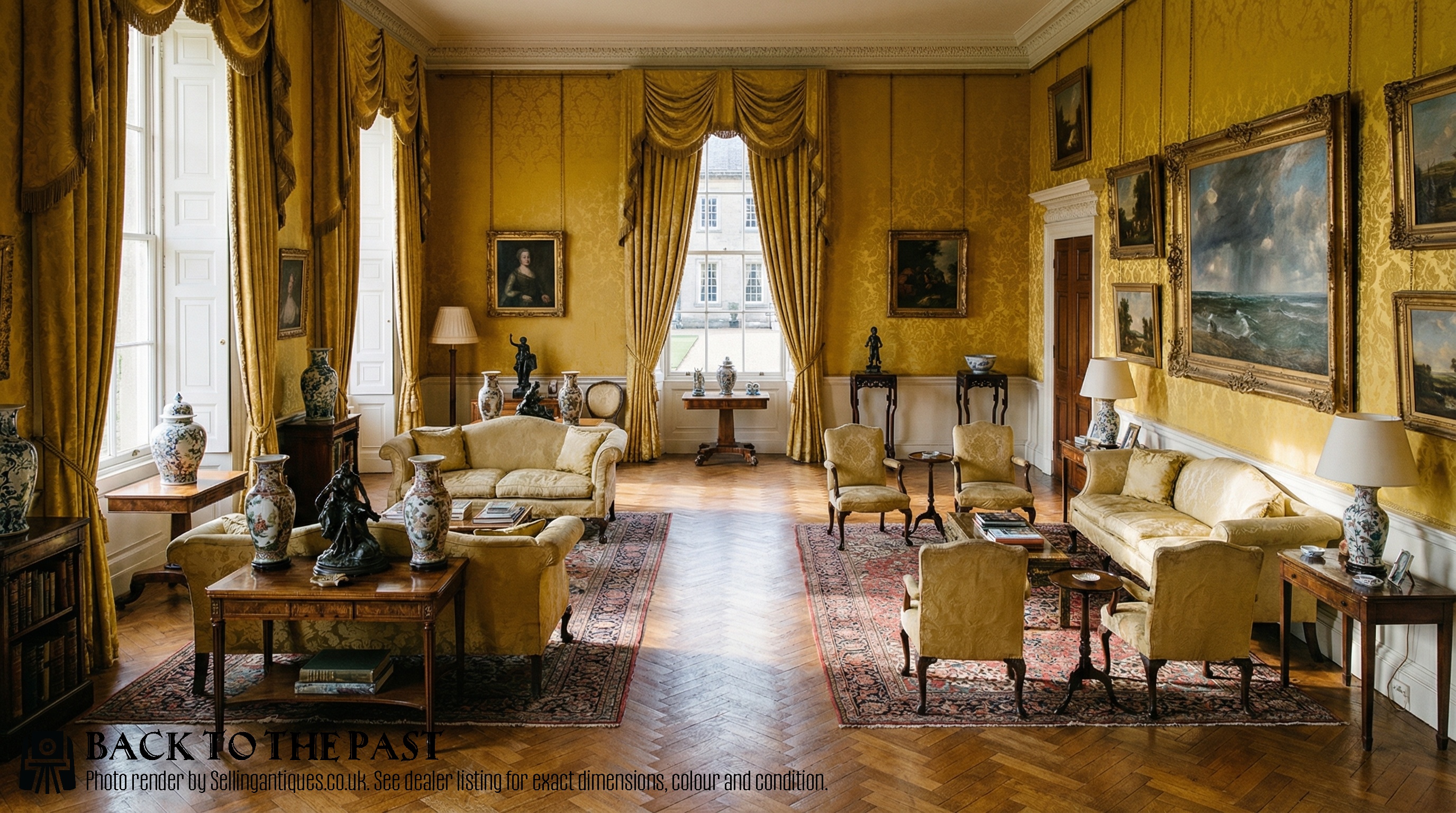
These versatile stands work effectively in living spaces as standalone display pedestals or paired as matching side tables. Their compact footprints allow them to fit into corners or beside seating areas without overwhelming the room.
To honour their original purpose, place a ceramic vase, bronze urn, or potted plant on top of the marble or timber surface. Their decorative carved aprons complement both traditional interiors and modern minimalist settings.