




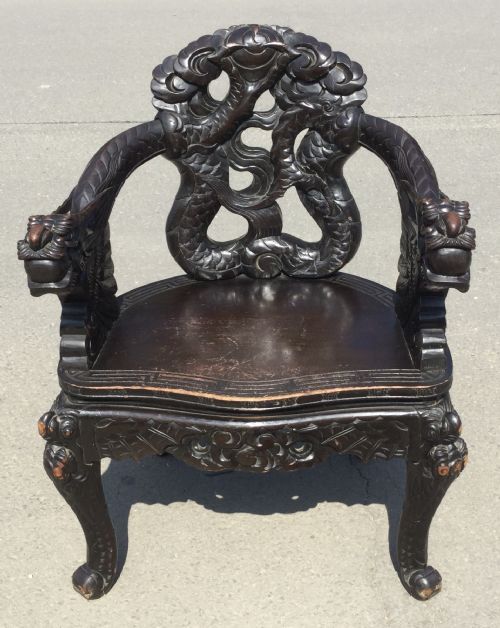
Chinese Hardwood Throne Chair
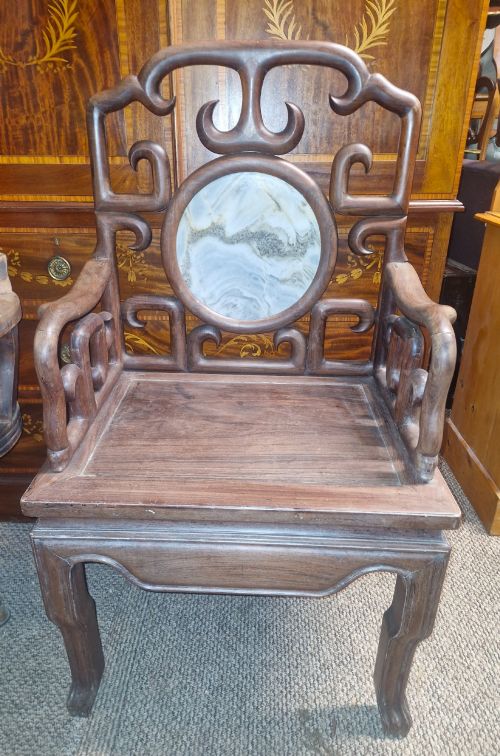
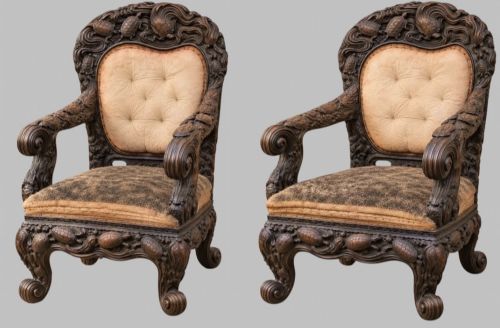
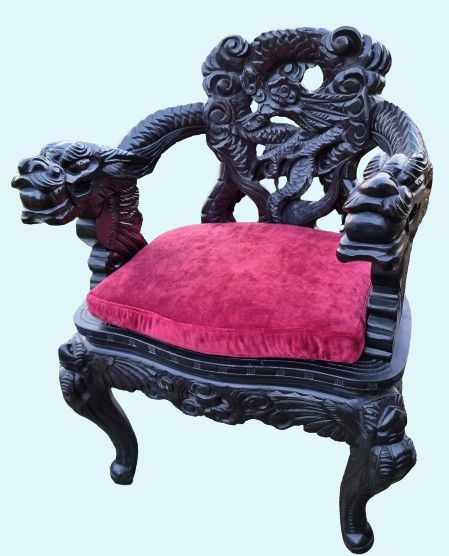
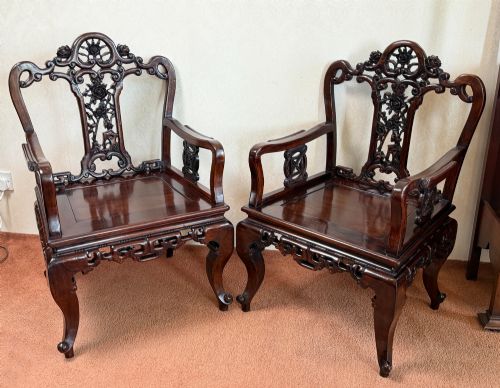
These heavy chinese hardwood throne chair pieces bring commanding presence and intricate nineteenth-century carving into a room.
Chinese Hardwood Throne Chair
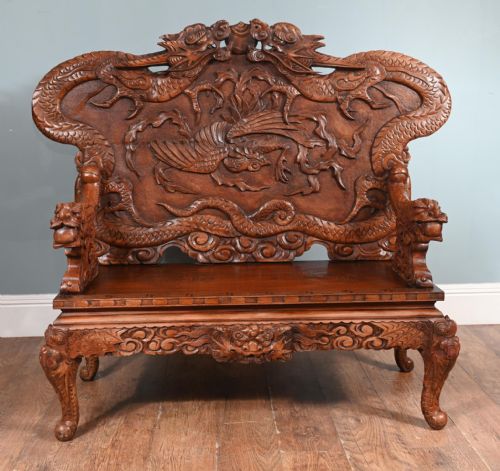
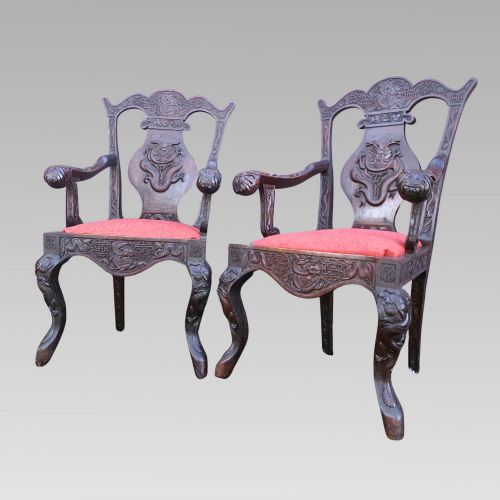
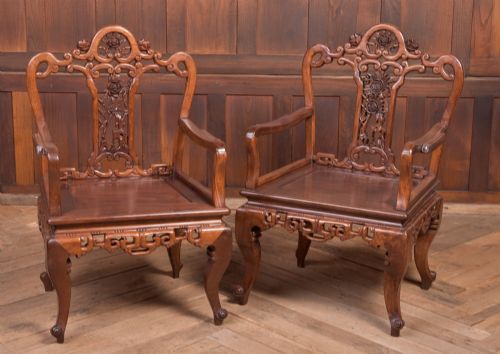
A chinese hardwood throne chair represents substantial seating originating predominantly across the nineteenth century, including specific dates from eighteen eighty to nineteen twenty. Buyers examining these listings encounter armchairs, benches, settles, and occasional matching side table sets designed with commanding proportions. The selection frequently includes horseshoe-back forms and regional Qing dynasty styles.
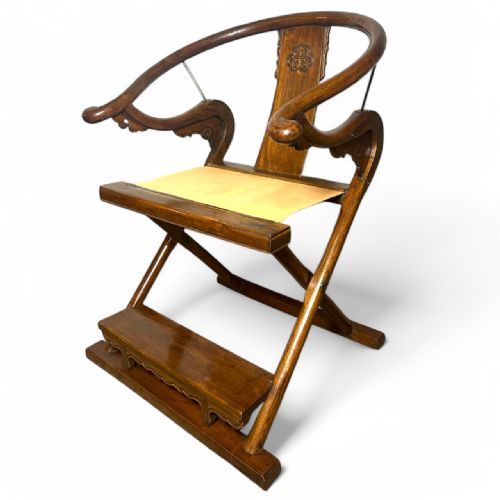
The objects derive from traditional Chinese workshops and export production, reflecting distinct historical periods such as the Qing dynasty. Most examples materialise as single armchairs or matched pairs intended for formal reception spaces. The forms range from high-backed folding variants to sturdy hall chairs and intricately carved settle benches.
Materials and construction
Construction relies heavily upon dense timbers including rosewood, hongmu, teak, and general dark hardwoods. These heavy materials provide the structural integrity required for deep relief carving and large seating platforms. Artisans frequently integrated contrasting elements such as marble seat panels and cinnabar lacquer surfaces.
Joinery methods support substantial frames without relying on modern fasteners, allowing timbers to expand and contract naturally. Surface treatments combine waxed wood finishes with detailed hand-carved dragon motifs and traditional ornamentation. Upholstery appears selectively, utilising textiles such as velvet on specific seating variants.
Chinese Hardwood Throne Chair Retail Price Guide 2026
Typical asking prices for chinese hardwood throne chair among the pieces listed under this phrase on Sellingantiques today, from the lower quarter to the upper quarter. They describe what is for sale here now, not the wider market.
Listings feature items spanning the nineteenth and early twentieth centuries, incorporating materials such as rosewood, teak, marble, and lacquer.
Judging quality
Quality rests upon the density of the chosen timber and the depth of the hand-carved ornamentation. Superior examples display crisp relief work on dragon motifs and structural elements without softening of the carved lines. The integration of inset marble panels or high-grade hongmu elevates the standing of an individual piece.
Proportion and symmetry dictate the visual weight of the seating, particularly within matched pairs. Pieces demonstrating refined joinery alongside intact original lacquer or polished hardwood surfaces command stronger interest. The complexity of the frame, such as horseshoe-back curves or folding mechanisms, further distinguishes finer examples.
The Chinese Hardwood Throne Chair Glossary
- Hongmu
- A dense, heavy tropical hardwood prized in traditional Chinese furniture making for its deep colour and durability. It translates literally to red wood.
- Horseshoe-back
- A chair design featuring a continuous curved crestrail that sweeps forward to form the armrests. This ergonomic form dates back centuries in Chinese woodworking.
- Cinnabar lacquer
- A traditional coating built from multiple layers of resin mixed with mercuric sulphide powder. Artisans carve intricate patterns directly into the thick hardened layers.
- Settle
- A wooden bench with a high back and solid armrests designed to block drafts in large rooms. These functional seats often include integrated storage or elaborate panel carving.
Chinese Hardwood Throne Chair: Frequently Asked Questions
How do I identify a Qing dynasty chair?
Look for distinct stylistic markers such as deep relief dragon carvings, formal symmetry, and traditional joinery methods utilised during the nineteenth century. The presence of dense timbers like hongmu or rosewood further supports this attribution.
Examine the overall proportion and the crispness of the hand-carving. Pieces bearing horseshoe-back forms or integrated marble panels typically align with the craftsmanship of that period.
Are these chairs comfortable for daily use?
These seating pieces were engineered for formal reception and ceremonial display rather than lounging. The upright wooden backs and solid hardwood seats encourage an intentional posture.
Many owners add custom silk or velvet cushions to soften the seating surface. This adaptation makes them practical for everyday living while preserving the historic timber.
What is hongmu wood?
Hongmu is a categorical term used by Chinese craftsmen to describe various dense, dark tropical hardwoods. It includes species that finish with a rich, polished surface and immense structural weight.
Furniture built from this material resists warping and supports intricate hand-carved details. Over time, the timber develops a deep natural patina.
How should I care for a hardwood chair?
Maintain the timber by keeping the piece away from direct heat sources and rapid humidity shifts. Apply a neutral paste wax occasionally to nourish the hardwood surface.
Dust the intricate carvings regularly with a soft, dry brush to prevent particle buildup in the crevices. Avoid using liquid polishes that might damage historic finishes.