



Hongmu Armchair
A hongmu armchair is a substantial seat of dark tropical timber that brings architectural presence and formal balance to a room.
Hongmu Armchair
A hongmu armchair sits at the heavier end of traditional Chinese seating, combining deep reddish-brown timber with upright frames and structured panel backs. These chairs emerge primarily from the nineteenth century and the early decades of the twentieth century, often following Qing Dynasty traditions or later Qing styles.
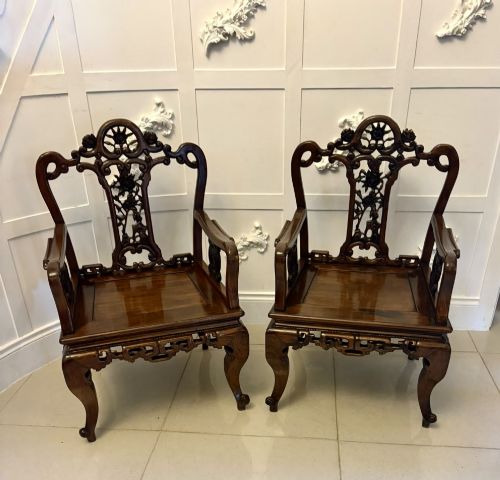
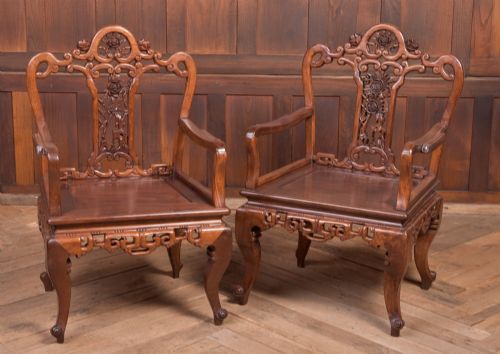
The buyer meets these pieces in various configurations, ranging from single grand throne chairs to pairs intended for formal reception rooms and larger suites that include side tables, benches or matching hall furniture. Many examples incorporate carved details along the crest rail and apron, while others rely on the dense grain of the wood for their visual impact.
Originating from Chinese workshops, these armchairs span periods from the mid-nineteenth century up to nineteen-twenty, encompassing both traditional forms and transitional pieces from the late nineteenth and early twentieth centuries. The selection on this page shows a strong concentration of pairs and throne chairs built from dense hardwoods.
Materials and construction
Makers utilised dense tropical timbers grouped under the term hongmu, alongside general Chinese hardwoods and rosewood, ensuring a heavy carcass capable of supporting intricate joinery without metal fasteners. These dense woods tolerate deep carving along the backsplats and armrests, allowing artisans to shape panels with floral or geometric motifs.
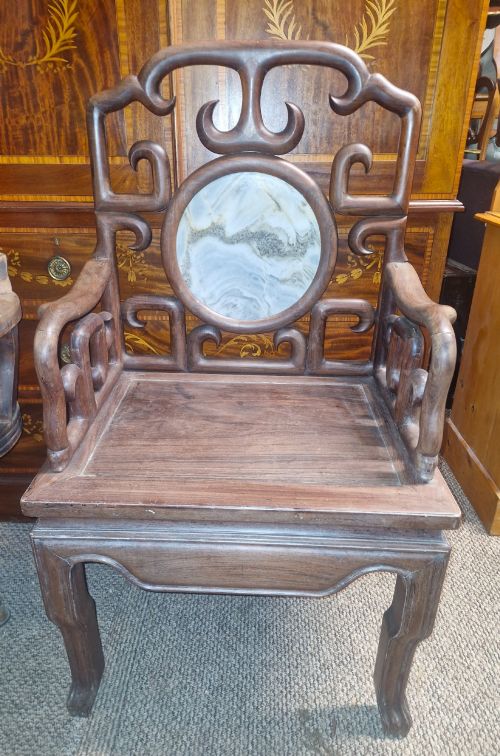
Select examples incorporate contrasting materials such as marble inset into the back panel to provide a cool, decorative surface, or mother-of-pearl inlay dotted across the wooden frame to catch the light. The joinery relies on traditional interlocking wooden joints that hold the uprights, seat frames and stretchers firmly in place across decades of use.
Hongmu Armchair Retail Price Guide 2026
Typical asking prices for hongmu armchair among the pieces listed under this phrase on Sellingantiques today, from the lower quarter to the upper quarter. They describe what is for sale here now, not the wider market.
Materials appearing across the current inventory include rosewood, marble inserts, mother-of-pearl, and general Chinese hardwoods.
Judging quality in a hongmu armchair
Quality rests upon the depth and crispness of the carving, where sharper lines and undercut foliage indicate a more confident hand in the workshop than shallow, mechanical incisions. The choice of timber also dictates the finish, with heavier, more richly figured rosewood and designated hongmu commanding greater visual depth than plainer utility hardwoods.
Proportion and symmetry separate standard seating from exceptional throne chairs, particularly in the balance of the armrests and the height of the back panel. The integration of secondary materials, such as a well-centred marble disc or precisely set mother-of-pearl, elevates the piece from basic seating to high-status furnishing.
The Hongmu Armchair Glossary
- Hongmu
- Red wood in translation, this term covers a category of dense, heavy tropical hardwoods used in traditional Chinese furniture making. It is prized for its natural dark lustre and weight.
- Throne chair
- A large, imposing armchair with an elevated back and substantial arms designed for formal reception spaces. These pieces command attention through their scale and heavy timber presence.
- Mother of pearl
- The iridescent inner layer of certain mollusc shells, cut into thin pieces and embedded into wooden channels for decoration. It creates bright, shimmering contrasts against dark wood.
- Hardwood
- Slow-growing timber from broad-leaved trees that yields a dense, durable material resistant to wear. In these listings, it forms the structural core of every chair.
Hongmu Armchair: Frequently Asked Questions
How do I identify a Qing Dynasty chair?
Qing Dynasty chairs are identified by their heavy hardwood construction, structured frames, and traditional carved motifs along the backsplat and apron.
Many examples date from the nineteenth century and reflect classical Chinese aesthetic standards.
Where were hongmu armchairs used?
These armchairs served as principal seating in formal reception halls, parlours, and domestic interiors.
Pairs were frequently arranged symmetrically around a table to receive guests in traditional households.
How do I care for a hardwood armchair?
Maintain the timber by keeping it away from direct heat sources and sudden humidity changes that might stress the traditional joinery.
Dust the carved surfaces regularly with a soft, dry cloth to preserve the natural finish of the wood.