


Chinese Guardian Lion Sculptures
Chinese guardian lion sculptures stand as powerful protectors, bringing centuries of symbolic tradition and masterly material work into a room.
Chinese Guardian Lion Sculptures
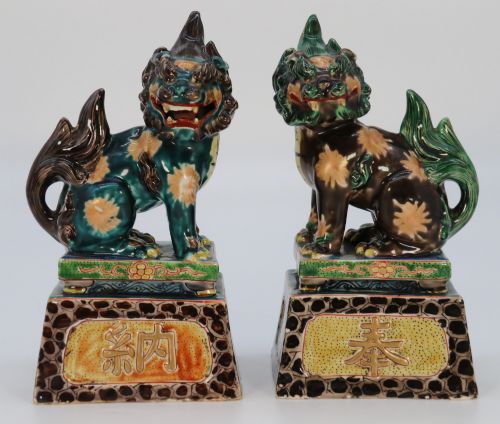
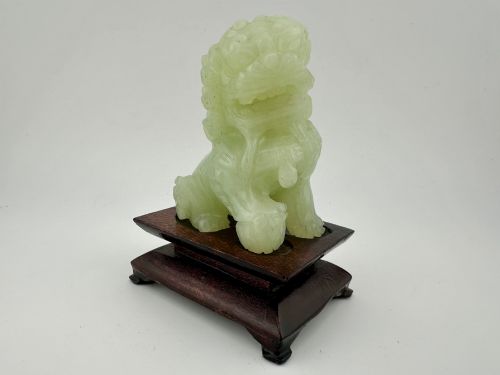
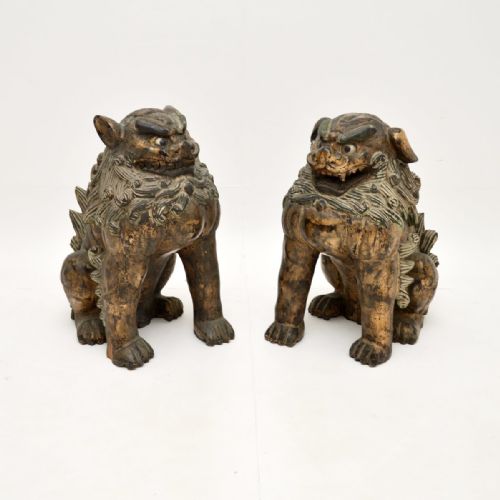
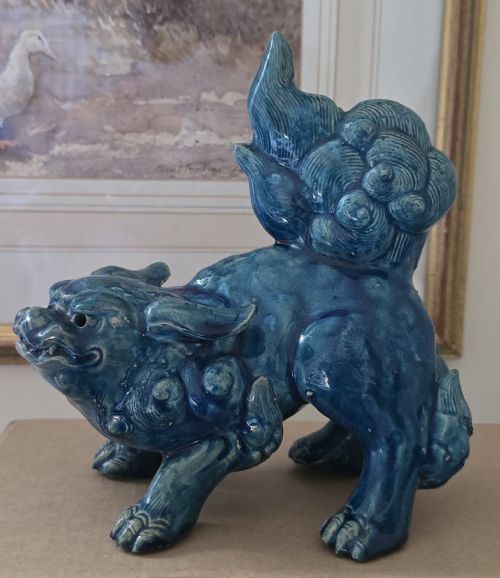
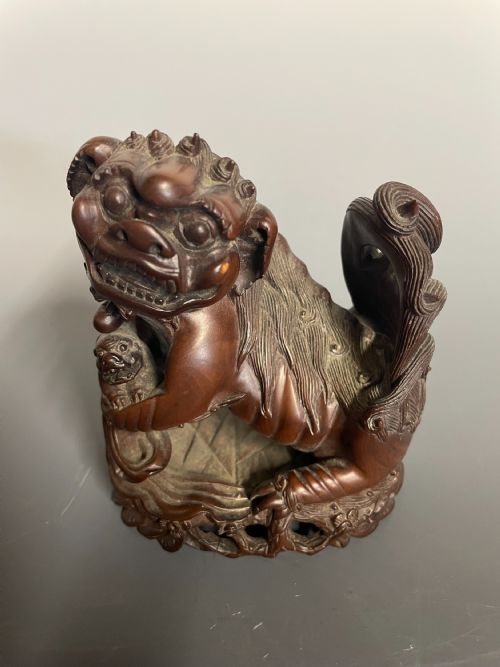
Chinese guardian lion sculptures, often recognised as foo dogs, temple guards, or shi shi figures, take the form of mythical beasts traditionally placed outside sacred spaces and homes to ward off malevolent forces. The selections gathered here span periods such as the Qing Dynasty and the Meiji Period, presenting sculptural forms that range from monumental temple guards to intricate desk accessories.
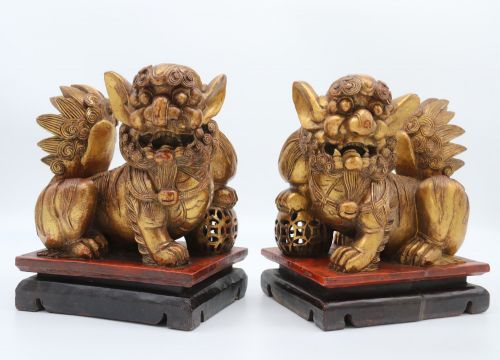
Buyers will encounter pairs carved from wood, cast in bronze, or shaped from soapstone, alongside porcelain and ceramic interpretations. These figures frequently appear seated upon plinths, with one paw resting upon a brocade ball or a young cub, embodying the balance of imperial power and protection.
Dating primarily across the eighteenth, nineteenth, and early twentieth centuries, these pieces demonstrate the enduring appeal of traditional Chinese and Tibetan Buddhist artistry. The variety extends to French cast iron interpretations and Japanese glazed figures, reflecting how far the stylistic influence of the guardian lion travelled.
Assessing quality
Age and material integrity play significant roles, with natural patination on bronze and untouched surfaces on carved wood indicating careful preservation over centuries. The presence of matched pairs also elevates a piece, as symmetry and coordinated detailing require higher initial craftsmanship.
Listings feature guardian lions rendered in carved wood, bronze, brass, soapstone, and porcelain across the eighteenth, nineteenth, and early twentieth centuries.
The Chinese Guardian Lion Sculptures Glossary
- Foo dog
- A colloquial Western term for Chinese guardian lions, derived from the Chinese word for Buddha or prosperity. These mythical creatures combine the traits of guardian lions and Pekingese dogs.
- Shi shi
- The traditional Japanese term for stone lion, referring to guardian figures heavily influenced by Chinese iconography. They frequently appear in Japanese art, including Meiji period works.
- Gilt
- A thin layer of gold applied to the surface of wood, bronze, or other materials to provide a rich metallic finish. It highlights decorative details on temple sculptures.
- Root wood
- Timber formed from the root mass of a tree, prized by carvers for its gnarled, organic grain patterns. Artisans incorporate these natural shapes into the bodies of figures.
- Qing Dynasty
- The final imperial dynasty of China, lasting from the seventeenth to the early twentieth century. This period produced many of the carved and enamelled guardian figures found in collections today.
Chinese Guardian Lion Sculptures: Frequently Asked Questions
Where were Chinese guardian lions placed?
Traditional placement for these guardian figures was outside the gates of imperial palaces, tombs, and temples to act as spiritual protectors. Smaller pairs were also positioned inside homes and halls to guard the interior.
Over time, smaller sculptural versions and incense burners found places on desks, altars, and mantelpieces within domestic spaces.
What materials are guardian lion sculptures made from?
Sculptors worked with a wide array of materials depending on the intended function and period. Common mediums include carved wood, boxwood, root wood, bronze, brass, soapstone, and porcelain.
Surfaces were frequently finished with gilt, lacquer, polychrome paint, or turquoise glazes to enhance the decorative impact of the figures.
How should I clean antique wood and bronze figures?
Wooden sculptures require gentle dusting with a soft, dry brush to prevent the accumulation of dirt in intricate crevices. Avoid liquid cleaners or polishes that might damage historic lacquer or gilt surfaces.
Bronze and brass pieces benefit from occasional light dusting, leaving the natural aged patina intact rather than attempting to polish them to a bright shine.