




Chinese Flower Stand Pair
A Chinese flower stand pair brings symmetry and architectural height to an interior, designed specifically to elevate prized plants and porcelain vessels.
Chinese Flower Stand Pair
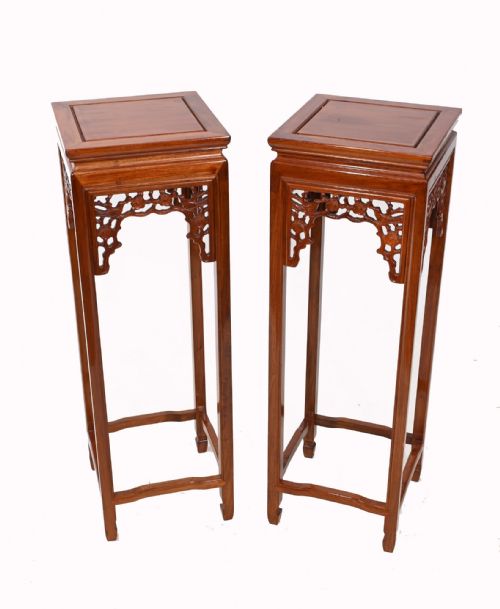
When searching for a chinese flower stand pair, collectors encounter matched sets of tall pedestals, low tables, and plant stands originating from the late nineteenth century and the early twentieth century. These objects function as paired architectural elements within a room, designed to display heavy ceramic vessels, bronze pieces, or botanical specimens at elevated heights.
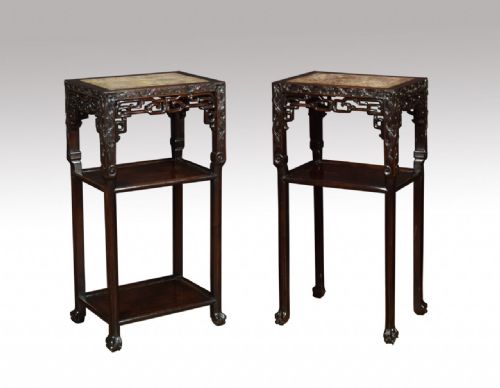
The pieces appearing on this page span the Victorian era, the Qing Dynasty, and the Chinese Republic Period, alongside interpretations in Chinoiserie and Qing Dynasty Style. Forms include two-tier stands, end tables, shaped pot stands, and tall pedestals.
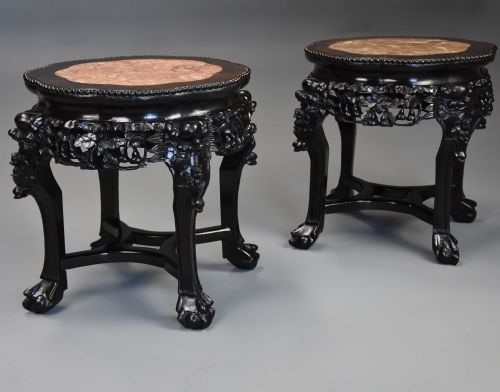
Makers and workshops constructed these pieces from dense tropical timbers, frequently incorporating inset marble panels or intricate mother-of-pearl inlay. The surviving examples demonstrate the enduring demand for balanced sets that anchor room layouts through symmetry.
How they were made
Craftsmen utilised dense hardwoods such as hongmu, huali, and rosewood, alongside ebonised wood and general hardwoods. These heavy timbers provided the structural integrity required to support weighty marble inserts and tall forms without warping.
Surfaces received decorative treatments including black lacquer, paint, and mother-of-pearl inlay, combined with detailed carving. Joinery methods allowed timber to expand and contract around stone inserts without fracturing the surrounding frame.
Listings feature pieces from the Victorian era, the Qing Dynasty, and the 1920s, constructed in rosewood, hardwood, and black lacquer with marble inserts.
What varies in quality
The standard of carving distinguishes standard production from superior examples, with finer pieces displaying deep relief work and crisp execution in the floral and foliate motifs. Sharp detailing along aprons and legs indicates greater time spent by the artisan.
Materials also dictate the tier of the piece, particularly the selection of the hardwood and the grain quality of the inset rouge marble tops. Intact mother-of-pearl inlay without missing tesserae elevates the integrity of the object.
The Chinese Flower Stand Pair Glossary
- Hardwood
- Dense timber species such as rosewood, huali, and hongmu used in traditional Asian furniture construction. These heavy woods resist sagging under substantial weight.
- Marble top
- A circular or shaped slab of stone, often rouge marble, fitted directly into the wooden frame of a stand. This provides a cool, flat surface impervious to moisture from plant pots.
- Mother-of-pearl
- Iridescent inner shell material cut into thin shapes and inlaid into wooden recesses to form floral or geometric patterns. It catches light against dark lacquered or polished timber surfaces.
- Tiered stand
- A piece featuring multiple levels for display, allowing objects to be arranged at varying heights within a single footprint. Two-tier variations offer additional display space.
- Qing Dynasty
- The final imperial dynasty of China, lasting from sixteen forty-four to nineteen twelve, encompassing the primary production periods for these carved hardwood stands.
Chinese Flower Stand Pair: Frequently Asked Questions
How were these stands used?
These pieces functioned in traditional interiors to elevate potted plants, bronze vessels, and decorative porcelain urns off the floor. Placing them in pairs created balanced visual symmetry on either side of doorways or furniture.
They also served as small side tables or end tables for holding lamps and tea items in reception rooms.
How do I style a pair today?
Position the stands symmetrically in an entrance hall, framing a doorway, or flanking a larger piece of furniture. Use them to hold trailing plants, ceramic vases, or sculptural lamps to add height variation to a room.
Keeping the pair together preserves their original decorative purpose and visual balance.
What woods were used?
Maker workshops utilised dense Asian hardwoods including rosewood, huali, and hongmu, alongside ebonised wood and general lacquered timbers. These heavy materials ensured stability for tall, narrow forms.
Surface finishes range from polished natural grain to black lacquer and painted highlights.