




Chinese Export China Plate
These Chinese export china plate examples bring centuries of traded artistry straight to your table.
Chinese Export China Plate
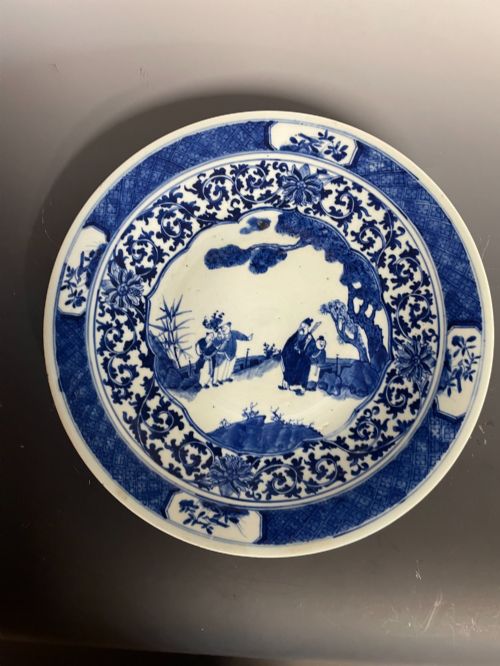
A chinese export china plate represents porcelain manufactured in China specifically for Western markets across the eighteenth and nineteenth centuries. You will most frequently encounter eighteenth century pieces attributed to the Qianlong period and Qing dynasty, alongside later nineteenth century Canton examples.
The forms extend beyond standard dining plates to include chargers, platters, soup plates, and matching teacups and saucers. Many feature specific heraldic coats of arms, floral motifs, bird designs, or narrative scenes produced for European and British patrons.
What Varies in Quality
Painting precision separates standard decorative vessels from exceptional artistic achievements. Pieces with meticulous brushwork, complex heraldic arms, or detailed figural scenes command greater attention than simpler floral patterns.
The preservation of enamel colours and gold leaf over centuries dictates the visual strength of each surviving object.
Acrobats and circus performers occasionally tumble across eighteenth century saucer designs, proving that ancient porcelain makers appreciated good entertainment.
The Chinese Export China Plate Glossary
- Famille Rose
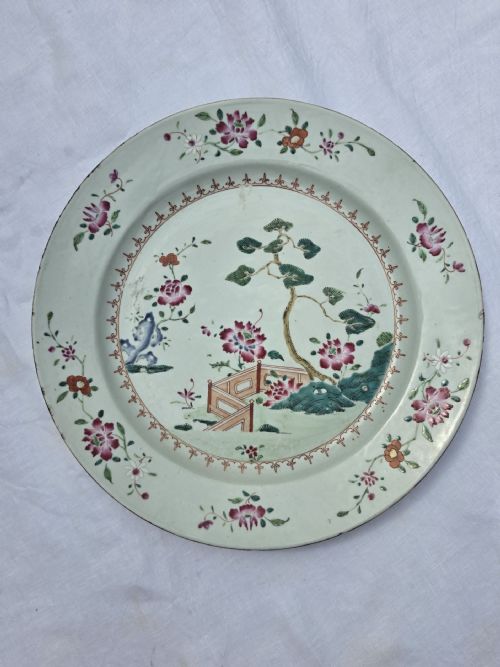
- A major palette of Chinese ceramic glazes introduced in the eighteenth century, distinguished by its opaque pink or rose enamel colour. This palette allowed artists to paint subtle tonal gradations.
- Armorial
- A ceramic design painted with a specific European family coat of arms or crest. These bespoke items were ordered directly by wealthy patrons.
- Mandarin Pallet
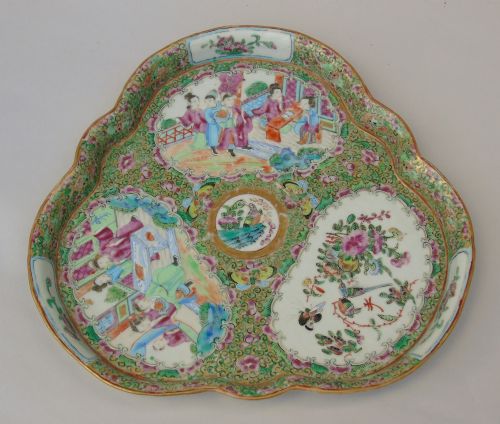
- A decorative scheme depicting elaborate interior or exterior figures in narrative scenes. These designs often illustrate courtly or domestic Chinese life.
- Hard-paste Porcelain
- A dense, vitrified ceramic composed of petuntse and kaolin fired at high temperatures. It forms the durable body of traditional Chinese export wares.
- Qianlong
- The sixth emperor of the Qing dynasty whose long reign encompassed a golden age of porcelain production. Pieces from this era often display exceptional technical refinement.
Chinese Export China Plate: Frequently Asked Questions
How were chinese export china plate services used originally?
Wealthy households used these armorial and decorated services for formal dining and displaying social status to guests.
Over time, many of these plates transitioned from dining tables to cabinet display pieces as their historical value grew.
Can I use my antique plate for everyday dining?
Hand-painted enamels and delicate porcelain bodies require careful handling that makes modern dishwasher use unsuitable.
Gentle hand washing preserves the fragile gold leaf and surface glazes for future generations.
How do I identify eighteenth century pieces?
Eighteenth century examples typically exhibit Qianlong period characteristics, including fine potting and specific famille rose or mandarin palette painting.
Examining the foot rim and paste consistency helps distinguish earlier Qing dynasty porcelain from nineteenth century Canton productions.
What is the difference between export and domestic wares?
Export ceramics were specifically tailored to Western tastes, incorporating European heraldry, shapes, and narrative motifs.
Domestic Chinese ceramics followed traditional aesthetic codes intended for local imperial or scholarly markets.