


Chinese Export Ceramic Lamps
Chinese export ceramic lamps bring centuries of far eastern artistry into a room as practical, glowing focal points.
Chinese Export Ceramic Lamps
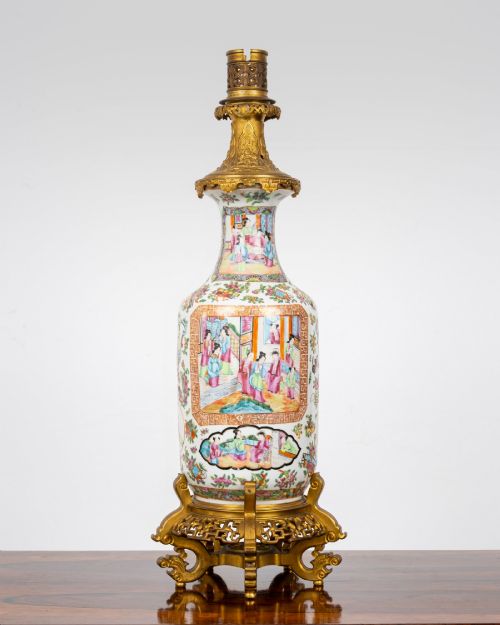
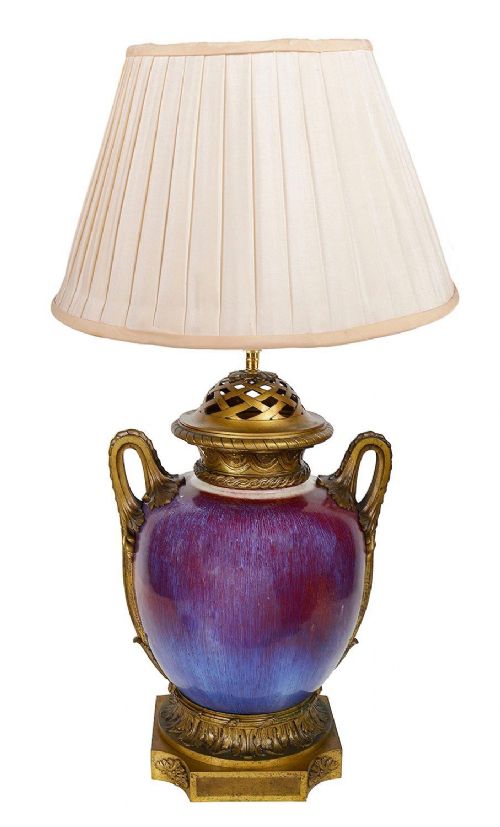
Chinese export ceramic lamps are decorative vases and jars transformed into table lighting, predominantly originating from the nineteenth century. These pieces combine historic ceramic bodies with later electrical fittings and metal mounts.
The most common forms encountered here are Rose Medallion and Famille Rose vessels, alongside celadon and blue and white prunus blossom vases. Many of these lighting conversions began life as ginger jars or decorative vases before receiving mounts.
Originating largely from the nineteenth century, with occasional eighteenth-century examples, these items reflect global trade and the Victorian taste for chinoiserie. Buyers often find pairs suitable for console tables or sideboards.
Materials and construction
The foundation of each piece is porcelain, shaped into vases or ginger jars and decorated with enamels, underglaze blue, or hand-painted polychrome scenes. Artisans applied rich colour palettes including pinks, greens, and gilt highlights to the ceramic surfaces.
Metal mounts in brass, ormolu, and gilt bronze secure the porcelain bodies and provide stable bases for lamp fittings. Fabric elements such as silk are occasionally utilised for complementary shades completing the assembly.
Some nineteenth-century ginger jars spent decades holding ginger before trading their lids for lamp bulbs.
Evaluating the pieces
Quality rests upon the crispness of the hand-painted enamel work and the richness of the gilding applied to the porcelain body. Finer examples display meticulous brushwork in floral panels and figural scenes rather than stencilled outlines.
The integration of metal mounts also dictates standard; cast ormolu and heavy brass bases fitted securely to the ceramic demonstrate superior craftsmanship compared to simpler utilitarian adaptations.
The Chinese Export Ceramic Lamps Glossary
- Famille Rose
- A prominent palette of opaque pink enamel introduced during the Qing dynasty. This colouring dominates many nineteenth-century export pieces.
- Celadon
- A pale green jade-like glaze fired onto porcelain. It creates a subtle translucent finish prized for its quiet elegance.
- Ormolu
- Gilded bronze used for decorative mounts and fittings. It adds warmth and structural support to the ceramic body.
- Prunus
- A motif depicting flowering plum blossoms against a cracked-ice blue background. This classic blue and white pattern appears frequently on export ginger jars.
- Rose Medallion
- A distinct style featuring panels of figures alternating with birds and flowers, richly bordered in gilt and pink. It is among the most recognisable export decorations.
Chinese Export Ceramic Lamps: Frequently Asked Questions
Are these original lamps?
Most pieces began as seventeenth to nineteenth-century vases or ginger jars that were subsequently converted into lamps by adding electrical wiring and metal mounts.
This adaptation process preserved fragile antique ceramics by giving them a modern domestic function.
How do I clean them?
Dust the porcelain and metal mounts gently with a soft dry cloth to protect the hand-painted enamel and gilding.
Avoid chemical cleaners or abrasive sponges which can damage the historic glaze and metallic finishes.
Can I find matching pairs?
Several listings feature matching pairs of vases converted into lamps, particularly within the Rose Medallion and celadon categories.
These symmetrical sets suit placement on matching side tables or mantelpieces.
What is export porcelain?
Export porcelain refers to ceramics manufactured in China specifically for overseas markets in Europe and the Americas during past centuries.
These wares often blended traditional Chinese forms with decorative styles that appealed to Western tastes.