




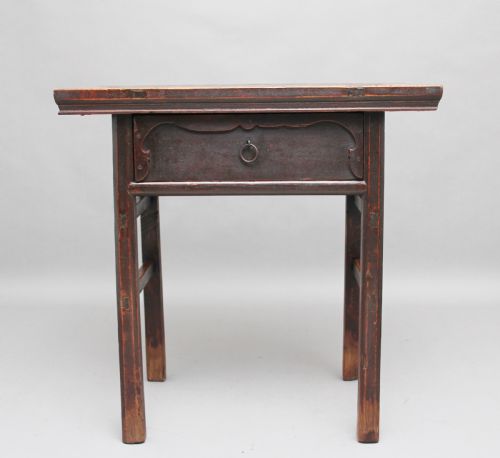


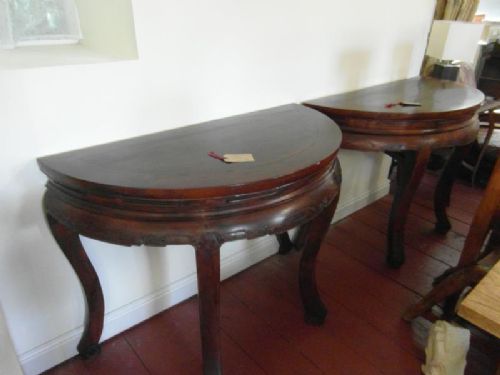


Chinese Elm Hall Table
A chinese elm hall table brings rustic warmth and enduring character to an entryway, offering a practical surface with authentic provincial heritage.
Chinese Elm Hall Table
When you search for a chinese elm hall table, you are looking at substantial wooden furniture originating from traditional Chinese workshops and provincial regions. These pieces span several centuries, with examples recorded from the eighteenth century through to the early decades of the twentieth century. They encompass various forms including console tables, side tables, writing desks, and altar tables.
The version you are most likely to encounter on this page is the nineteenth-century side table or console, often featuring practical drawers or simple linear proportions. These listings reflect traditional Chinese and Qing Dynasty styles, alongside provincial variations that prioritise functional utility. Altar tables and demi-lune pairs also appear among the selections.
The materials used across these pieces rely primarily on elm timber, complemented occasionally by hardwood, lacquer, and metal fittings such as brass or iron. Each piece demonstrates the enduring nature of timber construction developed through traditional craftsmanship. The variety spans from modest work tables to large altar styles.
How they were made
Construction relies heavily on solid elm timber, chosen for its fibrous grain and structural resilience in domestic furniture. Joinery techniques in these provincial and traditional pieces avoid modern fasteners, utilising interlocking wood joints that allow the timber to move naturally over time. Elm surfaces are often finished with traditional clear sealers or subtle lacquer applications.
Metal components such as brass and iron appear selectively as structural braces, drawer pulls, or decorative mounts on specific console and altar tables. Carved details emerge on particular nineteenth-century examples, showing hand-chiselled motifs without relying on synthetic adhesives or modern machinery. Timber selection balances structural strength with the characteristic grain patterns visible across the top surfaces.
Chinese Elm Hall Table Retail Price Guide 2026
Typical asking prices for chinese elm hall table among the pieces listed under this phrase on Sellingantiques today, from the lower quarter to the upper quarter. They describe what is for sale here now, not the wider market.
Some nineteenth-century elm work tables still bear the quiet ink stains of forgotten ledgers.
What varies in quality
The distinction between standard examples and finer pieces rests in the integrity of the timber preparation and the subtlety of the proportions. Superior pieces maintain balanced lines and original drawer configurations that reflect thoughtful provincial craftsmanship rather than hurried mass production. The depth of the elm grain and the harmonious ageing of the wood define the upper tier of these tables.
Hardware integration and joinery execution further separate the work. Fine pieces display precise fitting of brass or iron elements and stable construction that withstands centuries of use. The presence of traditional lacquer finishes applied with skill enhances the visual depth of the timber compared to heavier, uniform coatings.
The Chinese Elm Hall Table Glossary
- Elm
- A durable hardwood native to temperate regions, prized for its interlocking grain pattern and resistance to splitting. It serves as the primary material for the majority of these provincial tables.
- Console Table
- A long, narrow table designed to stand against a wall, frequently utilised in hallways and entrance spaces. These pieces often feature drawers for modest storage.
- Altar Table
- A traditional Chinese form characterised by elevated proportions and upturned ends, originally intended for ceremonial use. In domestic settings, they function as striking display surfaces.
- Qing Dynasty
- The final imperial dynasty of China, spanning from the seventeenth to the early twentieth century. Pieces attributed to this era reflect established traditional design canons.
- Demi-Lune
- A half-moon shape used for console tables designed to fit flush against a wall. They appear in pairs within traditional and provincial furniture groupings.
Chinese Elm Hall Table: Frequently Asked Questions
Where should I place a chinese elm hall table?
These tables suit narrow entranceways, hallways, and living rooms where a shallow surface is required. Their linear proportions allow them to sit flush against walls without obstructing pathways.
Purchasers often utilise the drawer variations for storing everyday items while displaying decorative objects on the main timber surface.
How do I care for elm furniture?
Maintain the timber by dusting regularly with a dry cloth and avoiding excessive moisture. Elm responds well to natural waxes applied sparingly to nourish the grain.
Keep the table away from direct heat sources and strong sunlight to prevent timber movement and preserve the traditional finish.
What is the difference between a console and an altar table?
Console tables generally feature flat tops and practical drawer configurations suited for everyday domestic storage. Altar tables typically present greater height, longer proportions, and distinct upturned flanges at the short ends.
Both forms utilise solid elm construction but serve different aesthetic and functional roles within traditional Chinese interiors.
How do I identify a nineteenth-century piece?
Nineteenth-century examples display hand-worked elm surfaces, traditional joinery methods, and patination acquired through decades of domestic use. They often incorporate simple iron or brass hardware rather than modern fixings.
Examining the underside and drawer interiors reveals the traditional construction techniques characteristic of this period.