


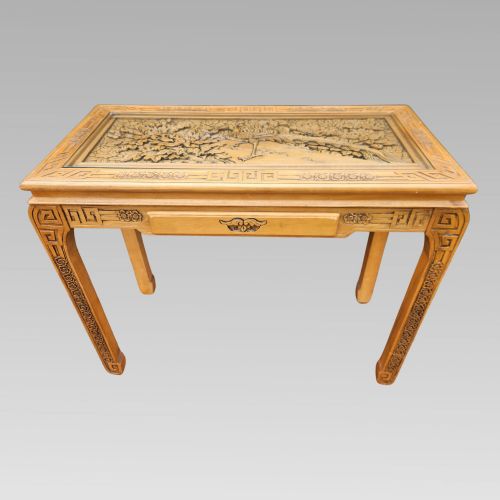


Chinese Wooden Entry Table
These Chinese wooden entry table pieces bring substantial timber presence and traditional joinery straight into a hallway, offering practical surface space with distinct historical character.
Chinese Wooden Entry Table
A Chinese wooden entry table encompasses substantial console tables, altar tables, and side cabinets designed with traditional forms and functional proportions. These items serve as strong focal points in hallways and living spaces, providing surface areas alongside storage options like drawers.
The selection here draws heavily from the nineteenth century, including pieces dated around nineteen hundred and nineteen thirty. Buyers frequently encounter elm and dark hardwood constructions shaped by Qing dynasty aesthetics and provincial Chinese traditions.
Alongside classic console configurations, the inventory includes altar styles and side cabinets originating from export and traditional workshops. Each variation reflects structural traditions handed down through generations of regional cabinet makers.
How they were made
Makers utilised resilient timbers such as elm, camphorwood, and dark hardwood to construct these tables, ensuring long-term durability. Brass fittings often accent the wooden structure, providing functional hardware for drawers and cabinet doors.
Carving and lacquer work appear across the surface designs, utilising techniques seen in red lacquer altar tables and carved console edges. Traditional Chinese woodworking methods prioritized stable joinery that allowed the timber to adapt to shifting environments.
Chinese Wooden Entry Table Retail Price Guide 2026
Typical asking prices for chinese wooden entry table among the pieces listed under this phrase on Sellingantiques today, from the lower quarter to the upper quarter. They describe what is for sale here now, not the wider market.
Listings feature items dated across the nineteenth century, nineteen hundred, nineteen thirty, and eighteen seventy, constructed primarily in elm and dark hardwood.
What varies in quality
The refinement of surface carving and the depth of the timber grain distinguish finer examples from standard production. Execution of traditional joinery determines structural integrity, while original lacquer finishes hold greater interest than later surface treatments.
Proportion and scale dictate the visual weight of the piece within an interior setting, with larger altar tables commanding a stronger presence. The integration of brass hardware and the preservation of original wood patination separate exceptional specimens from simpler functional items.
The Chinese Wooden Entry Table Glossary
- Console table
- A table designed to stand against a wall, frequently utilised in entrance halls or reception areas. These pieces generally feature slender proportions relative to their length.
- Altar table
- A traditional elevated table form historically associated with domestic shrines or ceremonial spaces. They typically display distinct upturned ends or recessed leg placements.
- Qing dynasty
- The final imperial dynasty of China, spanning from the seventeenth to the early twentieth century. This period generated significant stylistic output seen in export and traditional furniture.
- Elm
- A dense and durable hardwood commonly employed in Chinese regional furniture construction. It accepts carving well and develops a rich patina over time.
- Chinoiserie
- European decorative style reflecting Chinese artistic influences, appearing on certain tables adapted for Western export markets.
Chinese Wooden Entry Table: Frequently Asked Questions
Where should I place a Chinese wooden entry table?
These tables fit naturally in entrance halls, corridors, or living rooms where surface space is required against a wall. Their narrow depth allows them to sit comfortably in circulation areas without obstructing movement.
Pairing the table with a mirror or lighting creates a functional focal point upon entering the home, while drawers provide storage for everyday small items.
How do I care for antique elm and hardwood surfaces?
Maintain the timber by keeping the surface dusted with a soft, dry cloth and avoiding harsh chemical polishes. Natural wax can be applied sparingly to nourish older hardwood and elm grain.
Position the table away from direct heat sources and strong sunlight to prevent the timber from drying out or splitting over time.
What is the difference between a console and an altar table?
Console tables generally feature a flat top designed purely for wall placement, often incorporating drawers for utility. Altar tables derive their silhouette from traditional ceremonial furniture, frequently displaying distinctive flanged ends.
Altar styles often present a more architectural stance with recessed legs and subtle joinery details intended for visual prominence.
How can I identify nineteenth century Chinese furniture?
Nineteenth century pieces often display traditional joinery methods, hand-carved elm or hardwood elements, and aged patination acquired through decades of use. Regional variations reflect specific provincial workshop traditions.
Examination of the timber undersides and drawer construction reveals hand-worked surfaces characteristic of production prior to industrial standardisation.