


Chinese Curio Cabinet
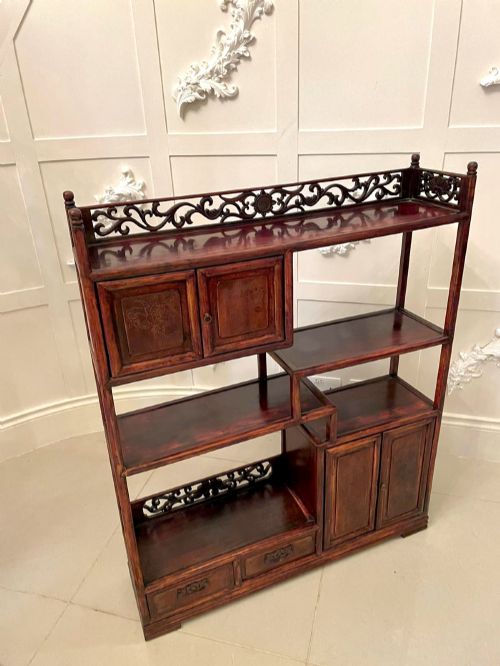
A Chinese curio cabinet brings asymmetrical shelves and dense hardwoods into a room, holding small treasures with quiet authority.
Chinese Curio Cabinet
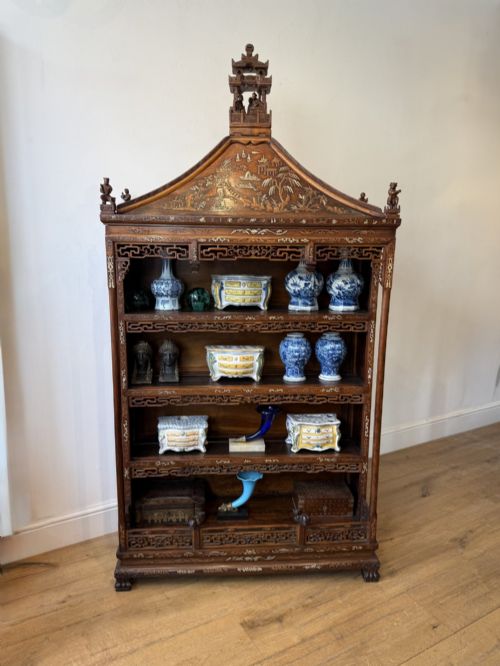
When you search for a Chinese curio cabinet, you are looking at intricate wooden furniture designed specifically to display porcelain, jade, and small artefacts. The pieces on this page span from the nineteenth century through to the early twentieth century, taking the form of glazed display cabinets, open shelving units, and intricate display stands.
You will most frequently encounter hardwood and hongmu construction in these listings, often enriched with glass doors or mother-of-pearl inlay. Styles range from Qing Dynasty and Late Qing examples to Chinese Export and Republic Period pieces, bringing traditional tiered shelving into domestic interiors.
How they were made
Cabinetmakers utilised dense Asian hardwoods and hongmu, selecting timbers heavy enough to support complex open fretwork without warping. These dark woods were joined using traditional woodworking techniques that avoided metal fasteners, allowing the timber to move naturally with changes in humidity.
Surface decoration often involved delicate bone inlay and luminous mother-of-pearl, set directly into the polished wood to catch the light. Glazed panels and brass hardware were later integrated to protect delicate porcelain and small curios from dust.
Listings feature pieces spanning the nineteenth century up to the nineteen thirties, predominantly built from hardwood, hongmu, and glass.
What varies in quality
The distinction between average and exceptional pieces rests primarily on the crispness of the carved detailing and the depth of the timber. Cabinets featuring precise openwork carving and tightly fitted joinery demonstrate a superior level of workshop skill.
Material selection also dictates worth, with dense hongmu and well-preserved mother-of-pearl inlay holding greater visual weight than simpler painted wood surfaces. The harmony of the staggered shelving proportions reveals the maker's eye for balance.
The Chinese Curio Cabinet Glossary
- Hongmu
- A dense, dark tropical hardwood traditionally used for fine Chinese furniture. It polishes to a rich sheen and resists heavy wear.
- Mother of pearl
- The iridescent inner layer of mollusc shells, cut into thin sections and embedded into wood for decorative effect. It creates striking contrast against dark timber.
- Qing dynasty
- The final imperial dynasty of China, lasting from sixteen forty-four to nineteen twelve. Pieces from this era often display complex carving and formal symmetry.
- Chinoiserie
- European artistic style reflecting Chinese motifs and techniques. It appeared across decorative arts during the eighteenth and nineteenth centuries.
- Bone inlay
- The practice of embedding carved animal bone into wooden channels to form geometric or floral patterns. This technique adds bright detail to dark furniture.
Chinese Curio Cabinet: Frequently Asked Questions
What is a Chinese curio cabinet used for?
These cabinets were built to display small precious objects, such as porcelain figures, jade carvings, and scholar's rocks. The tiered interior shelving allowed collectors to showcase diverse items without visual clutter.
Today, they serve the same purpose in modern homes, providing an organised and protective enclosure for cherished small collections or curiosities.
How do I date an antique Chinese cabinet?
Dating relies on examining the timber density, the style of carving, and construction methods. Nineteenth-century examples often feature heavy hongmu and hand-cut joinery, while early twentieth-century pieces may show transitional Republic Period influences.
Comparing the specific motif styles, such as Late Qing versus Chinese Export designs, helps narrow down the decade of manufacture.
How should I clean a hardwood cabinet?
Dust the surfaces gently with a dry, soft cloth to prevent particulate buildup in the intricate carved crevices. Avoid using modern aerosol polishes, which can leave chemical residues on antique finishes.
Maintain a stable room humidity to protect the dense hardwoods and prevent any mother-of-pearl inlay from loosening over time.