


Inlaid Hardwood Cabinet
An inlaid hardwood cabinet brings complex geometry and tactile surface work into a room through centuries of global cabinetmaking traditions.
Inlaid Hardwood Cabinet
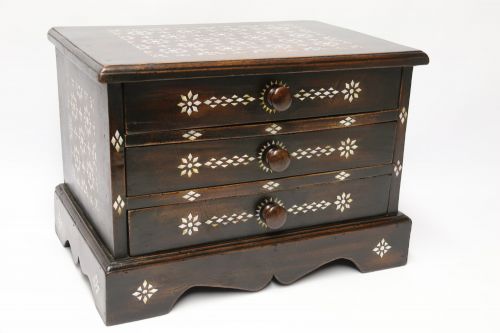
An inlaid hardwood cabinet encompasses diverse forms from table-top collector chests and music cabinets to large display furniture spanning the nineteenth and early twentieth centuries. These pieces emerge from Chinese, Japanese, Anglo-Indian, Syrian, Moorish, and Sheraton revival traditions, reflecting a global exchange of design during the Victorian and Edwardian eras.
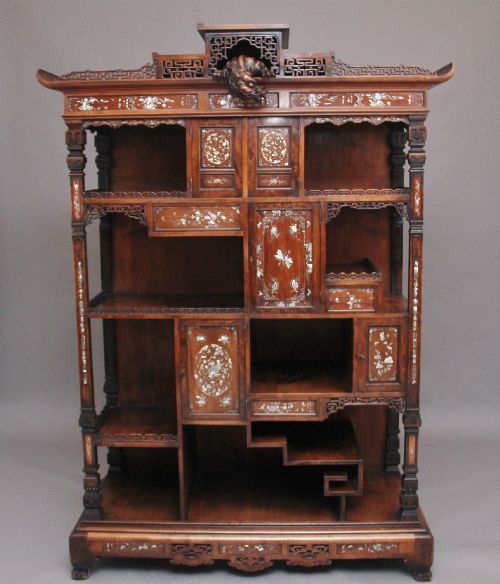
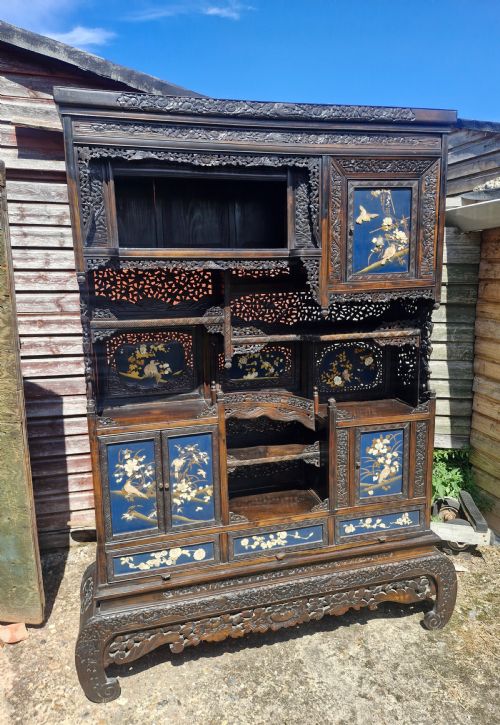
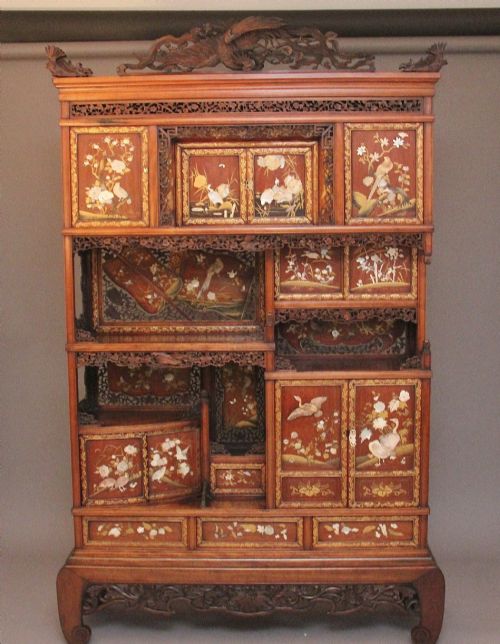
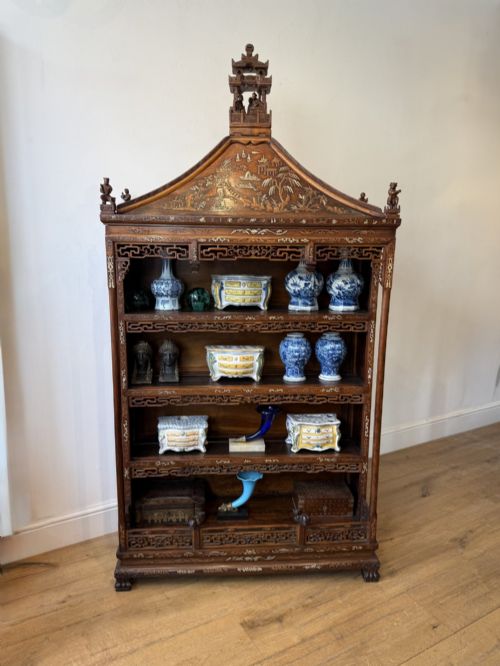
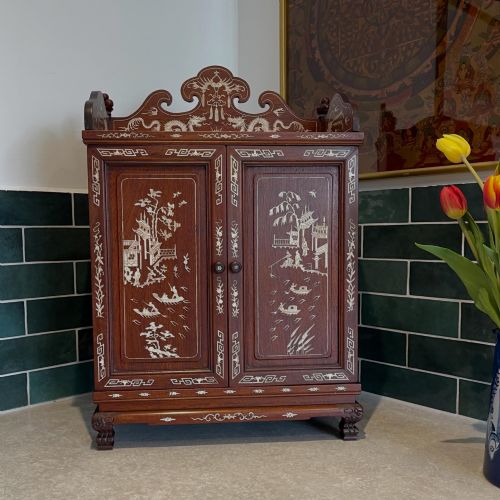
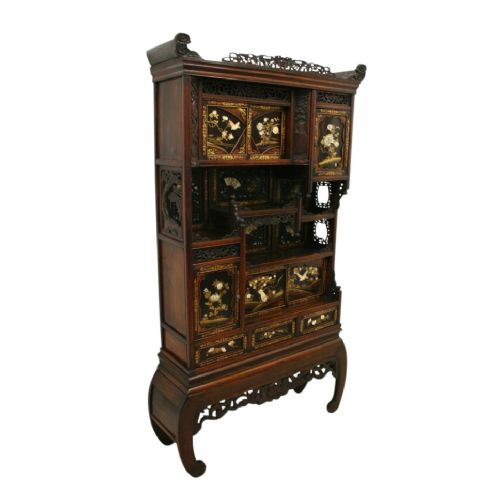
The buyer most frequently meets Japanese Meiji period shodana cabinets, Chinese display units featuring mother of pearl inlay, and occasional corner tables alongside larger storage pieces. The structural forms range from compact table cabinets to monumental floor-standing display furniture designed to showcase ceramics and curiosities.
Originating from workshops across East Asia, South Asia, and the Middle East, these cabinets demonstrate distinct regional motifs. Chinese export pieces and Japanese shodana cabinets sit alongside Syrian and Anglo-Indian collector chests, each displaying the specific decorative vocabulary of its cultural origin.
Construction and Materials
Makers utilised dense timbers such as rosewood and mahogany as the foundational structure for these cabinets. These heavy hardwoods provide the stable plane necessary for intricate surface decoration without warping over time.
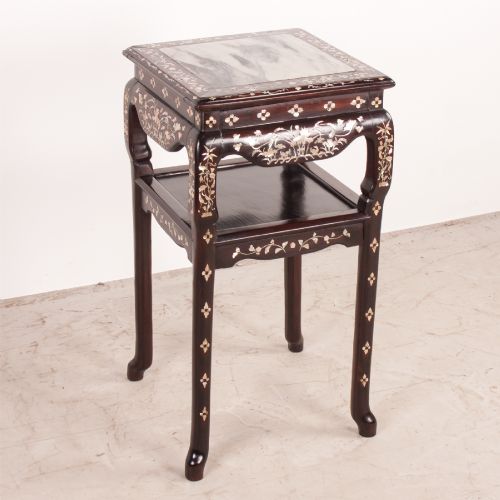
Surface enrichment relies on precise hand-fitting of contrasting materials into recessed channels within the timber. Artisans embedded mother of pearl, bone, and bone inlay alongside lacquer work to create pictorial scenes, geometric tessellations, and floral panels.
The listings show materials spanning rosewood, mahogany, mother of pearl, bone, and lacquer across nineteenth and early twentieth century periods.
Evaluating Quality
The standard of an inlaid hardwood cabinet rests upon the precision of the joinery and the tightness of the inlay work. Superior examples show seamless integration where contrasting elements sit entirely flush with the surrounding timber grain.
Depth and variety in the decorative programme distinguish finer pieces from standard production. Cabinets that combine multiple contrasting materials such as mother of pearl and bone within complex compositions demonstrate greater workshop skill than simpler linear banding.
The Inlaid Hardwood Cabinet Glossary
- Shodana
- A traditional Japanese display cabinet featuring asymmetrical shelving, sliding doors, and small cupboards designed for ornamental objects. These pieces often incorporate elaborate carving and mixed-material inlay.
- Mother of Pearl
- The iridescent inner layer of mollusc shells, harvested and shaped into thin plaques for insertion into timber. It provides shimmering tonal shifts across dark hardwood surfaces.
- Anglo-Indian
- Furniture made in India by local craftsmen following British colonial room forms, or produced in Britain using traditional South Asian decorative techniques. These objects frequently utilise dense hardwoods and intricate bone or ivory embellishment.
- Collector Chest
- A specialised cabinet fitted with numerous shallow drawers intended for housing natural history specimens, coins, or small artefacts. They prioritize internal organisation alongside decorative exterior surfaces.
- Chinoiserie
- European decorative style interpreting Chinese artistic motifs, popular during revival periods. It appears on cabinets through simulated lacquer and scenic panels.
Inlaid Hardwood Cabinet: Frequently Asked Questions
What is a shodana cabinet?
A shodana is a Japanese cabinet featuring stepped shelving and small compartments designed for the display of art objects. These pieces originate primarily from the Meiji period.
They rely on asymmetric balance and meticulous joinery to create functional sculpture for the interior.
How do I care for inlaid wood?
Maintain stable humidity and temperature away from direct heat sources to prevent the timber from shrinking and loosening the inlay. Dust gently with a dry cloth without applying modern liquid polishes.
Natural waxes applied sparingly preserve the sheen of rosewood and mahogany.
What is bone inlay?
Bone inlay involves cutting animal bone into geometric tiles or figurative motifs and pressing them into carved recesses within a hardwood base. This technique creates high-contrast decorative patterns.
It appears frequently on Anglo-Indian and Middle Eastern furniture.
Where were table cabinets used?
Table cabinets served as desktop storage for sheet music, letters, or small collectables within nineteenth-century parlours. Their modest scale allowed placement on top of larger sideboards or desks.
They combined display capability with private compartment storage.
How do I date a Chinese export cabinet?
Dating relies on combining the stylistic period, such as late Qing Dynasty or the transition to the twentieth century, with construction evidence. Examine the species of hardwood and the method of securing the backboards.
Export pieces from the late nineteenth century often reflect Western functional demands applied to Eastern workshop techniques.