




Chinese Ceramic Ginger Jar
When you search for a Chinese ceramic ginger jar, you are looking at centuries of storage vessels transformed into decorative centerpieces.
Chinese Ceramic Ginger Jar
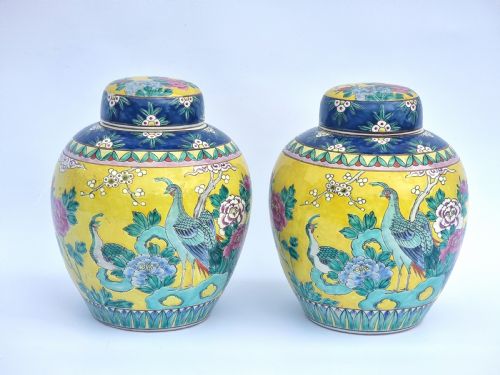
A Chinese ceramic ginger jar is defined by its stout body and broad shoulders, originally built for packing spices, salt or oil before European collectors repurposed them as display pieces. On this page, the nineteenth century provides the greatest number of examples, alongside pieces stretching back to the sixteenth century and forward into the twentieth.
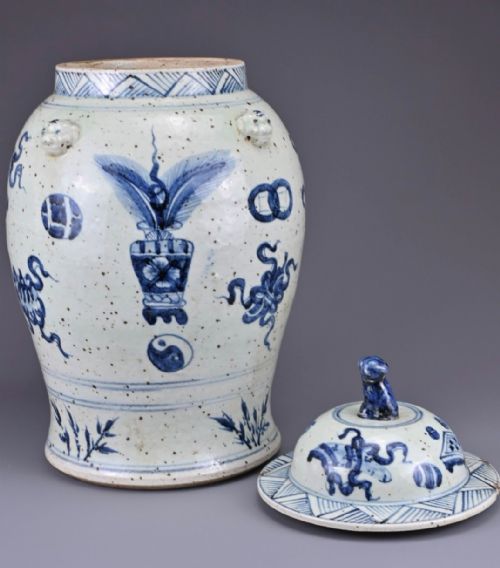
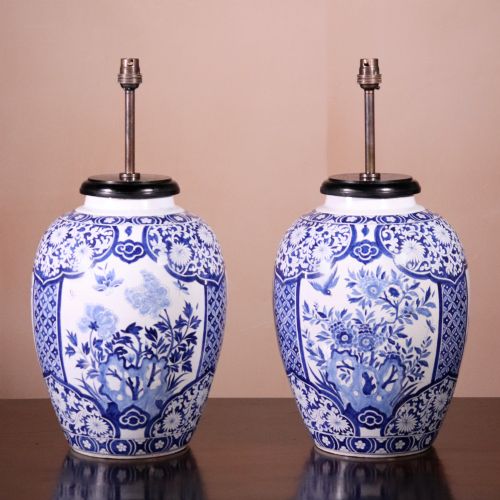
The inventory on this page spans traditional lidded jars, matching pairs, and examples later adapted into table lamps alongside related forms such as vases, urns, and canister vessels. Many pieces carry blue and white decoration, while others showcase the polychrome palettes of the Qing Dynasty or transitional periods.
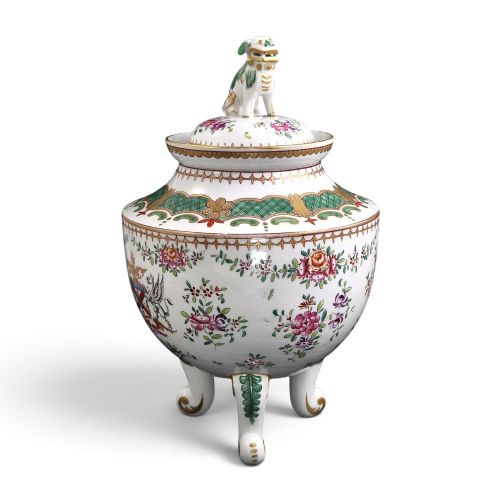
Origins range from direct imports to European interpretations in the Chinese style, including nineteenth-century porcelain by Samson of Paris. Buyers encounter everything from small opium pots and snuff canisters to large ovid jars designed to anchor a room.
Materials and construction
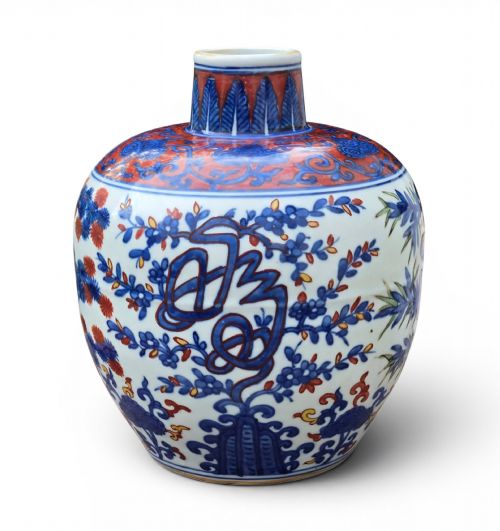
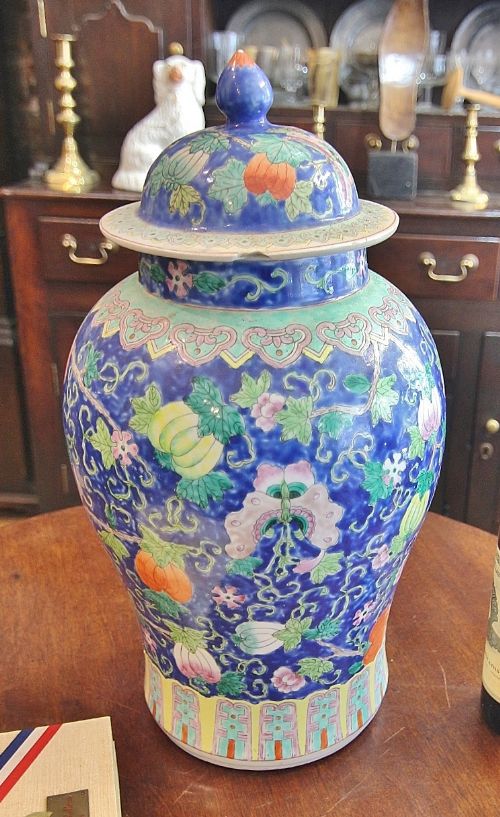
Potters shaped these vessels from clay and fine porcelain, applying cobalt blue beneath the glaze or adding iron-red, green, and yellow enamels over the surface. Some pieces combine the ceramic body with brass, bronze, or ormolu mounts, particularly when converted into lighting.
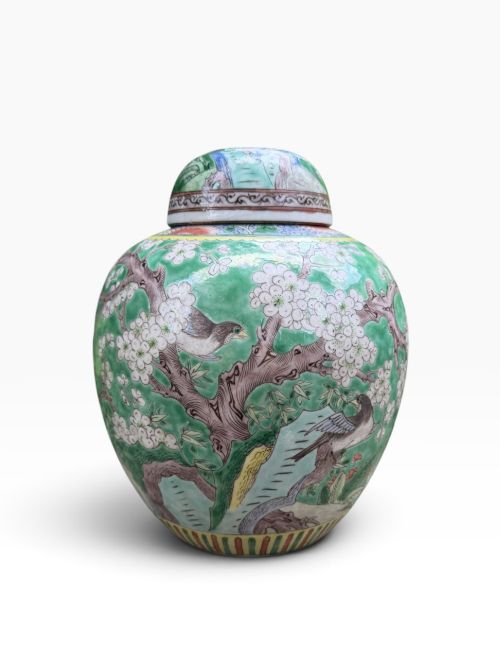
Surface treatments include crackle glazes, powder blue grounds, and hand-painted motifs depicting birds, flowers, dragons, and figures. Stoneware also appears alongside traditional porcelain, reflecting the varied kilns and production centres of different dynasties.
Periods represented stretch from the sixteenth-century Ming Dynasty to the twentieth century.
Judging the execution
Quality rests in the crispness of the hand-painted brushwork and the depth of the glaze, whether cobalt underglaze or polychrome enamels. Superior examples show confident, fluid lines in the decoration of dragons, florals, or figurative scenes.
The fit of the cover and the balance of the ceramic body distinguish finer pieces from standard production. Later European adaptations and interpretive wares display different manufacturing standards compared to period items made in Chinese kilns.
The Chinese Ceramic Ginger Jar Glossary
- Blue and white
- A style of decoration utilising cobalt pigment beneath a transparent glaze, fired at high temperatures. This technique dominates the earlier periods and forms the backbone of traditional ginger jar production.
- Famille rose
- A ceramic palette introduced in the Qing Dynasty, characterised by opaque pink enamel derived from colloidal gold. It allows for subtle tonal gradations in depictions of birds, flowers, and figures.
- Famille verte
- A vibrant enamel palette relying primarily on green alongside iron red, yellow, and blue. The style flourished during the Kangxi period and continued into later nineteenth-century manufacturing.
- Ginger jar
- A western term for a broad-shouldered, short-necked storage jar. Originally used for shipping commodities like ginger, salt, and spices.
- Mark and period
- A piece bearing the reign mark of a specific emperor and made during that exact reign. Imitation marks also appear frequently on later pieces.
- Ormolu
- Gilded bronze mounts applied to ceramic vessels, common on pieces adapted in Europe during the nineteenth century. It frames the porcelain body and elevates the decorative presence.
Chinese Ceramic Ginger Jar: Frequently Asked Questions
How were ginger jars originally used?
These vessels served as utilitarian storage containers for shipping and preserving commodities such as spices, ginger, and oils across maritime trade routes.
Over time, European collectors recognised the aesthetic value of the forms and repurpose them solely for interior display.
Are these jars always sold with lids?
Many examples retain their original matching covers, while others survive as bodies only or with later replacement lids.
Listing titles specifically note whether a cover accompanies the jar.
What is a lamp conversion?
A lamp conversion involves mounting a ceramic jar onto a base and fitting it for electrical wiring to function as a table lamp.
This practice became widespread in the nineteenth and twentieth centuries, often incorporating metal mounts.
How do I distinguish nineteenth-century pieces from older ones?
Distinguishing periods relies on examining the characteristics of the glaze, the tone of the cobalt, and the drawing style of the brushwork.
Markings on the base can offer guidance, though reign marks were frequently copied by later potters.