


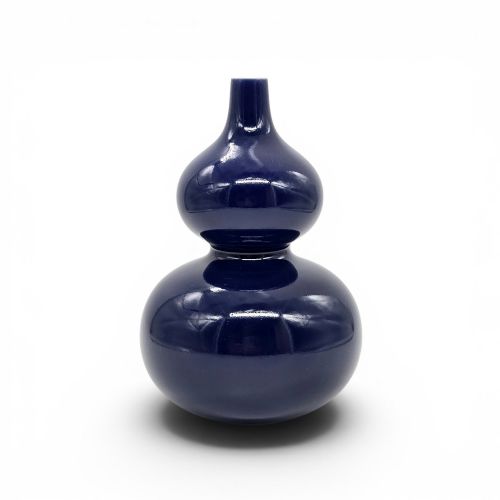
Chinese Ceramic Bottle
A Chinese ceramic bottle brings centuries of kiln mastery to a room, offering sculptural form and intricate glaze work.
Chinese Ceramic Bottle
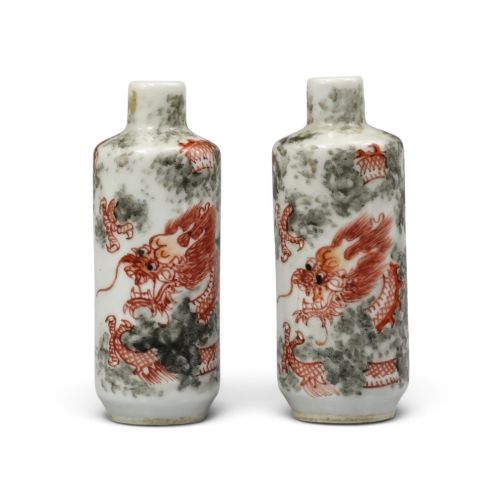
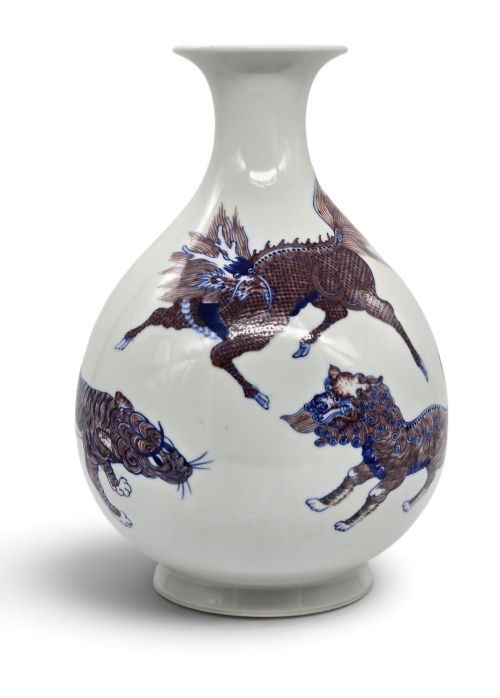
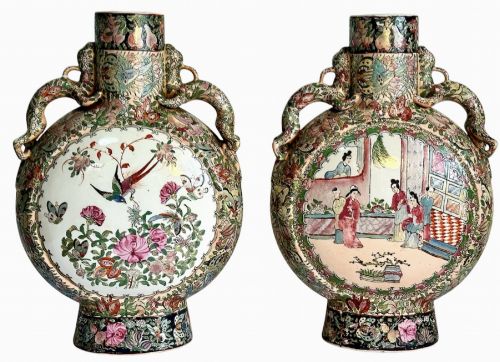
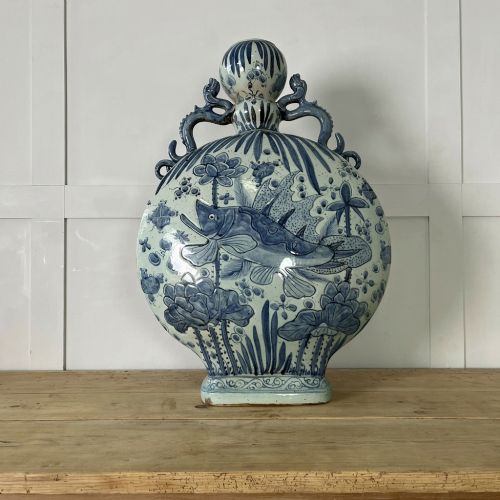
A Chinese ceramic bottle spans compact snuff bottles and large display vessels, including garlic-mouth vases, moon flasks, and double-gourd forms. These vessels originate primarily from the Qing Dynasty, alongside pieces attributed to the Republic period and the 18th to 20th centuries.
The version most frequently met on this page is the porcelain snuff bottle or the blue and white bottle vase. Such pieces often feature figural scenes, dragons, or monochrome surfaces, reflecting varied export and domestic traditions.
Materials and production techniques
Makers shaped these vessels from porcelain and ceramic, applying liquid glazes such as celadon, tea dust, turquoise, and cobalt oxide. Underglaze blue and iron-red pigments provide the linear detail on painted examples.
Firing took place in high-temperature kilns where copper-red and cobalt reacted beneath transparent or coloured coats. Incised motifs and moulded reliefs appear directly in the clay body before glazing and final firing.
Listings feature porcelain, jade, and ceramic materials shaped into snuff bottles, moon flasks, and tea caddies.
Evaluating craftsmanship and execution
The distinction between tiers rests in the precision of the brushwork and the control of the glaze during firing. Controlled copper-reds and crisp underglaze blue lines indicate superior handwork compared to softer, blurred pigment transfer.
Surface preservation and the crispness of incised peonies or mythical beasts reveal the carver's skill. The harmony between the bottle's profile and its glaze depth dictates the visual success of the piece.
The Chinese Ceramic Bottle Glossary
- Celadon glaze
- A pale green or grey-green glaze derived from iron in the raw materials. It often covers fluted or carved surfaces.
- Famille rose
- A palette of opaque enamel colours introduced in the Qing Dynasty, dominated by pink and rose shades. This style is common on figural snuff bottles.
- Underglaze blue
- Pigment applied to the ceramic body before glazing and firing, resulting in blue designs beneath a glossy coating. Cobalt oxide provides the colouring agent.
- Double-gourd
- A vessel shape formed of two stacked bulbous sections resembling a traditional gourd fruit. This form occurs in monochrome and blue-and-white ceramics.
- Moon flask
- A flattened circular flask with a short neck and two small handles, often standing on an oval base. These vessels frequently display painted figural or floral motifs.
Chinese Ceramic Bottle: Frequently Asked Questions
How do I display a ceramic bottle safely?
Place the vessel on a stable, level surface away from high-traffic edges where accidental knocks might occur. Ensure shelves or cabinets support the specific weight of larger porcelain bodies.
Keep pieces out of direct sunlight to protect enamel pigments from fading over time. Avoid grouping tall, narrow bottles too closely together without adequate space between forms.
What periods do these bottles date from?
The listings span the 18th, 19th, and 20th centuries, with particular representation from the Qing Dynasty and the Guangxu or Daoguang periods. Some examples connect to the early Republic era or carry earlier reign marks.
Specific dates on marketplace items rely on stylistic evidence, recorded reign marks, and period conventions. Comparing glaze types and decorative motifs helps contextualize the manufacturing era.
How were snuff bottles used?
Snuff bottles held powdered tobacco consumed during the Qing Dynasty as a social and medicinal custom. Small spoons attached to the stoppers allowed users to extract precise quantities of snuff.
These portable containers served as personal accessories carried in pouches or displayed among scholarly objects. Their intricate interior painting or carved exteriors reflected the owner's status.
What is the difference between a vase and a bottle?
Vases generally feature wider openings intended for holding floral arrangements or standing as independent sculptural objects. Bottles possess narrow necks designed to restrict airflow, historically suited for liquids, oils, or snuff.
Forms like garlic-mouth vases and double-gourd bottles bridge these definitions through specialised neck profiles. Examining the aperture size clarifies the primary functional category of the piece.