




Chinese Ceramic Bottle Vase
These Chinese ceramic bottle vase examples bring together centuries of skilled potting, cobalt glaze work, and refined form for any collection.
Chinese Ceramic Bottle Vase
When you search for a Chinese ceramic bottle vase, you are looking at vessels defined by a globular or slender body rising to a narrow neck. These pieces draw from eras including the Qing dynasty, the 18th century, the 19th century, and the Edwardian period.
Makers focused on balanced proportions, where the transition from the rounded belly to the upright neck creates a disciplined silhouette. Collectors prize these shapes for their clean geometry and historical lineage.
How they were made
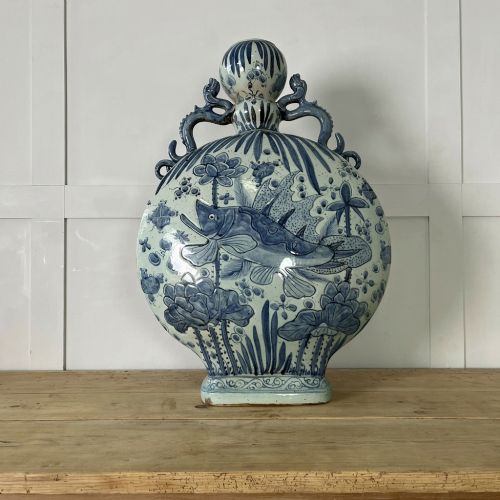
Potters shaped these vessels from ceramic and porcelain bodies before applying liquid mineral colours. Cobalt oxide and cobalt glaze provided the foundation for blue and white underglaze decoration.
Makers utilised high-firing kilns to vitrify the porcelain and fuse surface treatments like celadon glaze, tea dust glaze, and enamel to the clay. This process ensured durability while locking the painted scenes beneath a clear glass-like surface.
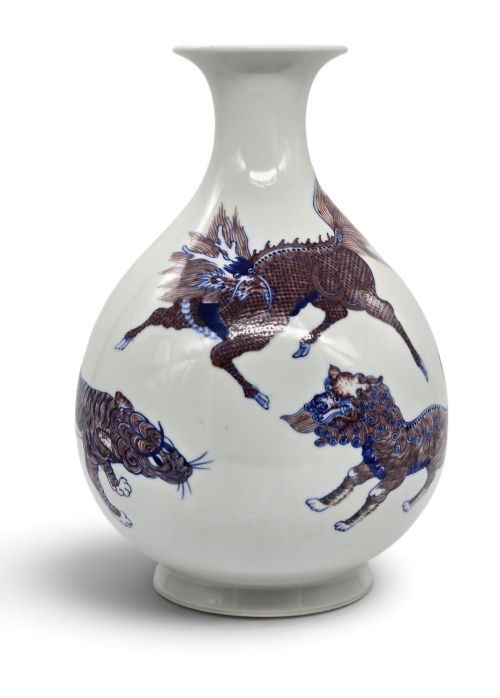
Some vessels depict mythical beasts and spring palace scenes, proving that antique potters enjoyed a lively imagination behind closed kiln doors.
What varies in quality
Quality rests upon the crispness of the underglaze painting and the purity of the ceramic body. Finer pieces display controlled brushwork in motifs such as dragons, mythical beasts, and literary figures.
The uniformity and depth of the glaze dictate the visual success of the vessel. Superior examples achieve an even tone across celadon, tea dust, or cobalt surfaces without distracting blemishes or pooling.
The Chinese Ceramic Bottle Vase Glossary
- Celadon glaze
- A pale green or grey-green glaze applied to stoneware or porcelain. It mimics the appearance of jade through iron oxide fired in a reduction kiln.
- Cobalt underglaze
- Pigment applied to the unglazed clay body before the application of a clear glaze and firing. This technique protects the blue decoration from wear over centuries.
- Double-gourd
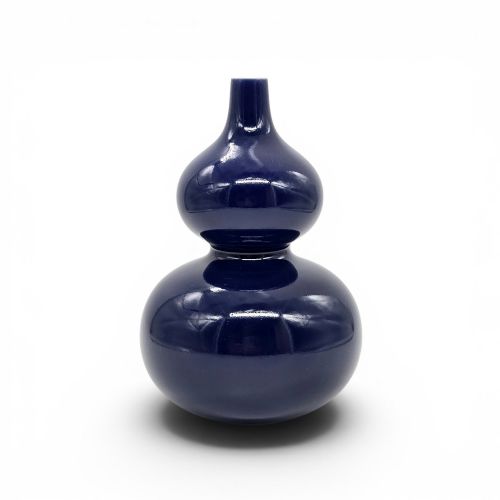
- A vessel shape formed by two joined bulbous sections resembling a traditional water container. This form symbolises auspicious luck and prosperity.
- Famille rose
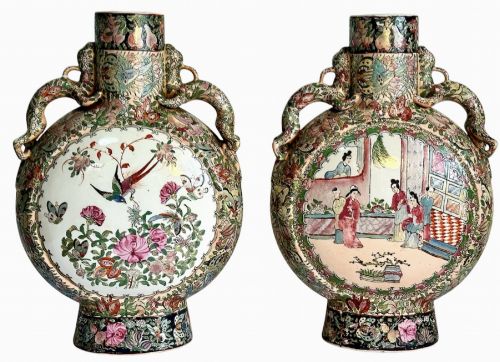
- A palette of opaque enamel colours introduced in the Qing dynasty. It relies heavily on a pink or purple enamel derived from colloidal gold.
- Moon flask
- A flattened circular flask with a small neck and two arched handles. Potters often decorated both flat sides with narrative or botanical scenes.
Chinese Ceramic Bottle Vase: Frequently Asked Questions
How are bottle vases dated?
Datings rely on stylistic traits, glaze types, and reign marks found on the base of the vessel. Scholars compare these markers against established historical periods.
Changes in cobalt purity and potting techniques help narrow the decade of production when marks are absent or apocryphal.
What is underglaze blue?
Underglaze blue is a decoration method using cobalt oxide painted directly onto the raw clay body. A transparent glaze is applied over the top before firing.
This method seals the pigment beneath the glassy surface, protecting the design from fading or scratching during handling.
Where should I display my vase?
Display these vessels in stable areas away from direct sunlight and high foot traffic to protect the ceramic body. Plinths or sturdy shelves support their heavy porcelain weight.
Ensure the display space allows adequate distance from heating sources that might stress the glaze.
How do I clean ceramic vases?
Dust the surface regularly with a soft, dry microfibre cloth to prevent particulate buildup on the glaze. Avoid using chemical cleaners or abrasive pads.
Stubborn grime requires only a damp cloth with mild soap, followed immediately by thorough drying with a lint-free towel.