



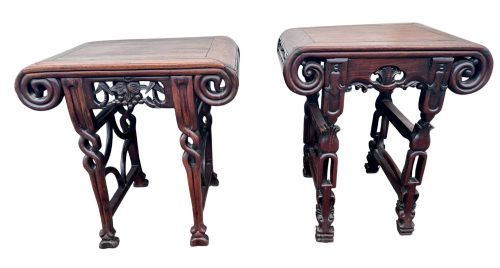


Chinese Carved Stool
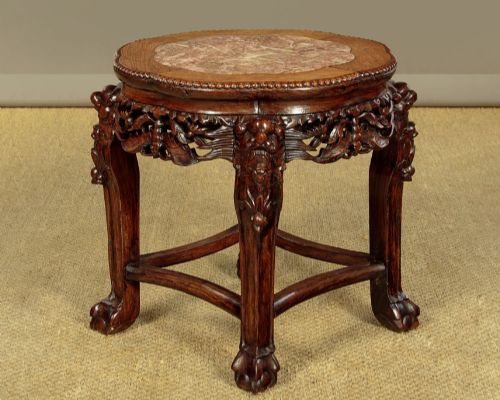
A chinese carved stool brings dense rosewood and inset marble into a room, offering a seat or pedestal shaped by Qing Dynasty hands.
Chinese Carved Stool
A chinese carved stool is typically encountered as a heavy hardwood seat, low table, or plant stand originating from the nineteenth century or the early decades of the twentieth century. These low forms serve multiple functions around a room, doubling as occasional tables, window seats, and lamp tables depending on their height and top surface.
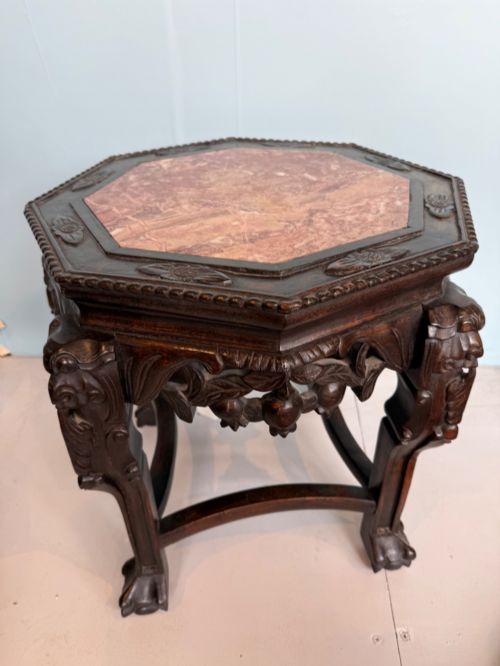
The selection on this page leans heavily toward nineteenth-century Qing Dynasty examples alongside early twentieth-century export pieces. Makers shaped dense timbers into drum, barrel, and square forms, often incorporating inset marble or quartz panels to create firm central platforms.
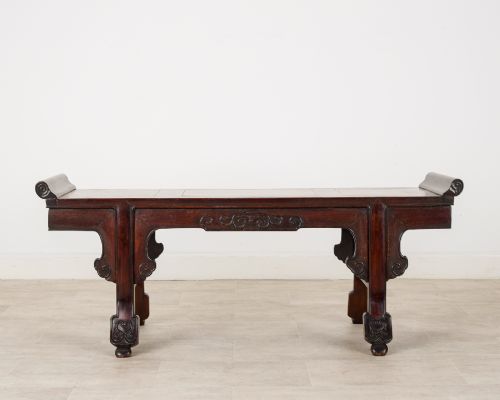
Buyers frequently find pairs of matching stools or plant stands alongside single low tables and benches. Their robust construction suits everyday placement beside seating or beneath windows where low furniture anchors the floor plan.
How they were made
Craftsmen built these items using dense Asian hardwoods including rosewood, hongmu, and huali, joined with traditional framing methods that accommodated seasonal wood movement. Surfaces received deep, intricate carving depicting foliage, scrolls, and traditional motifs.
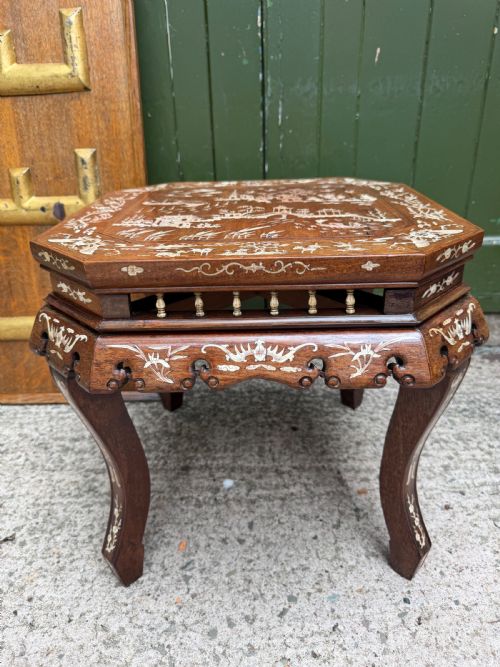
Many examples integrate contrasting materials such as rouge marble, burr wood, quartz, or lacquer panels set directly into the wooden framework. Certain pieces feature mother-of-pearl inlay or ebonised finishes applied to the timber substrate.
Chinese Carved Stool Retail Price Guide 2026
Typical asking prices for chinese carved stool among the pieces listed under this phrase on Sellingantiques today, from the lower quarter to the upper quarter. They describe what is for sale here now, not the wider market.
What varies in quality
Quality rests in the crispness of the carving and the selection of the primary timber, where dense hongmu and figured rosewood command greater visual weight than plain elm or standard wood. The stability of the frame and the precise fit of inset marble or quartz tops reveal the underlying joinery skill.
Refinement appears in the depth and undercut of the relief work, distinguishing standard production pieces from workshop examples boasting elaborate pierced aprons and inlaid mother-of-pearl details.
The Chinese Carved Stool Glossary
- Hongmu
- A dense, heavy Chinese hardwood prized for its dark red-brown colour and stability in traditional furniture construction. It frequently forms the primary structure of nineteenth-century stools and stands.
- Huali
- A fragrant, richly figured rosewood utilised in Qing Dynasty seating and tables. This timber allows for sharp, detailed carving along aprons and legs.
- Jardiniere stand
- A tall pedestal or small table designed to elevate potted plants or decorative bowls. These share similar carved frames and marble insets with low stools.
- Barrel stool
- A cylindrical seat form resembling a traditional wooden or ceramic cask. They often feature curved staves and studded detailing carved directly into the hardwood.
- Qing Dynasty
- The final imperial dynasty of China, spanning from sixteen-forty-four to nineteen-twelve. Pieces from the latter portion of this era dominate antique hardwood furniture markets.
Chinese Carved Stool: Frequently Asked Questions
Can I use a chinese carved stool as a small table?
Many low stools and barrel forms function easily as side tables, lamp stands, or pedestals for decorative objects. Their flat wooden or marble tops provide stable surfaces for everyday items.
Their sturdy hardwood construction handles daily placement beside chairs and sofas without difficulty.
How do I care for marble top stools?
Marble insets require simple dusting with a soft cloth and immediate wiping of liquid spills to prevent staining. Avoid harsh chemical cleaners that can dull the polished stone surface.
Condition the surrounding hardwood frame periodically with appropriate wax to maintain the timber finish.
Are these pieces from the Qing Dynasty?
Numerous examples date from the nineteenth century and the Qing Dynasty period, showing traditional Chinese craftsmanship and joinery techniques. Later pieces from the early twentieth century often reflect export designs influenced by Western tastes.
Examining the density of the wood and the style of the carving helps identify the specific manufacturing period.
What is the difference between hongmu and rosewood?
Hongmu is a category term used in Chinese furniture for dense, dark decorative hardwoods rather than a single botanical species. Rosewood encompasses specific timber varieties known for distinct grain patterns and colour variation.
Both materials deliver the heavy weight and durability expected in antique Chinese seating.