
Chinese Carved Stone
Chinese carved stone brings together centuries of lapidary skill, shaping soapstone, jade and hardstone into scholarly desk accessories and figures.
Chinese Carved Stone
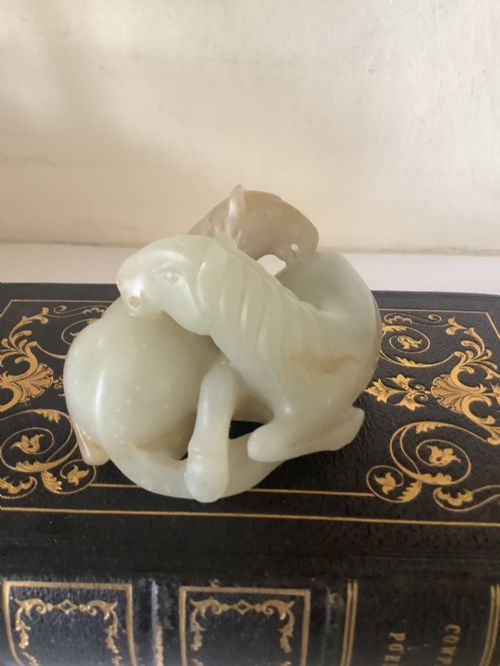
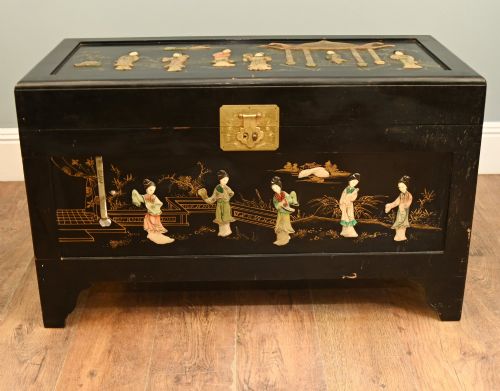
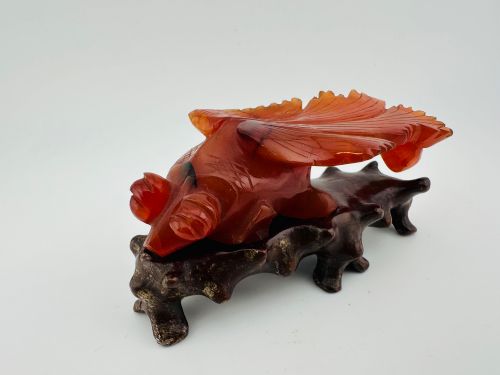
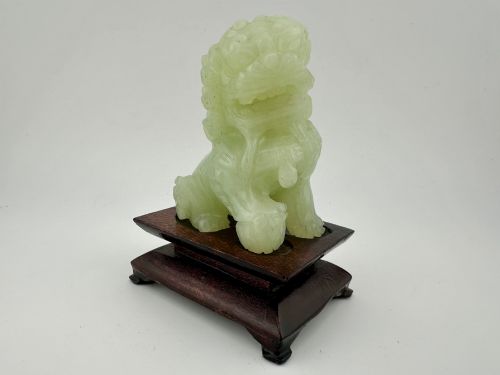
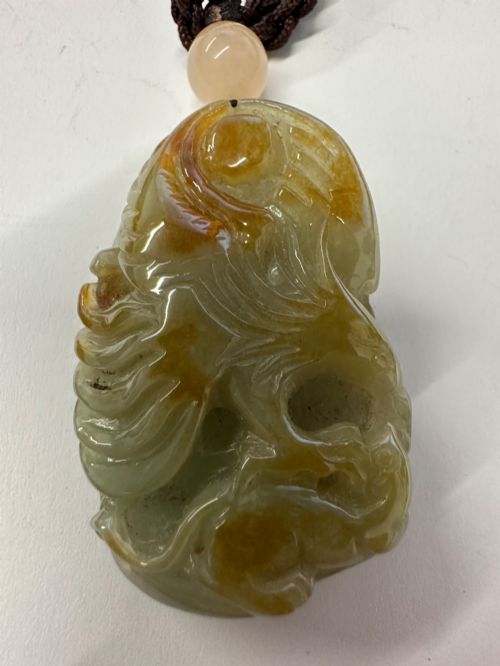
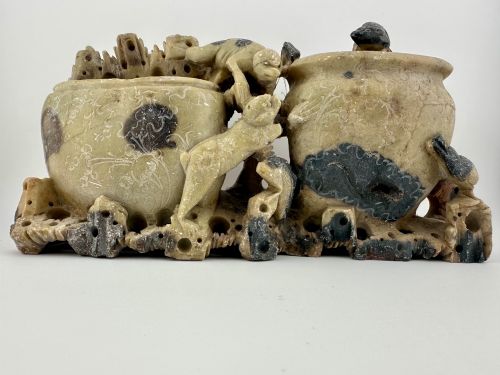
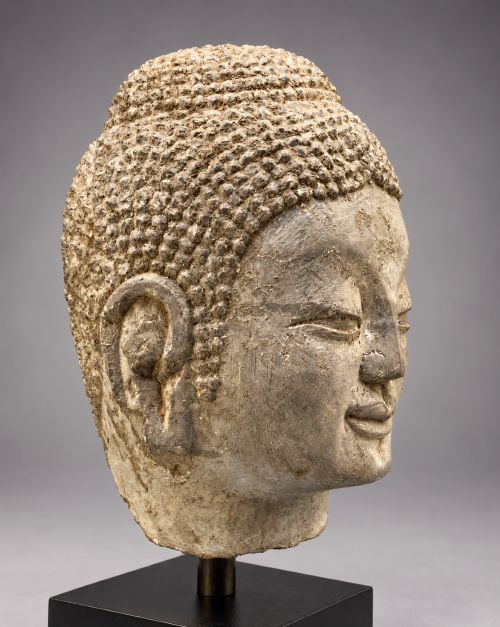
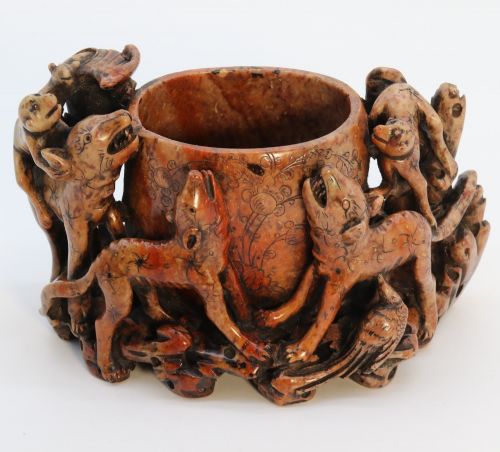
When buyers search for chinese carved stone, they encounter a diverse range of objects spanning scholarly desk items, figures, and decorative sculpture. The selection includes soapstone brush washers and seals alongside jade carvings, limestone Buddha heads, and hardstone bonsai trees.
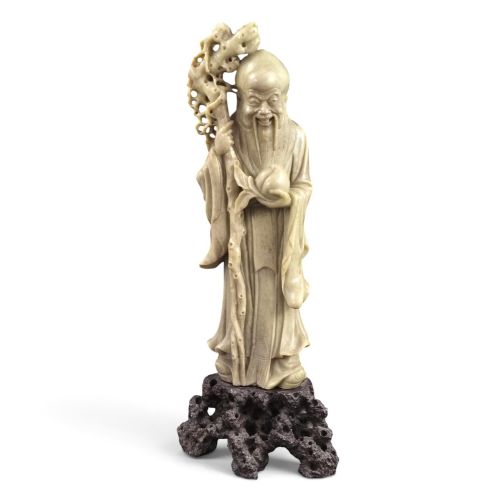
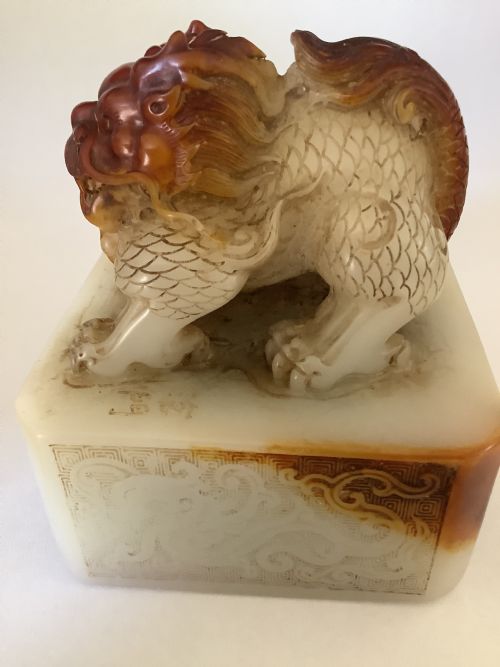
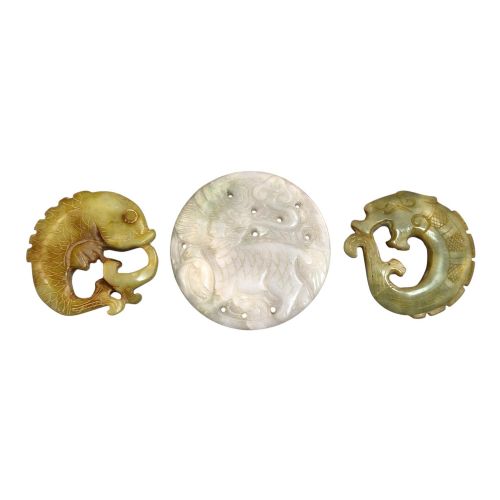
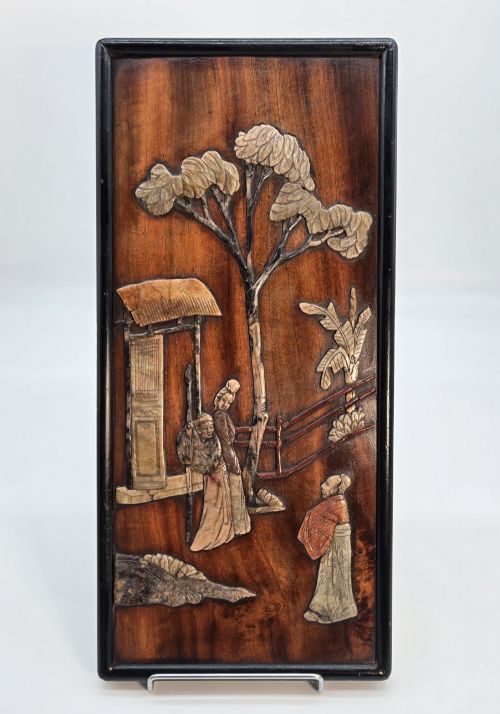
Soapstone pieces frequently appear as detailed figures, mountain landscapes, and seals dating from the nineteenth and early twentieth centuries. Hardstone and jade items range from small animal miniatures and archaistic cups to architectural furniture panels.
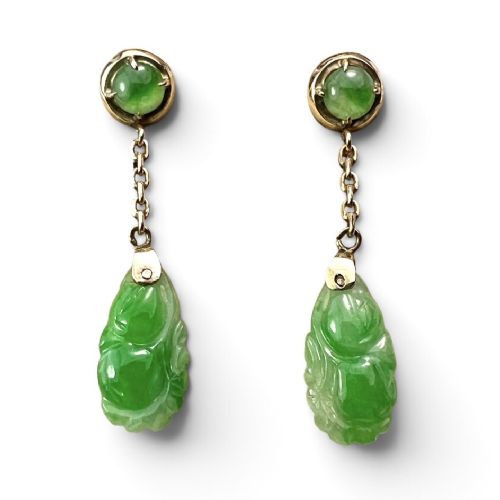
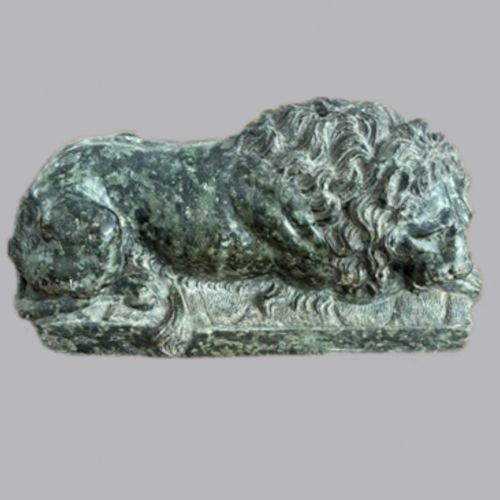
Pre-sixteenth-century sandstone and limestone sculptures represent the earlier historical end of the category. Later items often combine carved minerals with cloisonné or precious metals into decorative objects.
How they were made
Lapidaries shaped soapstone, jade, jadeite, nephrite, and bowenite using abrasive grinding, sawing, and drilling techniques suited to each mineral's hardness. Softer soapstone and Shoushan stone permitted deep undercutting for figures and continuous landscapes, while dense jade required patient abrasive shaping.
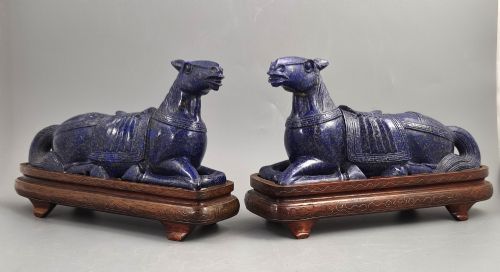
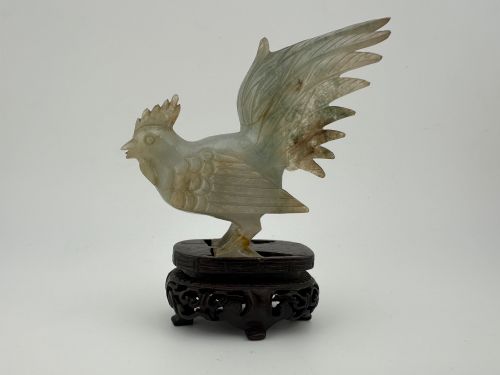
Many sculptures incorporate fitted hardwood stands, carved bone, or metal mounts. Complex decorative bonsai trees combined carved hardstone blossoms and jade leaves with cloisonné planters.
Listings span soapstone, jade, hardstone, and marble across periods from pre-sixteenth century temple sculpture to twentieth-century Art Deco jewellery.
What varies in quality
The degree of undercutting and compositional depth distinguishes master carvers from standard makers. Fine execution shows in the crisp definition of facial expressions, drapery folds, and naturalistic textures across stone and jade.
Material selection dictates the upper tier of pieces, where unblemished jadeite, translucent nephrite, or evenly coloured soapstone take precedence. The integration of natural russet inclusions into the design highlights superior stone utilisation.
The Chinese Carved Stone Glossary
- Soapstone
- A relative soft metamorphic rock rich in talc that carves easily into detailed figures and scholarly desk items.
- Nephrite
- A dense, tough amphibole mineral utilised alongside jadeite for carved vessels, pendants, and animal figures.
- Bi Disc
- A flat circular jade or stone artefact with a circular hole in the centre, often associated with ritual and cosmology.
- Shoulao
- The Taoist god of longevity, frequently depicted with a high forehead holding a peach and staff.
- Taotie
- A stylised zoomorphic mask motif found on ancient and archaistic ritual bronzes and jade vessels.
Chinese Carved Stone: Frequently Asked Questions
How do you display a jade mountain?
A jade mountain landscape requires a stable surface with adequate lighting to reveal the translucency of the stone. Most examples rest upon a custom-fitted hardwood stand designed to support the irregular boulder shape.
Positioning the carving away from direct sunlight protects the material from extreme temperature shifts. These landscape sculptures function best as focal points on desks or low tables.
What is Shoushan stone?
Shoushan stone is a specific variety of soapstone sourced from the mountains near Fuzhou in China. It is prized for its smooth texture and varied natural colour tones.
Carvers utilised this material for boulders, seals, and figural groups throughout the Qing dynasty and later periods. The stone takes a fine polish that highlights internal veining and colour gradations.
How are hardstone bonsai trees made?
Hardstone bonsai trees feature carved jade, agate, or quartz leaves and flowers mounted within a cloisonné or ceramic jardiniere. Wire armature secures the mineral components to branching structures.
These decorative sculptures brought permanent floral displays into nineteenth and twentieth-century interiors. Each blossom and leaf was individually shaped from coloured minerals to mimic natural plants.