


Vintage Chinese Hardstone
Vintage Chinese hardstone brings carved jade, agate, quartz, and soapstone into interiors through sculptures, screens, and bonsai trees that collectors prize.
Vintage Chinese Hardstone
When you search for vintage Chinese hardstone, you encounter carved minerals shaped into sculptures, desk seals, amulets, and bonsai trees. These items draw from traditional Chinese, Qing style, and Republic period aesthetics, alongside Art Deco and Chinoiserie interpretations.
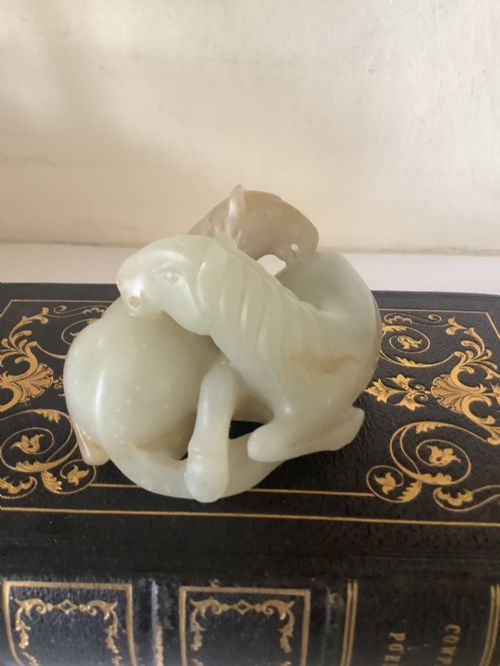
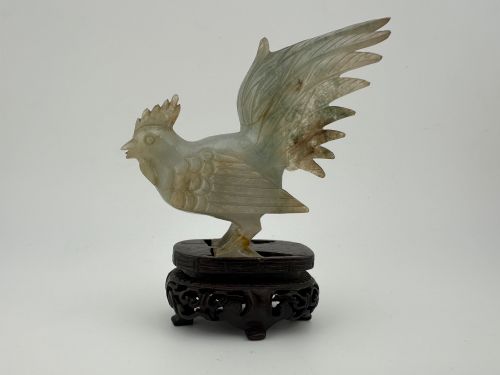
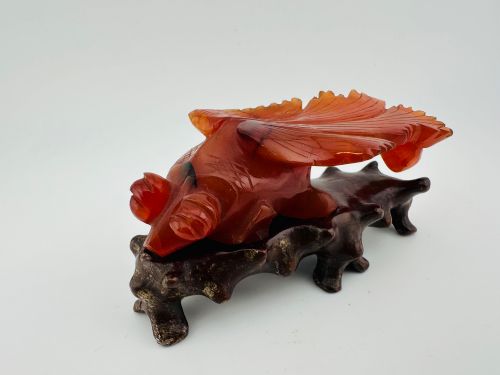
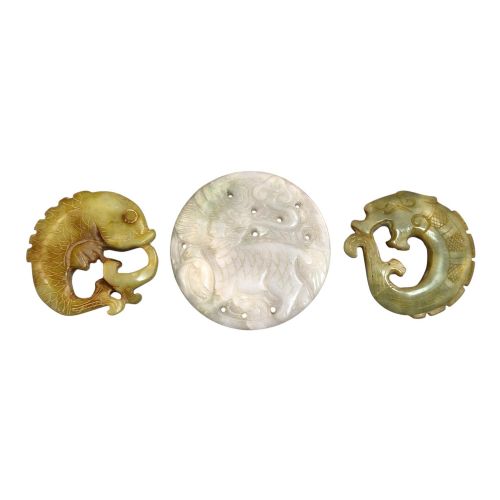
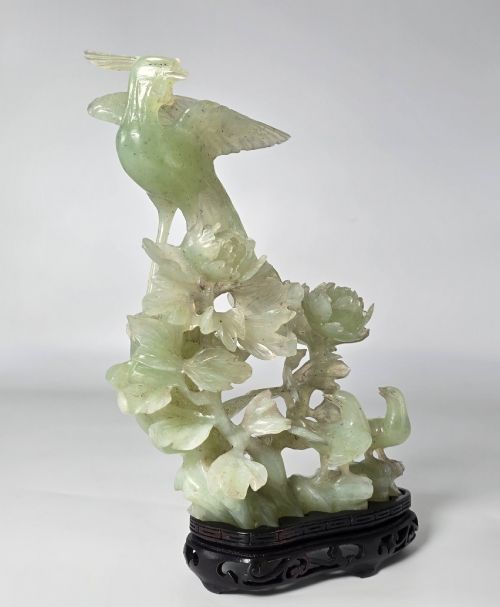
The selections available here range from small jade fish miniatures and green jade censers to large six-panel lacquered screens and cabinets mounted with hardstone. Forms extend from animal groups of birds and roosters to tripod vessels and flowering bonsai arrangements.
Originating across the nineteenth century, the Edwardian era, and the nineteen-twenties and thirties, these objects bridge decorative arts and functional furniture. A buyer meets both standalone sculptural figures and larger pieces of furniture integrated with carved stone elements.
Materials and construction techniques
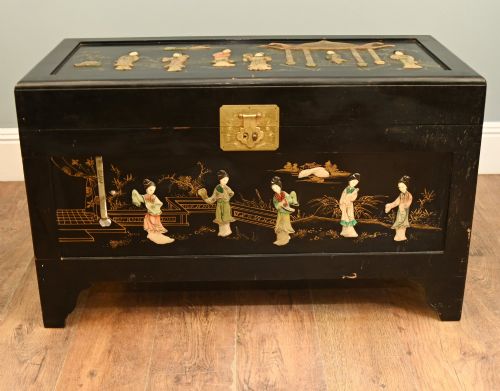
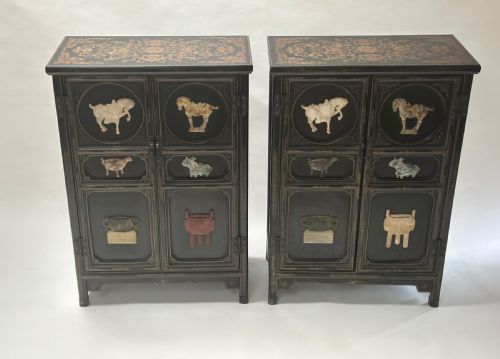
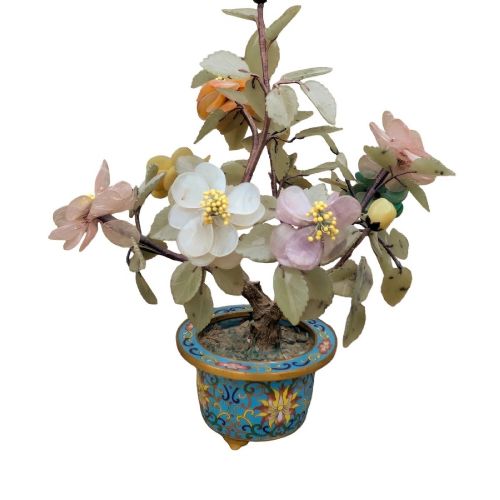
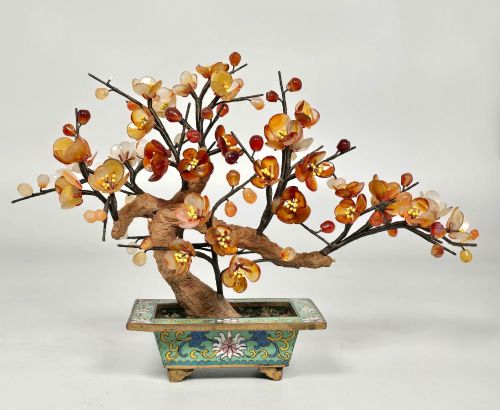
Carvers shaped jade, agate, quartz, hardstone, and soapstone into detailed figures and decorative elements, pairing mineral carvings with wood, brass, lacquer, and cloisonné. Artisans mounted stones onto black lacquer screens and low tables, or arranged them within cloisonne jardinieres to form miniature flowering trees.
Makers utilised wood for cabinetry, coffee tables, and folding screens, applying raised relief detail and gilt decoration to black lacquer surfaces. Selected items incorporate eighteen-karat gold fittings, uniting mineral carving with fine metalwork.
Current listings feature items from the nineteenth century, the Edwardian era, and the nineteen-tens, twenties, and thirties.
Factors that distinguish finer pieces
The refinement of the carving defines the upper tier of these objects, separating delicate depictions of fauna and mythological creatures from simpler forms. Precision in mounting hardstone elements onto lacquer screens or wooden furniture creates a cohesive composition.
Depth of detail in the mineral material, from pale green jade to dark green stone and shadow agate, dictates the visual impact of sculptures and desk seals. The integration of mixed materials like cloisonne, brass, and gold elevates the execution of bonsai trees and scent bottles.
The Vintage Chinese Hardstone Glossary
- Hardstone
- A non-precious or semi-precious mineral carved into decorative objects. This category encompasses jade, agate, quartz, and soapstone.
- Bi Disc
- A flat circular jade or stone artefact with a circular hole in the centre. These ancient forms inspired later amulets and decorative carvings.
- Foo Dog
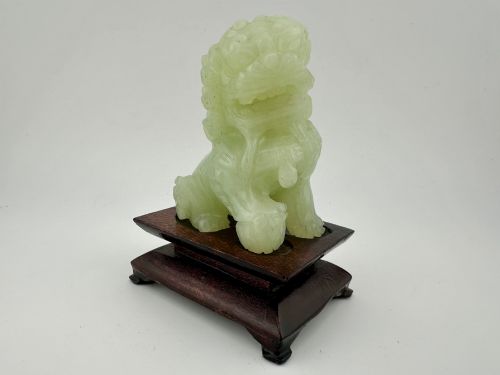
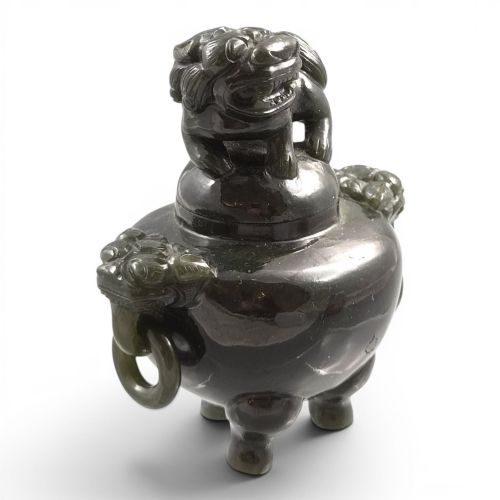
- A traditional guardian lion sculpture often depicted seated on a base or guarding a vessel. They appear frequently on desk seals and censers.
- Cloisonné
- An enamelwork technique where metal wire forms compartments on a surface that are filled with coloured paste and fired. These pots often hold hardstone bonsai trees.
- Chinoiserie
- European interpretations of Chinese artistic traditions applied to furniture, screens, and decorative items. This style surfaces across twentieth-century cabinets and tables.
Vintage Chinese Hardstone: Frequently Asked Questions
What is a hardstone bonsai tree?
A hardstone bonsai tree is a decorative sculpture featuring carved jade, agate, or quartz flowers and leaves arranged within a cloisonne or ceramic jardiniere. Artisans built these miniature botanical forms during the early twentieth century to bring natural motifs indoors.
These pieces combine mineral carving with metalwork and enamel, functioning as tabletop centerpieces. They offer the permanence of stone while mimicking the graceful shapes of living plants.
How do I identify a Republic period piece?
Republic period items typically date from the early twentieth century, spanning the nineteen-tens, twenties, and thirties. They often display traditional Chinese motifs adapted for international and domestic markets through refined carving and lacquerwork.
Look for specific design cues like black lacquer furniture with raised relief detail or carved stone groups of birds and fish. These items bridge traditional Qing aesthetics with modern decorative arts.
Where were hardstone screens used?
Hardstone-mounted screens served as room dividers, decorative backdrops, or architectural accents in early twentieth-century interiors. Artisans applied carved panels of jade or soapstone onto black lacquered wooden frames.
These folding screens range from four to six panels, often featuring Chinoiserie or Oriental-inspired motifs. They introduce texture and mineral colour to living spaces.
What is a Chinese desk seal?
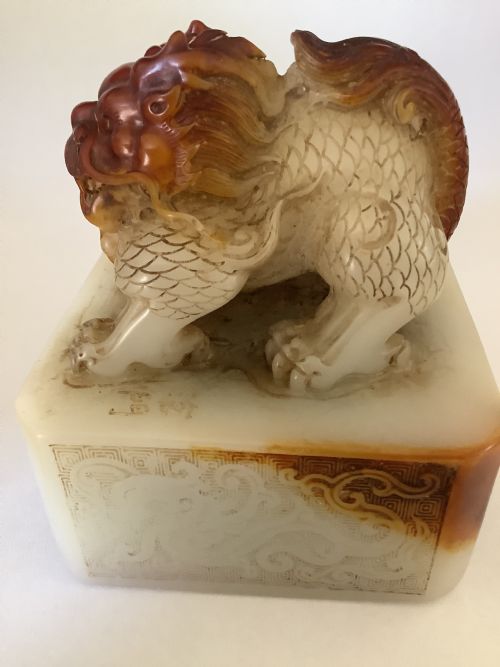
A desk seal is a carved stone object featuring a handle, often shaped as a Foo Dog or mythological creature, above a chunky seal base. Historically used for stamping documents, these items function as compact sculptures on a desk.
Carved from jade-type stones during the nineteenth and early twentieth centuries, they showcase detailed hand-carved animal figures. Collectors prize them for their sculptural presence and tactile quality.