


Chinese Carved Nesting Tables
Chinese carved nesting tables are graduated sets designed to slide together, offering versatile surfaces in dense hardwoods for daily use.
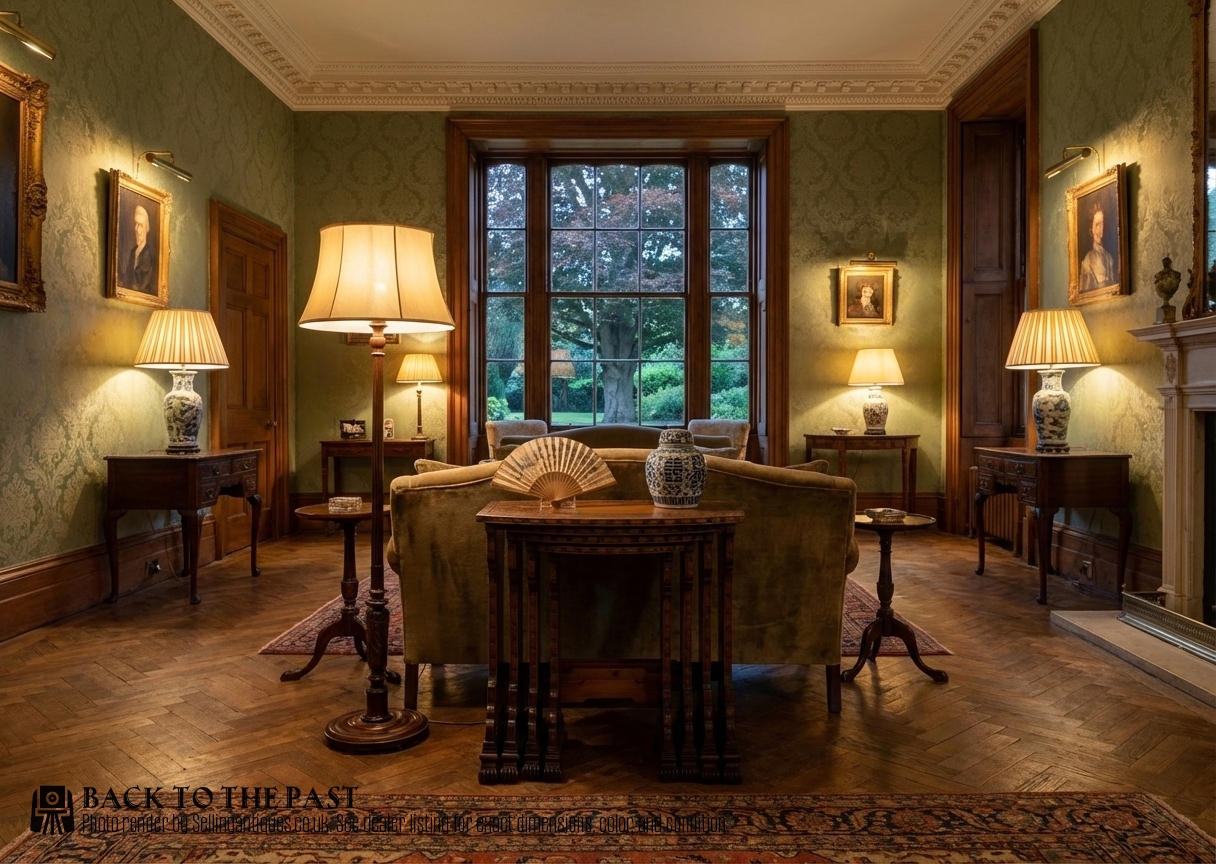
Chinese Carved Nesting Tables
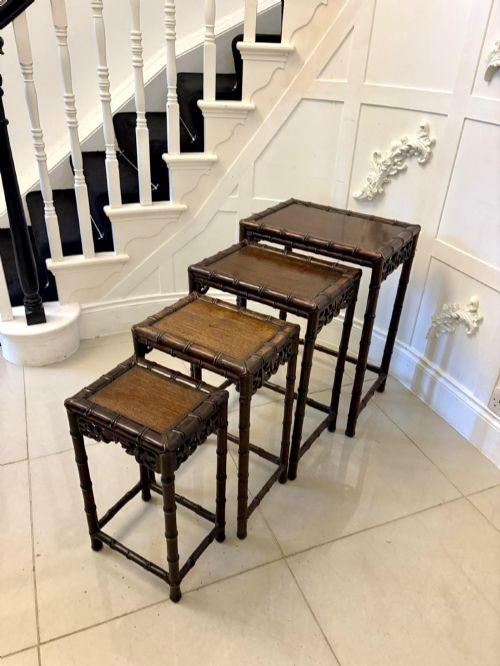
Chinese carved nesting tables arrive as sets of three or four graduated pieces that slide neatly beneath one another when floor space is needed. These sets emerge primarily from the nineteenth century, the Edwardian era, and the early decades of the twentieth century, reflecting trade and stylistic exchange.
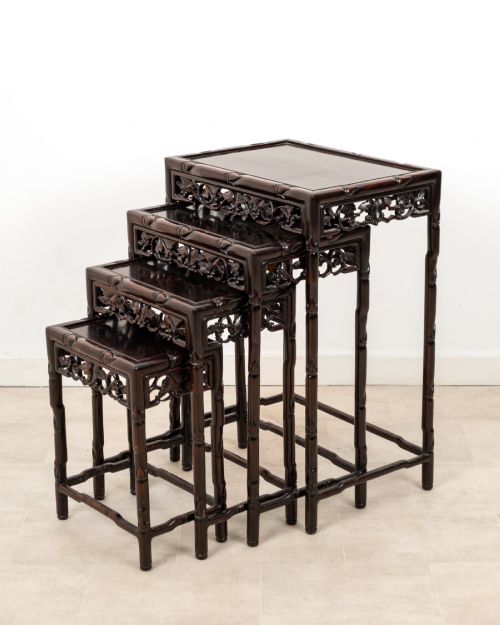
The dominant form on this page is a set of four tables carved from dense timber, often carrying Qing Dynasty influences or Chinese Export aesthetics. Buyers encounter occasional coffee tables alongside traditional side tables and occasional tables.
Origins span nineteenth century workshops through to later interpretations, incorporating Anglo-Indian touches and Chinoiserie details. The primary function remains unchanged across these variations, providing a compact surface arrangement that expands rapidly for guests or tea.
Materials and construction
Construction relies heavily on dense timbers such as rosewood, hongmu, teak, and huanghuali wood, selected for their stability and weight. Artisans also utilise ebonised wood and incorporate burrwood panels or glass inserts to finish the tops.
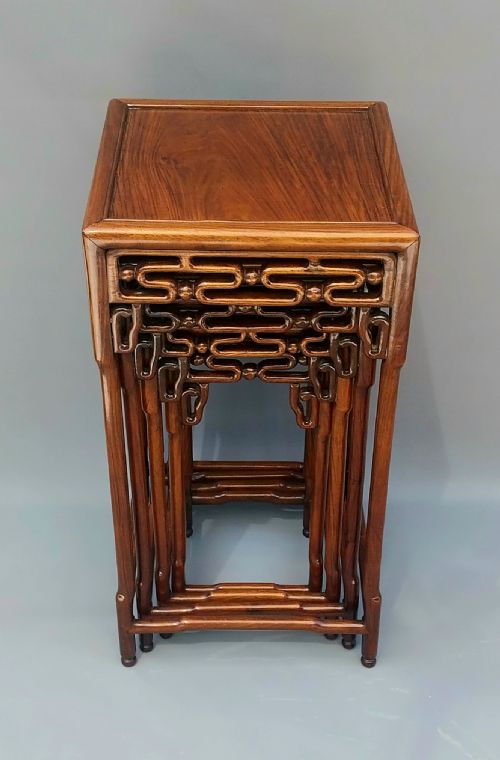
Carving technique defines the surfaces, running deep into the hardwood aprons and legs with floral, scroll, or figural motifs. Graduated sizing demands precision joinery so each smaller table fits accurately into the frame of the one above it.
These clever little tables prove that Victorian households understood the art of shrinking furniture long before flat-pack was invented.
Distinctions in quality
Quality rests upon the density and grain of the chosen timber, particularly when examining pieces rendered in huanghuali or heavily figured rosewood. Superior sets display crisp, deep relief carving that remains sharp across all four graduated tiers rather than softening on the smallest table.
Structural integrity separates ordinary examples from the finest items, visible in the snugness of the fit when the tables nest together. The richness of the natural polish and the retention of original surfaces contribute further to a piece's standing.
The Chinese Carved Nesting Tables Glossary
- Hongmu
- A dense, dark tropical hardwood favoured in Chinese furniture making for its weight and ability to hold fine detail. It translates literally as red wood.
- Quartetto
- A set of four tables designed to graduate in size so they slide one beneath another. The term appears frequently in nineteenth-century British records for nesting sets.
- Chinoiserie
- European artistic style reflecting Chinese motifs and techniques, often applied to furniture and decorative arts. It interprets Eastern forms through a Western lens.
- Graduated
- Describing a set where each successive table diminishes in height and width to fit inside the preceding one. This scaling is essential for proper storage.
Chinese Carved Nesting Tables: Frequently Asked Questions
How were these tables used?
These sets served primarily as occasional furniture for serving tea, holding lamps, or displaying ornaments in reception rooms.
Because they could be stacked together into the footprint of a single small table, households utilised them to save space until extra surfaces were required.
How do I care for hardwood furniture?
Maintain these pieces by keeping them away from direct heat sources and sudden humidity changes that cause timber to split.
Dust regularly with a dry cloth and occasionally feed the rosewood or hongmu surfaces with appropriate natural wax to preserve the finish.
Are sets usually three or four tables?
Most examples listed here comprise a set of four graduated pieces designed to slide one inside the next.
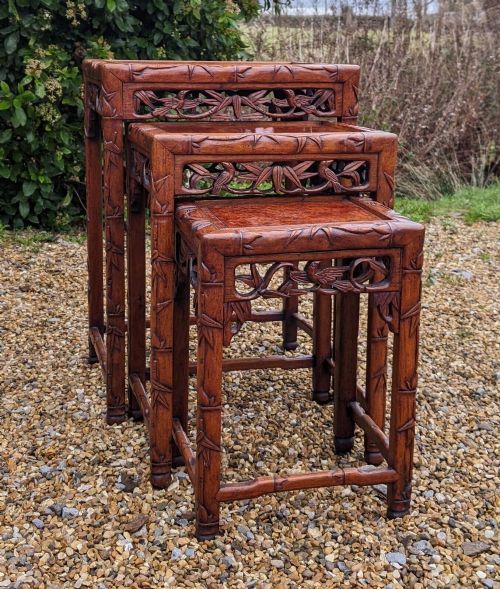
Sets of three also appear across the selection, offering a slightly more compact arrangement while maintaining the same stacking function.
What is the difference between Export and Qing styles?
Chinese Export pieces were specifically manufactured for Western markets, often blending traditional carving with shapes popular in European homes.
Qing Dynasty pieces adhere more closely to domestic Chinese forms, though many nineteenth-century items combine these design traditions.