
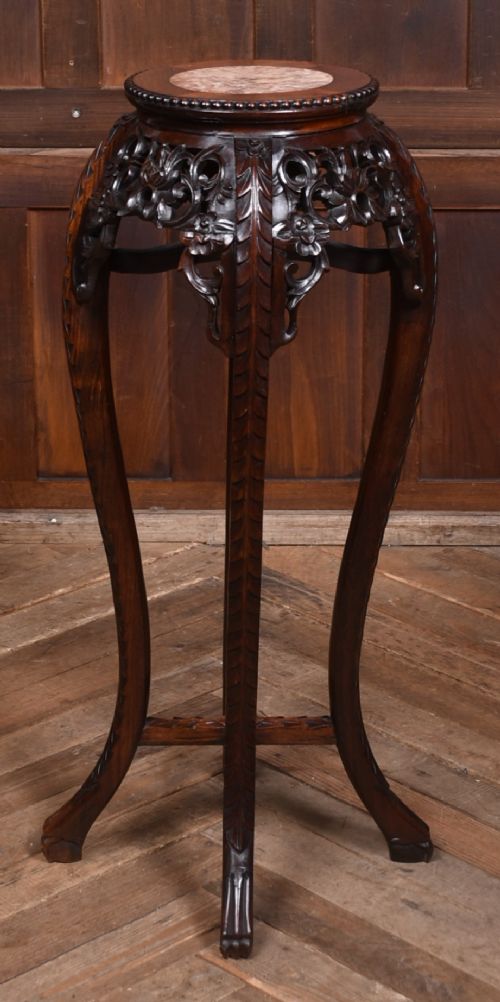

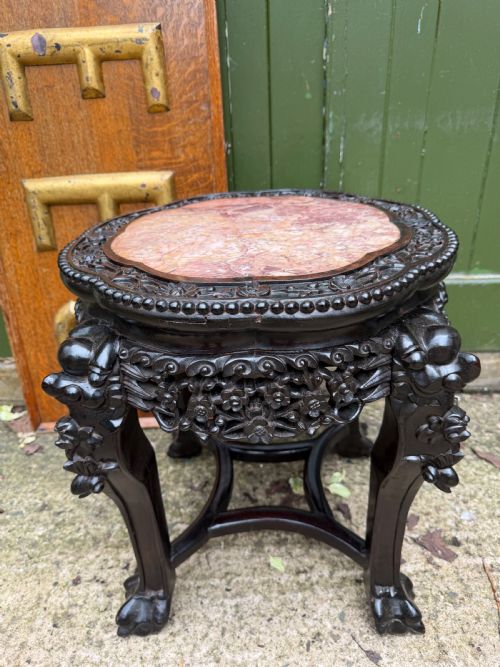


Chinese Carved Jardiniere Stand
A Chinese carved jardiniere stand brings dense exotic timbers and cool stone surfaces together to elevate heavy planters.
Chinese Carved Jardiniere Stand
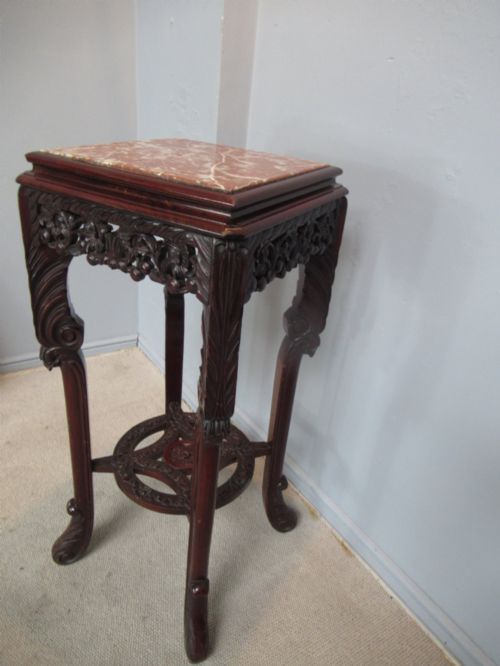
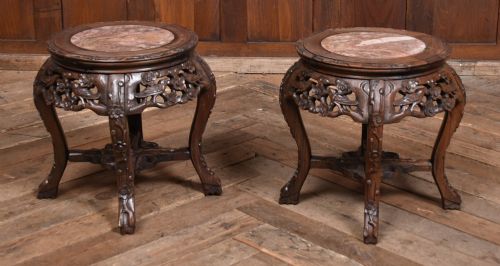
A Chinese carved jardiniere stand provides a sturdy, elevated platform designed specifically to display heavy ceramic planters, bronze vessels, and decorative urns. The form primarily emerges from the nineteenth century, aligning with Qing Dynasty production and later export manufacturing for Western interiors. These pieces range from low stools suited for side tables to taller pedestals supporting prominent floor-standing jardiniere bowls.
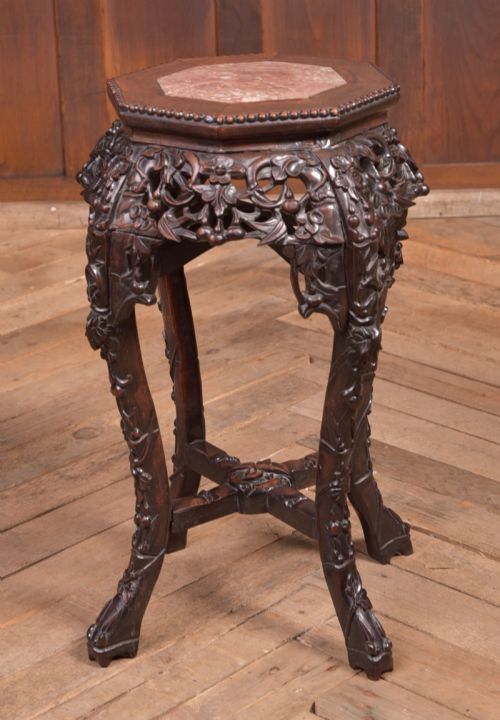
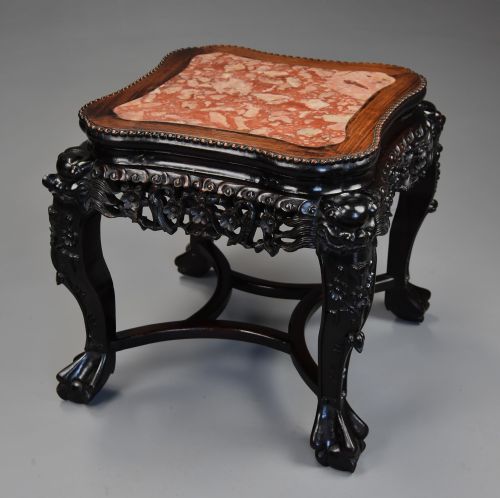
Most examples encountered on this page combine dense tropical hardwoods with inset marble surfaces, often featuring shaped apron supports and scrolling legs. While many serve their original purpose for displaying plants, collectors also utilise them as occasional tables or lamp stands within period rooms.
Materials and construction
Makers constructed these stands from heavy tropical timbers such as padouk, rosewood, and hongmu, selecting them for their rich natural grain and ability to hold deep, undercut relief carving. Many pieces integrate contrasting panels of variegated rouge marble fitted tightly into a recessed wooden channel on the top surface. Joinery relies on traditional interlocking frames that accommodate the natural movement of dense wood over time without splitting.
Surface decoration frequently employs intricate hand-chiselled motifs depicting flora, fauna, and scrolling foliage, executed with sharp, confident chisels. Selected examples incorporate ebonised finishes or subtle mother-of-pearl inlay to accent the dark timber grounds.
Materials recorded across the inventory include heavy hardwoods, rouge marble, padouk, rosewood, and occasional mother-of-pearl inlay details.
Judging quality and craft
Quality reveals itself through the depth and crispness of the hand carving, where superior examples display three-dimensional undercut work without mechanical smoothing. The selection of the inset marble also sets finer pieces apart, particularly those featuring dramatic natural veining and a smooth, flush fit to the surrounding timber frame.
Structural integrity and the choice of dense, heavy stock distinguish better workshop production from lighter export items. Stands that retain their original polish and show robust, tight joinery across the stretcher rails demonstrate superior longevity and material selection.
The Chinese Carved Jardiniere Stand Glossary
- Hongmu
- A dense, highly prized Chinese hardwood often translated as red wood, used extensively for quality furniture and stands during the Qing Dynasty.
- Jardiniere
- A large ornamental pot or container, usually made of ceramic or metal, designed to hold growing plants or floral arrangements.
- Padouk
- A heavy, durable tropical timber native to Asia and Africa, valued for its rich reddish-brown colour and stability in fine carving.
- Rouge marble
- A decorative red or reddish-brown limestone with distinct white or grey veining, frequently imported for furniture insets.
- Qing Dynasty
- The final imperial dynasty of China, spanning from sixteen-forty-four to nineteen-twelve, known for sophisticated hardwood carving traditions.
Chinese Carved Jardiniere Stand: Frequently Asked Questions
How were Chinese jardiniere stands used?
These pieces functioned primarily as elevated platforms to display heavy porcelain fish bowls, bronze urns, and flowering plants within traditional interiors. Raising the vessels protected fine flooring from moisture and brought delicate decorative plants to a more visible height.
Over time, owners also repurposed them as small side tables, wine stands, or lamp tables to complement various domestic settings.
What woods were used for these stands?
Maker workshops predominantly utilised dense tropical hardwoods, including rosewood, padouk, and hongmu, chosen for their structural strength and deep colour. These heavy timbers supported the substantial weight of marble inserts and large ceramic planters without flexing.
Selected items also feature ebonised wood or lacquered finishes to achieve a uniform, dark decorative surface.
Why do many stands have marble tops?
The inset marble panel provided a cool, waterproof surface that resisted water damage from damp plant pots and overflow. It also introduced a striking textural contrast against the dark, intricately carved hardwood frames.
These marble inserts usually feature natural veining in shades of rouge, grey, or white, selected to complement the tone of the surrounding timber.
How do I date a Chinese jardiniere stand?
Dating relies on assessing the timber density, carving style, and construction methods characteristic of nineteenth-century export production and the Qing Dynasty. Pieces often reflect stylistic shifts from deep, naturalistic foliage carving towards more restrained forms by the early twentieth century.
Associated periods range from mid-nineteenth-century examples to later Edwardian and Republic period interpretations.