
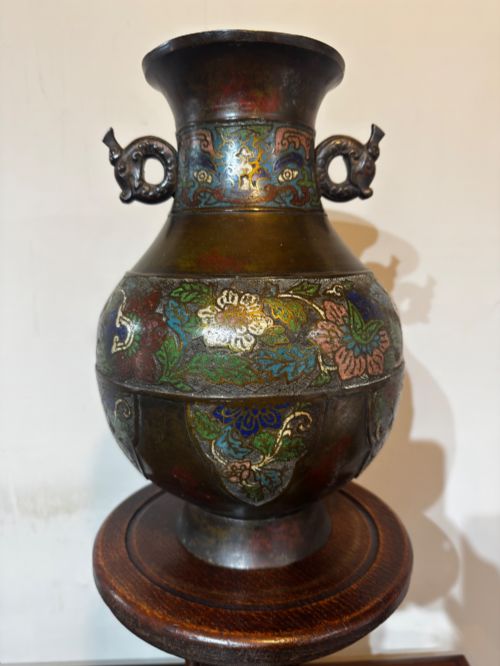


Chinese Bronze Urn Vessel
These Chinese bronze urn vessels bring centuries of ritual form and metalwork skill into a room.
Chinese Bronze Urn Vessel
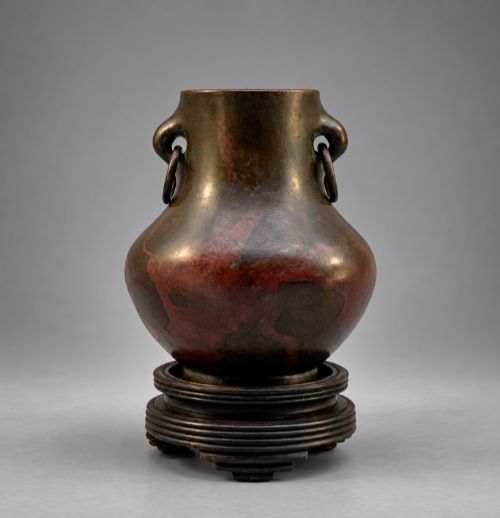
A Chinese bronze urn vessel spans forms such as baluster vases, tripod censers, ritual gu vessels, and food bowls. Buyers encounter works rooted in Qing Dynasty aesthetics alongside pieces carrying Chinese Archaistic and Victorian Chinoiserie influences.
The material record stretches from pre-16th century roots through 17th-century productions and 18th-century ritualistic bowls into the nineteenth century. Production continues through 19th-century pieces, 1920 examples, and 1930 table lamps.
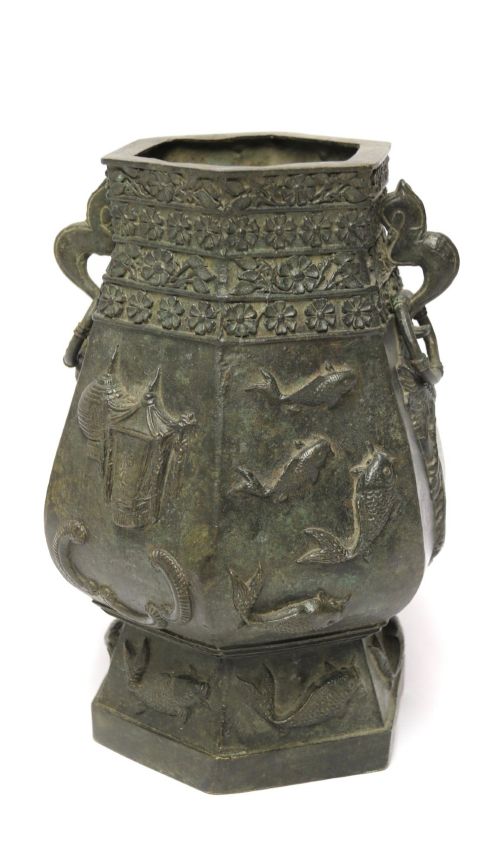
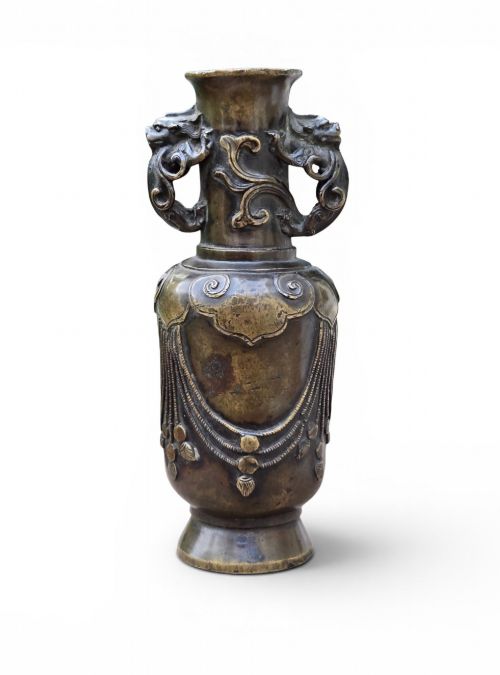
Most items appearing in this selection date from the nineteenth century, reflecting the material output of the late Qing period. Forms range from hexagonal vessels and twin-dragon handled vases to jardinières and incense burners.
How they were made
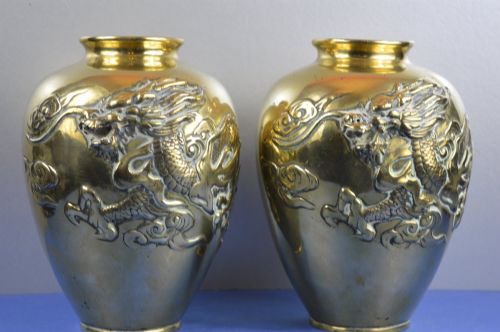
Makers shaped these objects primarily from bronze, brass, and copper alloy, sometimes applying gilt bronze or gilt metal. Casting methods created solid hexagonal bodies, high-relief baluster forms, and structural details like twin-dragon bases.
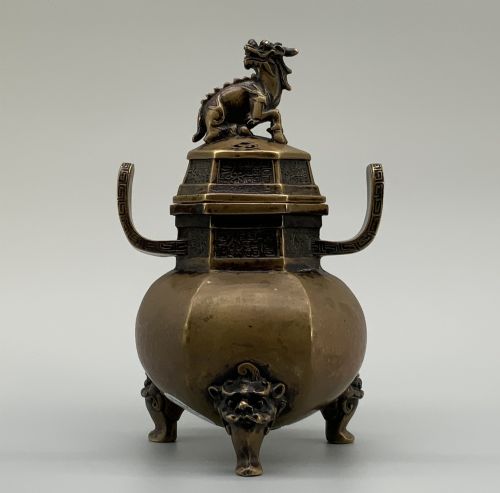
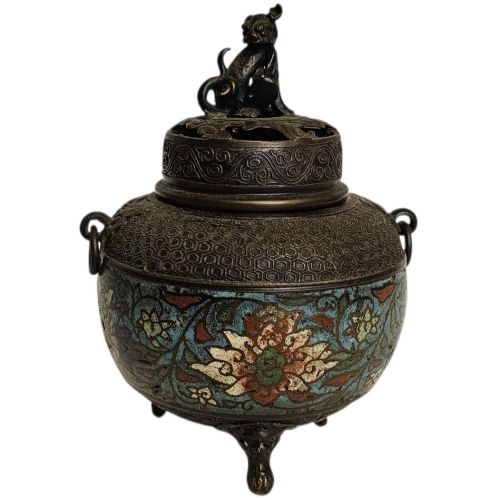
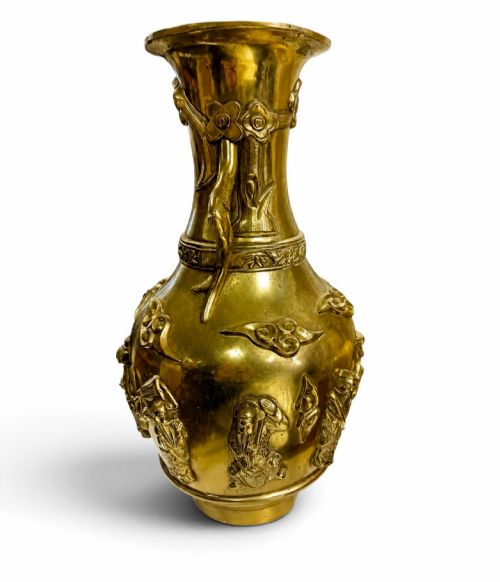
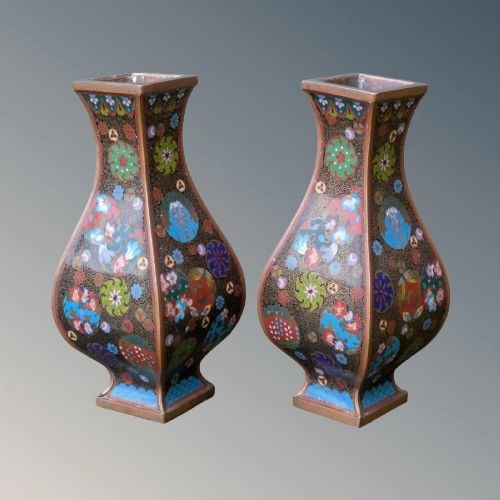
Surface decoration relies heavily on cloisonné enamel and champlevé enamel applied directly to the metal armature. Artisans also incorporated fabric elements or sculpted fine details such as qilin lion finials and Daoist immortals.
Guard dogs and mythical lions peer from vessel covers, standing watch over centuries of incense smoke and lamp cords.
What varies in quality
Quality rests on the crispness of the casting and the depth of high-relief work, where distinct details on figures and dragons distinguish finer examples. Weight and substance also signal better manufacture, with heavier pieces showing solid construction.
The precision and colour harmony of enamel work define the upper tier of cloisonné and champlevé pieces. Intricacy in integrated handles, tripod supports, and cover alignment separates standard decorative objects from exceptional works.
The Chinese Bronze Urn Vessel Glossary
- Censer
- A vessel designed for burning incense, frequently featuring a tripod base and a decorated cover. These pieces often include animal finials such as fu lions.
- Cloisonne
- A metalwork technique where enamel paste fills compartments wired to a bronze or copper base. Artisans fire the piece to fuse the colours.
- Champleve
- A method where troughs are gouged directly into the metal surface to hold enamel before firing. This creates a flush, patterned finish.
- Gu vessel
- An ancient ceremonial bronze beaker form featuring a flared mouth and a slender central section. Nineteenth-century makers revived this archaic ritual shape.
- Archaistic
- A design style that consciously imitates ancient ritual bronzes of early dynasties. It draws on archaic motifs and ceremonial vessel silhouettes.
Chinese Bronze Urn Vessel: Frequently Asked Questions
What is a Chinese bronze urn vessel used for?
These vessels served various functions, from ritual food offerings and burning incense to holding flowers or serving as decorative ornaments in scholar spaces.
Over time, many pieces transitioned into decorative displays, and some examples from the twentieth century were converted into table lamps while retaining their original bronze bodies.
How do I identify a Qing Dynasty piece?
Qing Dynasty and late Qing pieces often display characteristic surface treatments like cloisonné enamel, high-relief Daoist motifs, or specific base marks.
Stylistic cues such as qilin lion finials and tripod footings help connect an object to the nineteenth-century aesthetic.
Are these pieces made of solid bronze?
The inventory records solid bronze constructions alongside copper alloy, brass, and gilt bronze variations. Some items incorporate applied enamel work and fabric components alongside the metal armature.
Weight often indicates the density of the metal used in the casting process.
What is an archaic ritual vessel?
An archaic ritual vessel replicates the forms and decorative motifs of ancient Chinese bronzes created centuries earlier. Makers revived these ritual shapes during later periods, producing items like Gu vessels and food bowls.
These pieces honour ancient ceremonial traditions through revived manufacturing techniques.