


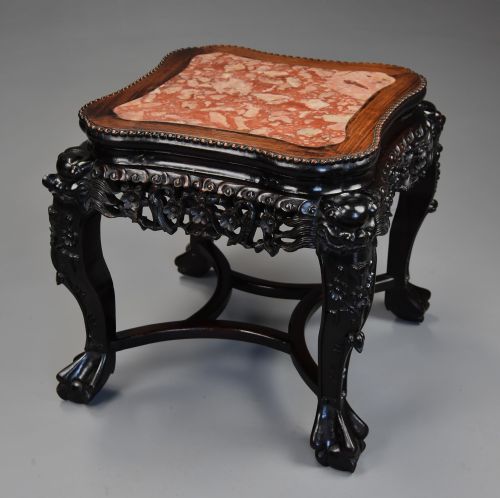


Chinese Bonsai Table
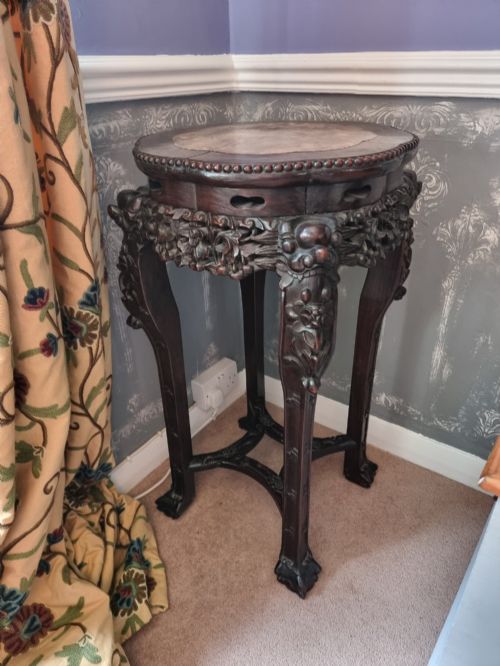
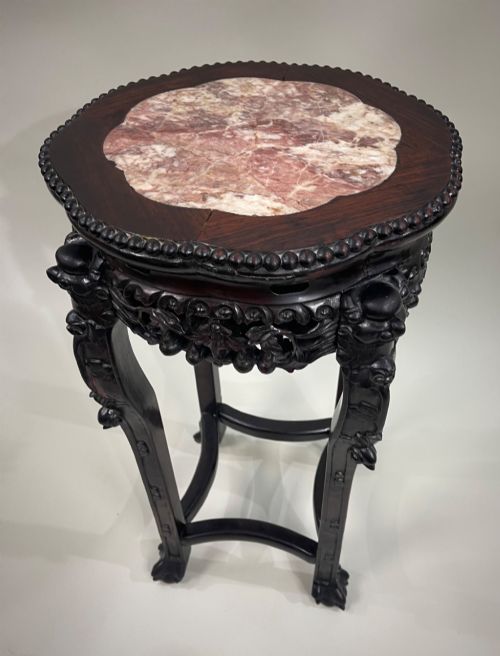
A Chinese bonsai table supports a heavy ceramic pot or bronze vessel, bringing timber and marble together to elevate plants and scholarly objects.
Chinese Bonsai Table
A chinese bonsai table appears in various low formats such as plant stands, jardiniere stands, urn supports, and small low tables. These pieces serve to elevate decorative pots, plants, and scholar's objects within a room.
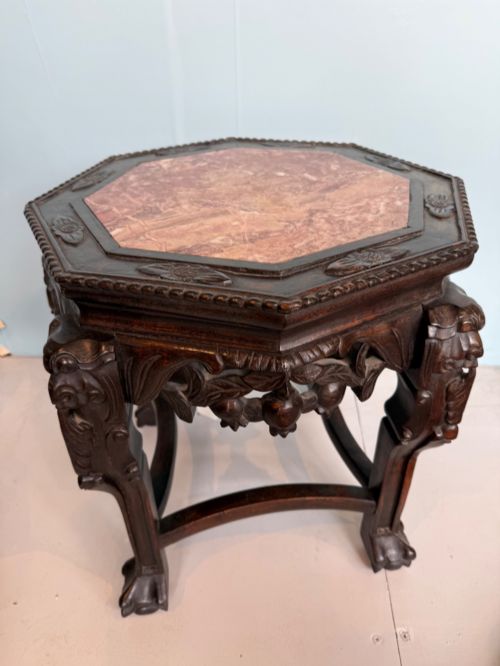
Most examples originate from the nineteenth century, spanning the Victorian era and the Qing Dynasty. The selection includes individual stands, matched pairs, and low Kang or opium tables of smaller scale.
Makers designed these items to function as pedestals for specific vessels, meaning the top surface often matches the circular or multi-lobed outline of a jardiniere or vase.
Materials and construction
Carpenters utilised dense exotic timbers such as rosewood, hongmu, padouk, huali wood, and mahogany to build these stands. These heavy tropical hardwoods provide the structural strength needed to support solid stone inserts without warping.
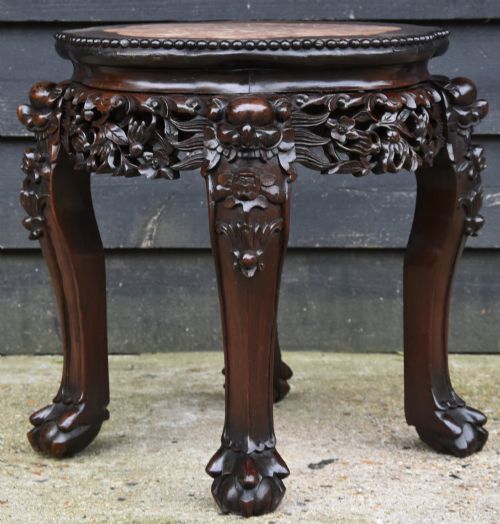
Many examples incorporate a central inset panel of rouge marble or veined stone within the timber frame. Artisans carved the surrounding wood with traditional motifs, joining the structural members through precise joinery.
Chinese Bonsai Table Retail Price Guide 2026
Typical asking prices for chinese bonsai table among the pieces listed under this phrase on Sellingantiques today, from the lower quarter to the upper quarter. They describe what is for sale here now, not the wider market.
The listings show pieces constructed from padouk, hongmu, rosewood, and huali wood, frequently inset with marble.
Assessing craftsmanship
The distinction between standard and superior pieces rests upon the crispness of the hand carving and the selection of the timber. Deeply undercut foliage and pierced relief work require significant time from the craftsman, separating elaborate scholar's pieces from basic utility stands.
The quality of the inset marble and the weight of the dense hardwood dictate the tactile presence of the object. Heavier woods like hongmu and padouk hold sharper carved details and display richer natural grain than softer domestic alternatives.
The Chinese Bonsai Table Glossary
- Jardiniere stand
- A tall or low table designed specifically to hold a ceramic flower pot or plant container. These stands protect interior surfaces and raise the greenery to eye level.
- Hongmu
- A category of dense, dark tropical hardwoods prized in Chinese furniture making. The material translates literally as red wood and takes a fine natural polish.
- Padouk
- A heavy, durable timber with reddish tones used extensively for carved oriental furniture. It provides a stable base for heavy marble inserts.
- Kang table
- A low domestic table traditionally used on a heated brick sleeping platform in northern China. Smaller scaled versions function today as coffee or display tables.
- Huali wood
- A fragrant and highly figured Chinese hardwood associated with classic furniture production. It exhibits complex grain patterns that enhance carved surfaces.
Chinese Bonsai Table: Frequently Asked Questions
What is a chinese bonsai table used for?
These pieces serve as elevated platforms for potted plants, bronze vessels, and decorative ceramics. By lifting the object off the floor or a standard surface, they draw attention to the plant or pot placed upon them.
Historically, scholars and collectors utilised them to display treasured specimens indoors. Today, they function effectively as small side tables or lamp stands in domestic interiors.
How do I date a nineteenth century stand?
Dating relies on examining the timber species, the depth of the carving, and the overall construction methods. Pieces linked to the Qing Dynasty often display traditional carving styles and dense timbers like hongmu or padouk.
Labels referencing the Victorian period or the later nineteenth century reflect the trade and importation history of these items into Europe. Comparing the wear on the timber base provides further clues to age.
Are these stands strong enough for heavy pots?
The dense tropical hardwoods used in these pieces possess exceptional structural strength and load-bearing capacity. Timbers such as rosewood and mahogany support heavy marble inserts without flexing.
This robust construction means they easily manage heavy ceramic planters and bronze jardinieres. The stable frames prevent tipping even when supporting uneven weights.
How do I care for the marble top?
The marble insert requires simple dusting with a dry or slightly damp cloth to maintain its surface. Avoid using harsh chemical cleaners that might etch or dull the polished stone.
Treat the surrounding hardwood with natural wax rather than silicone polishes to preserve the finish. Keeping the piece away from direct heat sources prevents the timber frame from shrinking around the stone.