
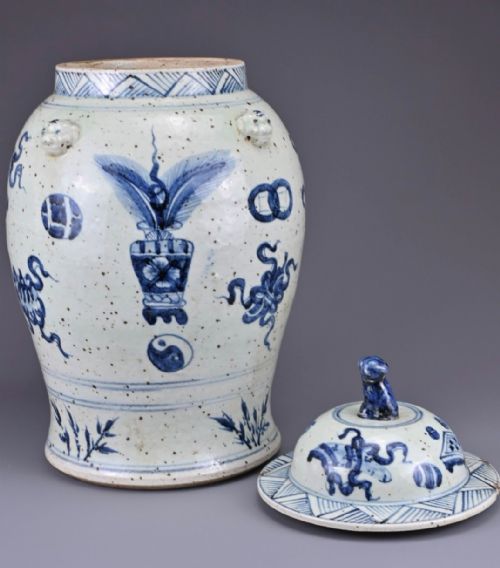
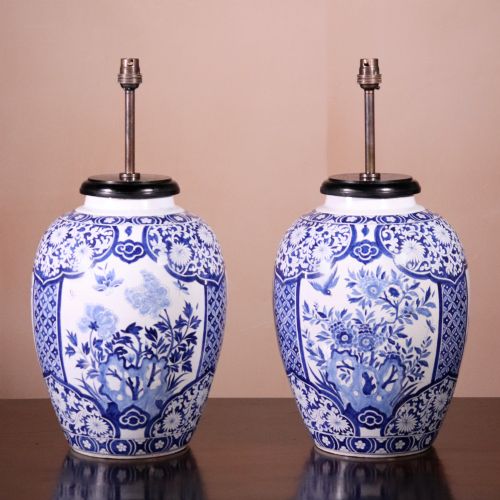


Chinese Blue White Ginger Jar
A Chinese blue white ginger jar brings centuries of ceramic tradition into a room through deep cobalt tones and painted porcelain forms.

Chinese Blue White Ginger Jar
A Chinese blue white ginger jar is a ceramic vessel originally created to store spices, herbs, or salt, featuring a wide mouth and rounded body. Collectors encounter these jars in various forms, from utilitarian storage containers to ornamental pieces adapted as table lamps.
The pieces on this page span several centuries, with the nineteenth century heavily represented alongside earlier seventeenth and eighteenth-century examples. Alongside traditional lidded vessels, the selection includes related forms such as vases, potiches, and kamcheng jars.
Makers and decorators utilised distinct stylistic traditions, ranging from transitional designs and Qing Dynasty productions to export wares and provincial interpretations. Many examples retain their original covers, while others appear converted for domestic lighting.
How they were made
Potters shaped these vessels from high-fired porcelain and ceramic bodies before applying cobalt pigment beneath a transparent glaze. The painted decoration relies on brushwork executed directly on the clay surface prior to the high-temperature firing that fuses the cobalt into a durable blue hue.
Secondary materials appear in specific contexts, such as brass fittings and fabric shades on lamp conversions, or carved wood bases accompanying display vessels. Some pieces incorporate additional enamel colours like iron red and green alongside the cobalt pigment, or feature crackle glaze effects created intentionally during firing.
Listings feature porcelain and ceramic bodies decorated with cobalt pigment, occasionally paired with brass, fabric, and wood elements.
What varies in quality
The visual strength of the cobalt pigment dictates much of the appeal, separating deep, luminous tones from flat or muddy applications. Precision in the hand-painted motifs, whether botanical scenes, symbolic characters, or figurative narratives, reflects the skill of the original decorator.
Physical preservation also shapes desirability, particularly the survival of matching covers and the absence of heavy restoration to the porcelain body. Pieces maintaining crisp glaze surfaces and well-defined potting lines distinguish themselves from heavily worn or compromised examples.
The Chinese Blue White Ginger Jar Glossary
- Cobalt Glaze
- A vitreous coating coloured with cobalt oxide, applied to ceramic bodies before firing to produce rich blue decoration under the surface. This technique allows intricate painted details to remain protected beneath a glossy finish.
- Potiche
- A large ornamental jar with a rounded body and a domed cover, often displayed alongside matching vessels on furniture. These pieces were traditionally used for storage in affluent households.
- Qing Dynasty
- The final imperial dynasty of China, spanning from sixteen forty-four to nineteen twelve, known for prolific porcelain production and diverse decorative styles. Many surviving ginger jars date from the later decades of this era.
- Transitional Period
- The turbulent ceramic phase in seventeenth-century China between the Ming and Qing dynasties, marked by pictorial freedom and vibrant cobalt painting. Pieces from this era often display dynamic narratives and experimental glazing.
- Kamcheng
- A covered ceramic jar originating from Chinese kilns specifically for the Southeast Asian export market, featuring polychrome or blue and white designs. These vessels traditionally served festive or utilitarian functions in diaspora households.
Chinese Blue White Ginger Jar: Frequently Asked Questions
How were ginger jars originally used?
These vessels were primarily manufactured to store and transport spices, ginger, and other valuable commodities within trade networks.
Over time, their sturdy forms and decorative appeal led to them being adopted as prominent display items in domestic interiors.
How do I date a blue and white jar?
Dating relies on observing stylistic markers, potting characteristics, and the depth of the cobalt pigment under the glaze.
Earlier pieces from the seventeenth and eighteenth centuries often display different baseline clay qualities and brushwork styles compared to nineteenth-century productions.
Are converted lamp jars still valuable?
Many ginger jars were adapted as table lamps during the nineteenth and twentieth centuries to suit contemporary interiors.
These converted pieces remain collectible, though purists often look for examples where the original porcelain body sustained minimal alteration.
What does double happiness mean?
The double happiness symbol is a traditional Chinese ornamentation frequently painted on marriage jars and gift ceramics.
Its presence signifies joy and harmony, making it a common motif on pieces created for celebratory occasions.