



Chestnut Leather Library Chairs
Chestnut leather library chairs combine rich traditional seating with deep natural warmth, offering both comfortable study and handsome period style.
Chestnut Leather Library Chairs
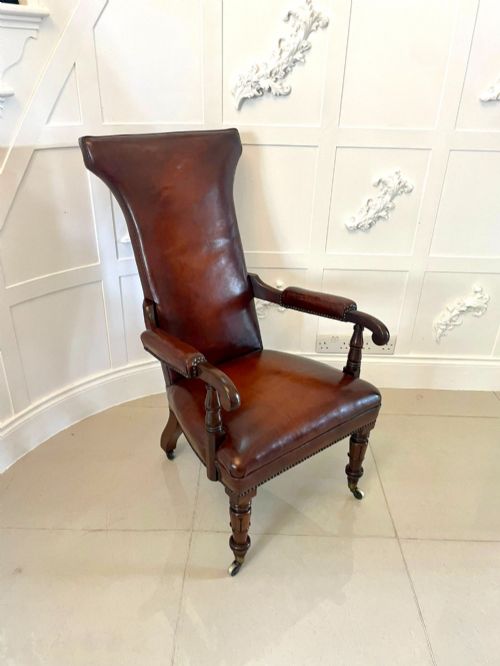
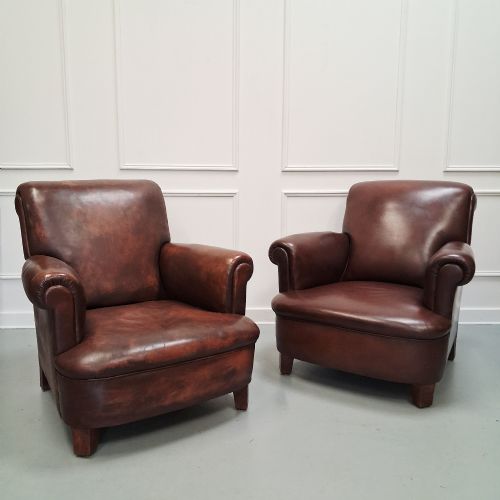
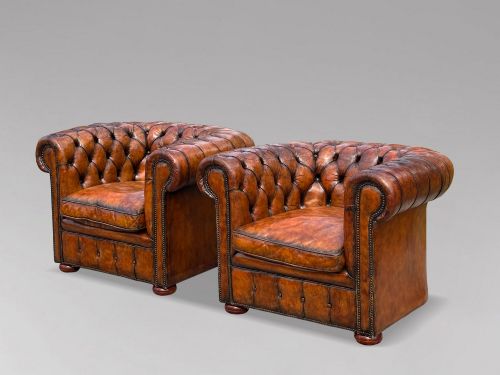
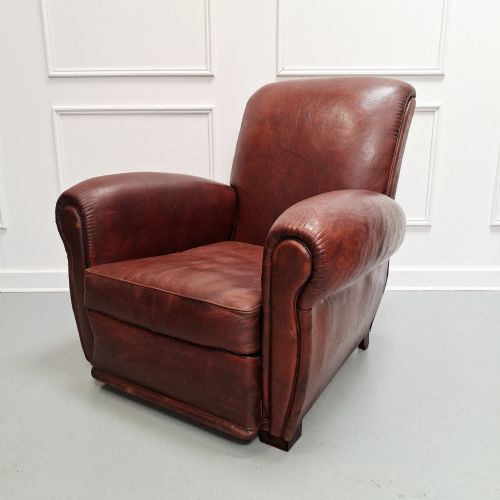
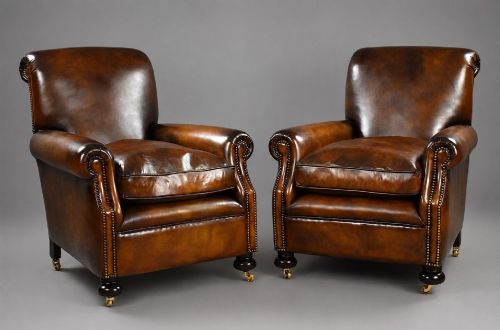
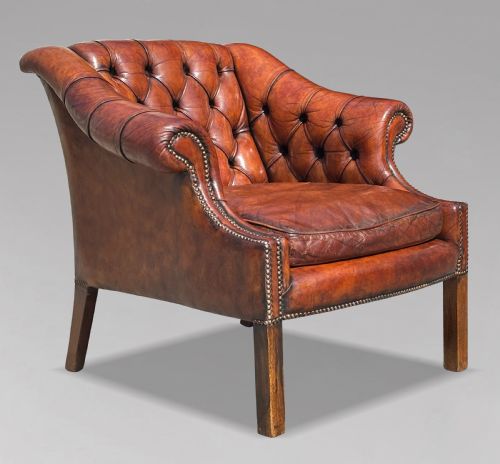
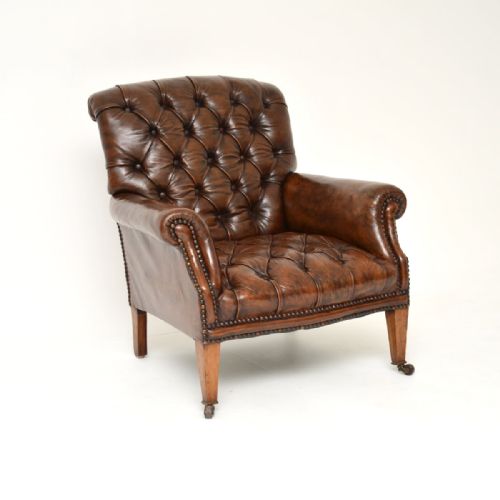
Chestnut leather library chairs encompass sturdy desk chairs, deep club armchairs, and buttoned easy chairs designed for reading rooms and studies. These forms span from the early nineteenth century through the Victorian era up to 1930s club styles.
Victorian and nineteenth-century examples dominate the selections, alongside Regency desk chairs and Georgian revival armchairs. Buyers most frequently encounter mahogany and oak frames upholstered in warm chestnut hides.
The category bridges formal office seating and relaxed club chairs, providing substantial support through padded arms and high backs. Many pieces feature traditional buttoning or wingback designs suited to domestic libraries.
Materials and construction
Cabinet makers utilised solid timbers such as mahogany, oak, rosewood, and hardwood to build robust frames that support heavy daily use. Brass hardware, including studs and castors, often secures and accents the upholstery and legs.
Upholsterers shaped rich leather over traditional stuffing, incorporating button-backed panels and winged supports for comfort. Wood carving and turned legs appear on many frames, reflecting Georgian, Regency, and Victorian cabinet-making methods.
Several armchairs incorporate hidden reclining mechanisms, letting nineteenth-century readers nap as comfortably as they studied.
Evaluating quality and character
The grade of timber and the depth of the wood grain set finer pieces apart from standard workshop production. Carved details on mahogany and oak frames indicate higher craftsmanship during the Victorian and Georgian periods.
The suppleness and tone of the chestnut leather determine the visual appeal of each armchair. Original buttoning and stable frame construction further distinguish exceptional library chairs from later reproductions.
The Chestnut Leather Library Chairs Glossary
- Chestnut leather
- Tanned animal hide exhibiting warm reddish-brown chestnut hues. This leather develops a distinct patina through age and regular handling.
- Library chair
- A heavy upholstered armchair or desk seat intended for reading and writing rooms. These pieces prioritize sturdy construction and sustained comfort.
- Club chair
- A deep, low-seated upholstered armchair designed for relaxation. French and English variants feature prominently in twentieth-century seating.
- Button back
- An upholstery method where depressions are pulled into the padding using buttons. This technique secures internal stuffing and creates a textured geometric pattern.
- Wingback
- An armchair featuring protective side panels attached to the arms and back. These wings originally shielded sitters from draughts in large rooms.
Chestnut Leather Library Chairs: Frequently Asked Questions
How do I care for chestnut leather?
Keep leather seats away from direct heat sources and strong sunlight to prevent the hide from drying out. Apply specialised leather balms periodically to maintain suppleness and preserve the natural chestnut colour.
Dust wooden frames with a soft cloth and avoid chemical polishes that can damage antique finishes. Gentle maintenance ensures the leather develops an authentic aged patina over time.
Are these chairs comfortable for daily use?
Most library armchairs and club seats offer generous proportions and padded support suited for reading or working at a desk. Victorian and Edwardian examples were built for sustained comfort during long hours of study.
Seat firmness varies depending on the internal stuffing and original spring construction used by the maker. Selecting pieces with robust frames ensures reliable everyday seating.
How can I tell a Victorian chair from a Georgian one?
Victorian chairs often feature heavier mahogany or oak frames with elaborate carvings, buttoned upholstery, and darker chestnut tones. Georgian pieces display cleaner classical proportions, simpler lines, and lighter timber figuring.
Examining the underside woodwork and fastening methods helps clarify the period of manufacture. Construction techniques evolved significantly between the eighteenth and late nineteenth centuries.
What is the difference between a desk chair and a library armchair?
Desk chairs are typically designed to sit lower or swivel, allowing easy movement around a study table or partner's desk. They often feature open wooden arms and compact frames tailored for writing tasks.
Library armchairs are larger upholstered seats meant for reading by a fire or in a reading room. They incorporate deep cushioning, enclosed arms, and sometimes high wingbacks for privacy.