


Chestnut Leather Club Chair
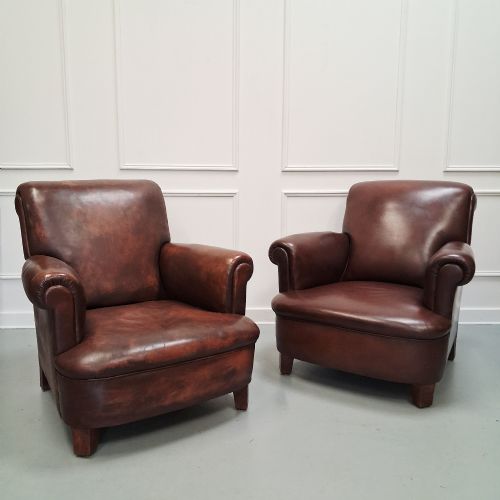
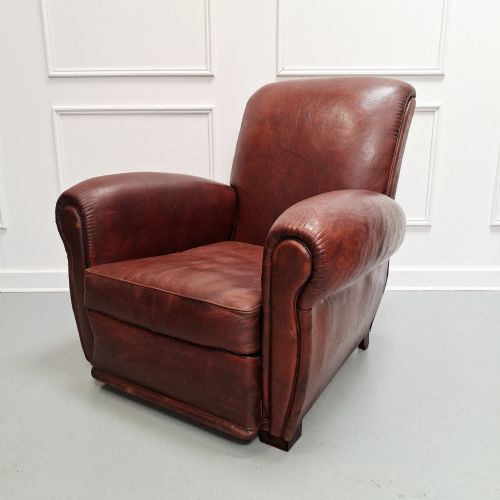
A chestnut leather club chair offers deep seating and rich hide, representing comfortable traditional lounging from the nineteenth and twentieth centuries.
Chestnut Leather Club Chair
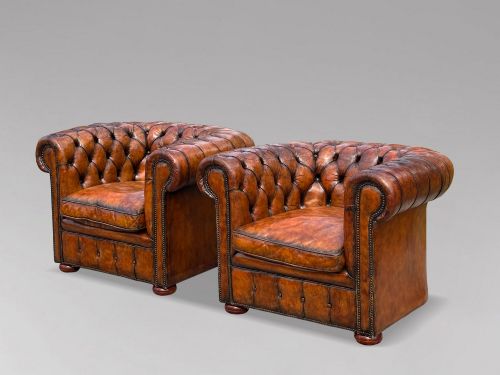
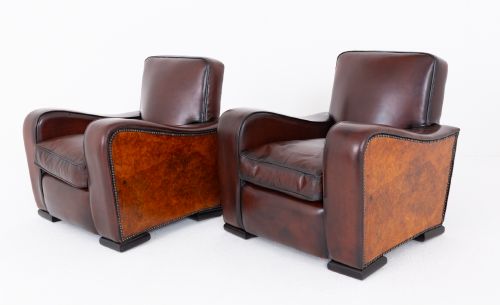
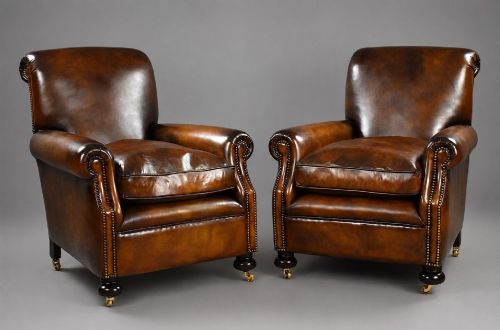
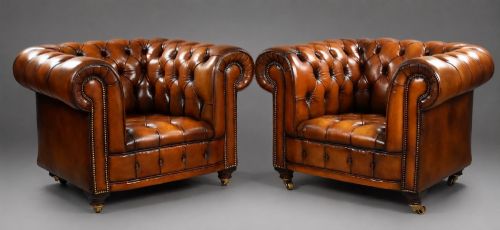
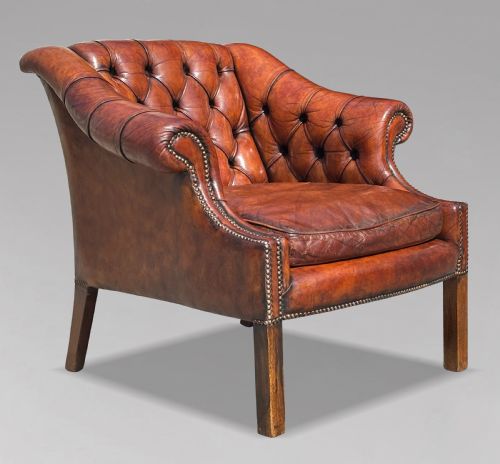
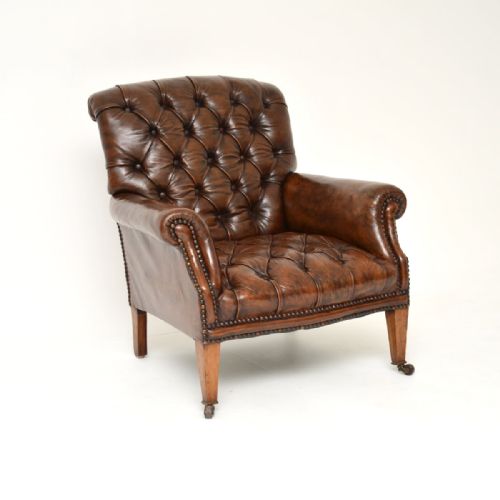
A chestnut leather club chair combines robust framing with upholstered hide, taking forms such as the traditional club chair, the Chesterfield armchair, and the library armchair. These seats emerge from periods including the Victorian era, the Edwardian years, and the Art Deco movement.
Buyers regularly encounter matched pairs alongside individual armchairs, spanning forms from standard low club seats to high-backed wingback chairs. The selection draws on English and French workshops, utilising woods like oak, mahogany, walnut, and rosewood beneath the leather covering.
Construction and Materials
Makers built the foundational frames of these chairs using timber such as oak, mahogany, and walnut, often supporting sprung interiors with traditional webbing and stuffing. Selected hides were then stretched and secured across the frame, frequently finished with individual brass tacks along the borders.
Surface treatments included hand-colouring and polishing the leather to achieve deep brown and chestnut tones over decades of use. Carved wooden details occasionally appear on the exposed framework of library chairs and Victorian easy chairs.
Judging Quality
Quality rests in the integrity of the wooden frame beneath and the depth of the leather hide, where thicker, properly tanned skins age with a richer patina. Superior examples maintain firm internal support and balanced proportions without relying on replacement components.
The precision of the upholstery work, from buttoning to the placement of brass studding, distinguishes standard production from finer workshop execution. Original timber elements that retain their distinct grain and colour add significantly to the standing of a piece.
Heal and Son Ltd
The Chestnut Leather Club Chair Glossary
- Chesterfield
- A deep-buttoned upholstered seating style traditionally featuring arms and back of the same height. This form remains a standard descriptor for heavy leather armchairs.
- Wingback
- An armchair featuring protective side panels attached to the armrests designed to shield the sitter from draughts. These high-backed chairs appear across Victorian and Edwardian examples.
- Patina
- The surface sheen and softening of tone developed by leather and wood through age and handling. A deep patina indicates long-term natural wear rather than artificial treatment.
- Button back
- An upholstery technique where depressions are formed in the padding by stitching through to the frame, often secured with leather-covered buttons. This method provides structural stability to the cushioning.
Chestnut Leather Club Chair: Frequently Asked Questions
What defines a club chair?
A club chair is a deep, comfortable armchair designed for lounging, typically upholstered in leather with low, rounded arms.
The form originated in France before becoming a staple of English libraries and sitting rooms.
How do I care for antique leather?
Antique leather requires regular dusting and occasional treatment with appropriate conditioners to prevent the hide from drying out.
Keeping the chair away from direct sunlight and heat sources protects the original chestnut tone and suppleness.
Are these chairs comfortable for daily use?
These armchairs are built with sprung seats and padded backs designed for sustained relaxation.
Their substantial proportions and deep seating make them well-suited for everyday reading and living spaces.
How do I date a leather armchair?
Dating relies on stylistic markers such as the framing timbers, the presence of buttoning, and the silhouette of the arms and back.
Victorian and Edwardian models often show distinct wood carving and nailhead patterns characteristic of their period.