

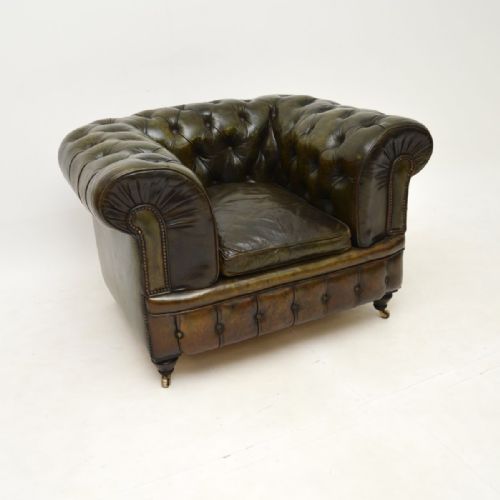


Antique Chesterfield Armchair
An antique chesterfield armchair offers deep buttoning and sturdy seating, shaped by decades of heavy library use and gentleman's club comfort.
Antique Chesterfield Armchair
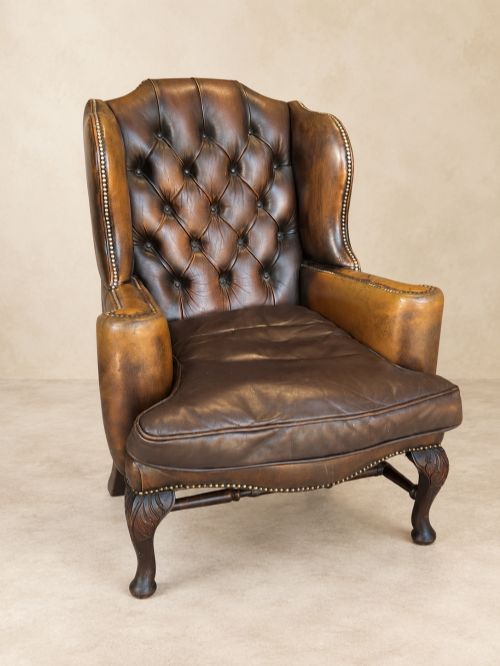
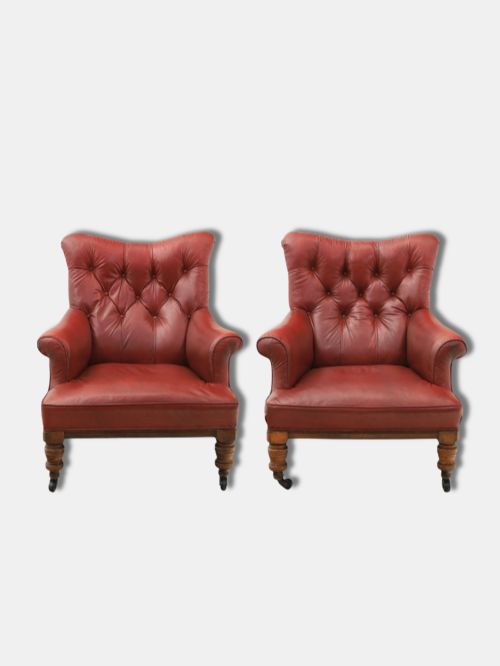
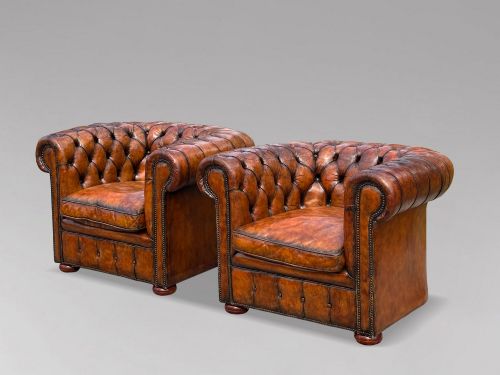
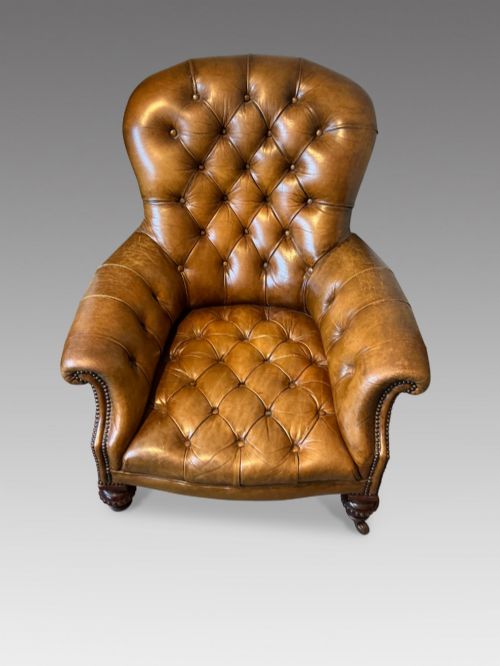
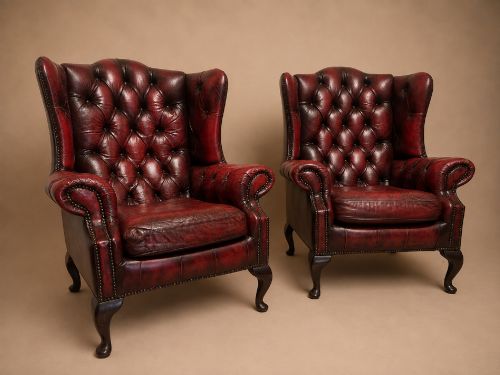
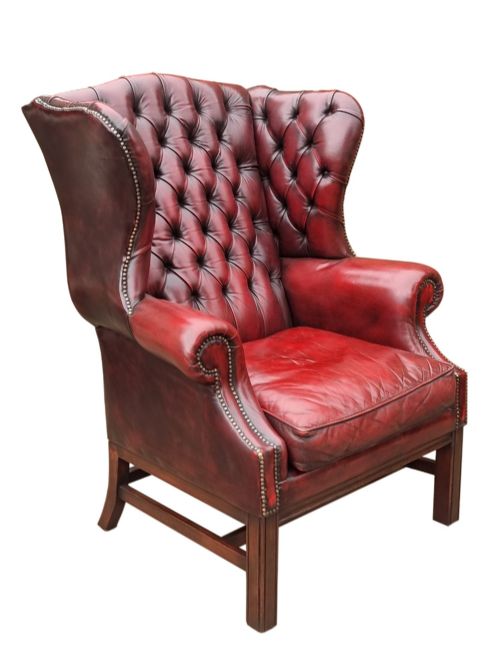
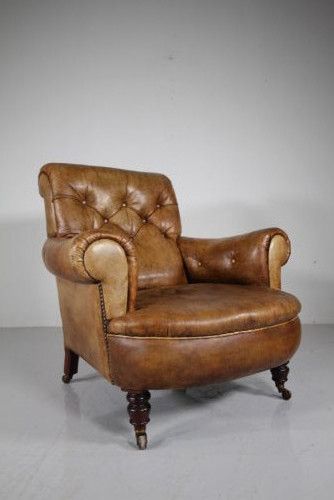
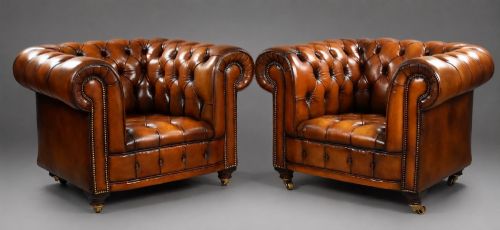
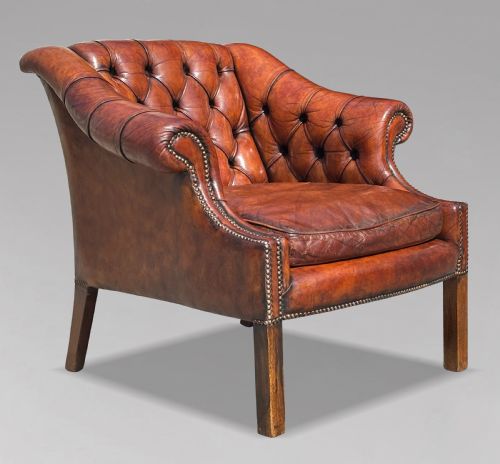
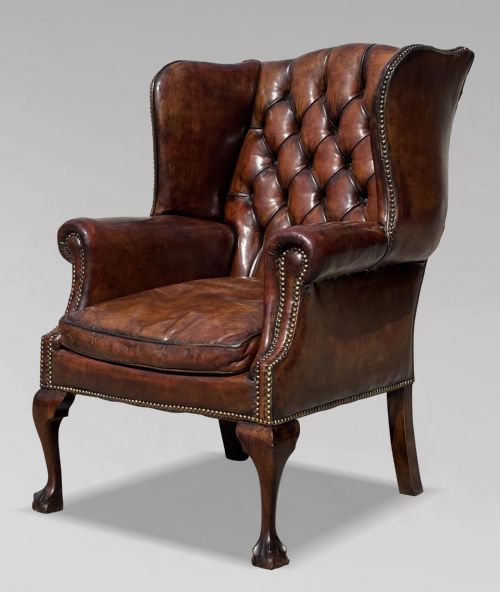
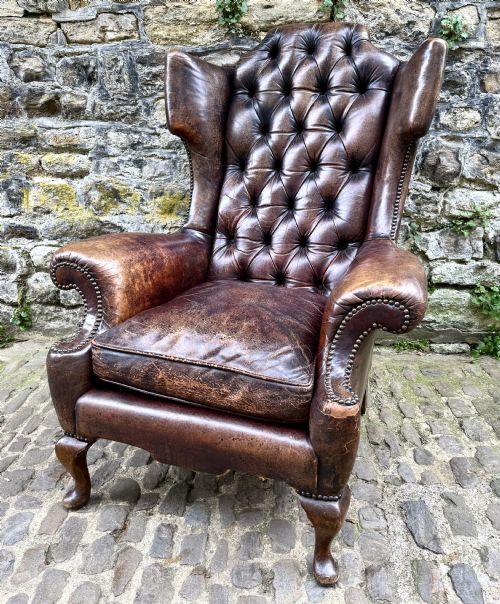
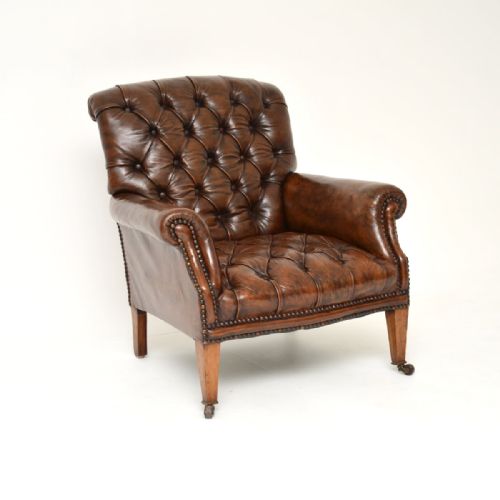
An antique chesterfield armchair provides a low-slung, deeply upholstered seat designed for prolonged sitting and heavy domestic or institutional use. These chairs frequently emerge from Victorian, Edwardian, and early twentieth-century workshops, often appearing as club chairs, library chairs, or winged variants. Buyers encounter tan, brown, oxblood, and green leather upholstery set upon timber frames of mahogany, oak, or general hardwood.
The form encompasses standard low-backed club chairs as well as imposing wingback versions with substantial scrolled arms. Many examples feature tight buttoning across the backrest, securing the internal stuffing and creating the characteristic quilted texture. Pairs and suites occasionally appear alongside single pieces, reflecting their original placement in private libraries, smoking rooms, and offices.
What varies in quality
The calibre of an antique chesterfield armchair rests primarily on the depth and character of the leather hide, where natural patination and hand-dyed finishes distinguish superior examples from plain surfaces. Frames built from dense timber such as mahogany demonstrate greater structural integrity than those utilising softer secondary woods.
Execution of the buttoning and hand-tacked brass detailing indicates the standard of workshop output. Pieces retaining rich colour variation and robust framing command greater attention among collectors than uniform or heavily altered specimens.
Antique Chesterfield Armchair Retail Price Guide 2026
Typical asking prices for chesterfield armchair among the pieces listed under this phrase on Sellingantiques today, from the lower quarter to the upper quarter. They describe what is for sale here now, not the wider market.
Listings span the eighteenth century through the Edwardian period, uniting mahogany, oak, brass, and leather in traditional English forms.
The Antique Chesterfield Armchair Glossary
- Chesterfield
- A deeply buttoned upholstered seat characterised by low arms and a back of the same height. The term historically denoted heavy club and library seating.
- Wingback
- An armchair featuring protective side panels attached to the armrests or back. These extensions historically shielded occupants from draughts in large rooms.
- Rexine
- A leathercloth material utilised as an upholstery substitute in early twentieth-century furniture production. It mimics the appearance of animal hide through coated fabric.
- Tufting
- A method of securing interior padding by passing twine or thread through the upholstery and anchoring it with buttons. This creates a geometric pattern across the backrest.
Antique Chesterfield Armchair: Frequently Asked Questions
What is a chesterfield club armchair?
A club armchair is a low, deep-seated upholstered chair designed for relaxation in gentlemen's clubs and private libraries during the nineteenth and early twentieth centuries.
These pieces typically feature leather upholstery and supportive armrests built for long periods of reading or conversation.
How do I date an antique leather armchair?
Dating relies on examining the timber frame construction, the type of leather finish, and the style of the legs, whether mahogany spade feet or brass-castorted supports.
Victorian and Edwardian examples often display distinct buttoning patterns and wood types that align with the periods recorded in workshop records.
Where should I place a wingback chair?
Wingback chairs suit studies, living rooms, and libraries where their high backs and protective side panels can anchor a seating arrangement.
Their substantial scale pairs well with traditional timber desks or reading tables from similar eras.
Are these chairs comfortable for daily use?
These seats were originally built for domestic and institutional comfort, utilising deep internal padding and robust spring or stuffing systems.
Modern users find them supportive, though historical seat heights and depths vary according to the decade of manufacture.