

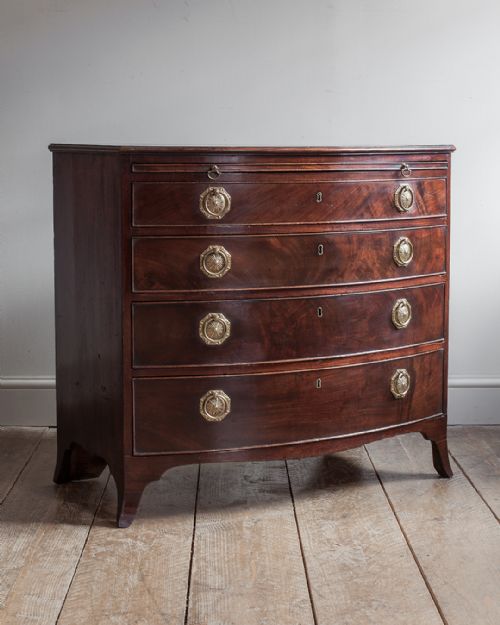
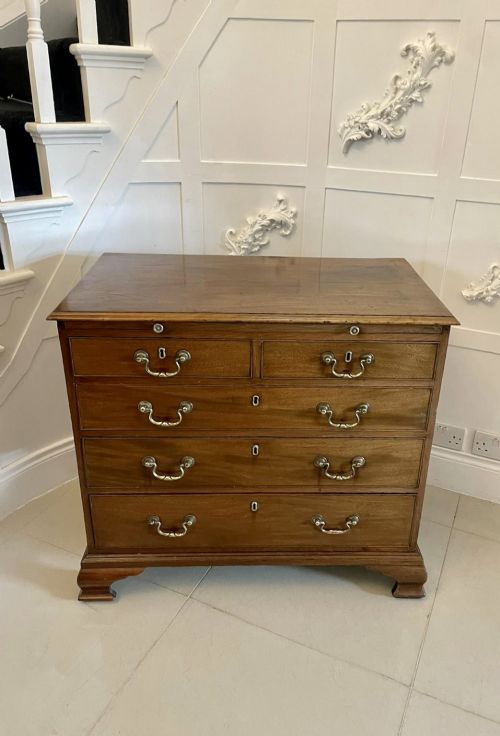
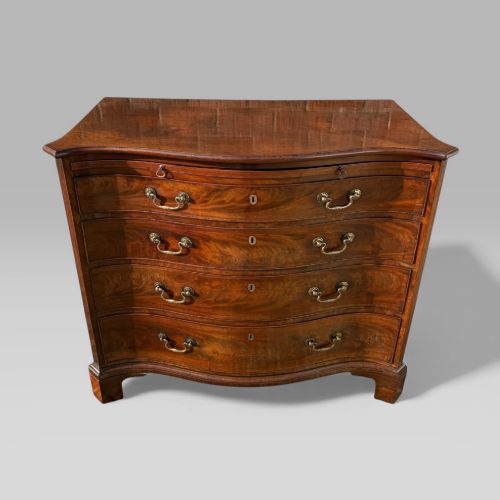
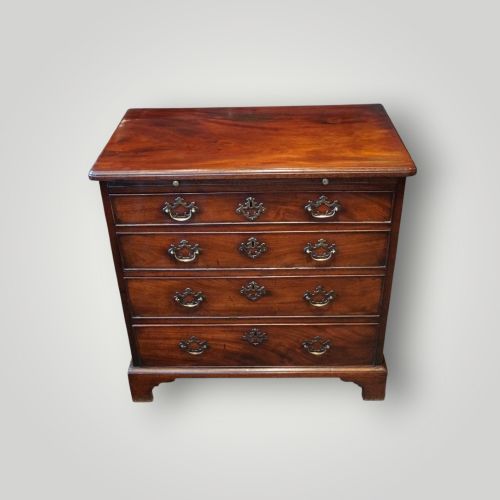
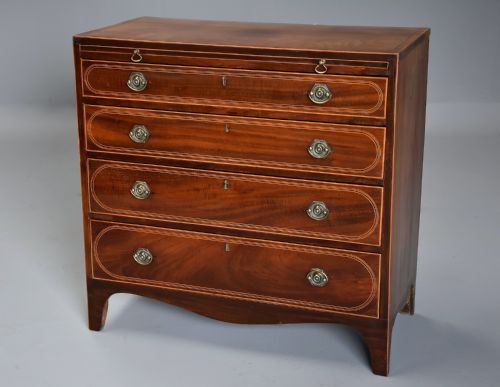
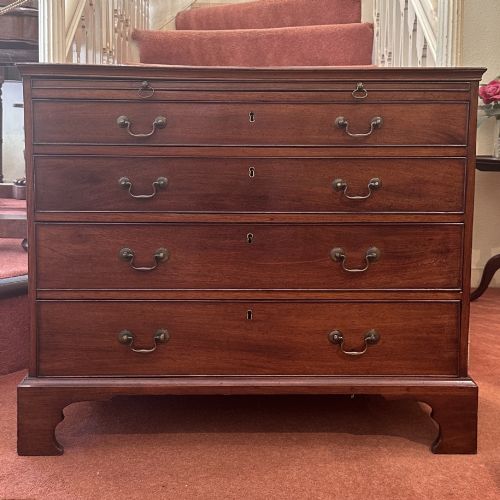
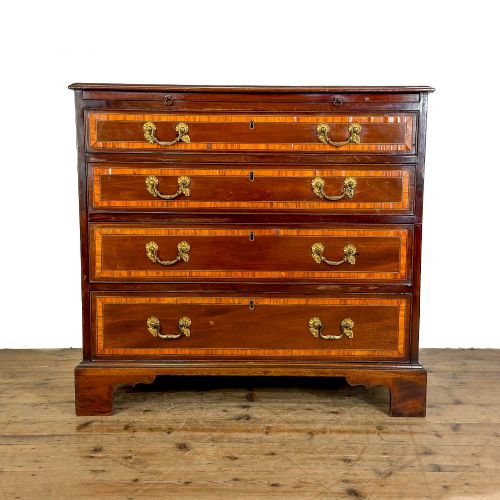

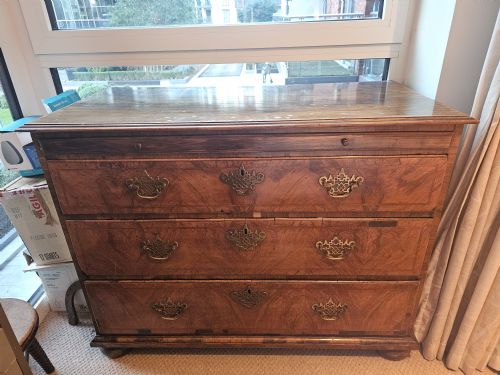
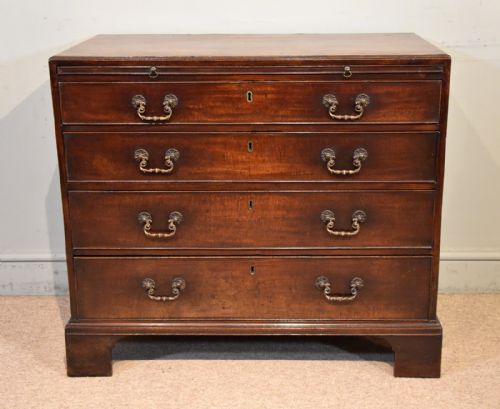
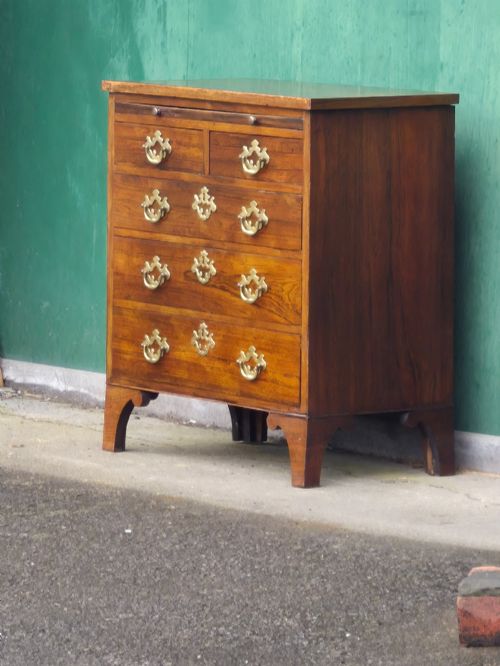
Chest of Drawers Brushing Slide
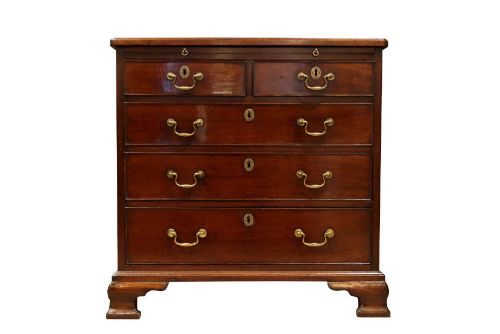
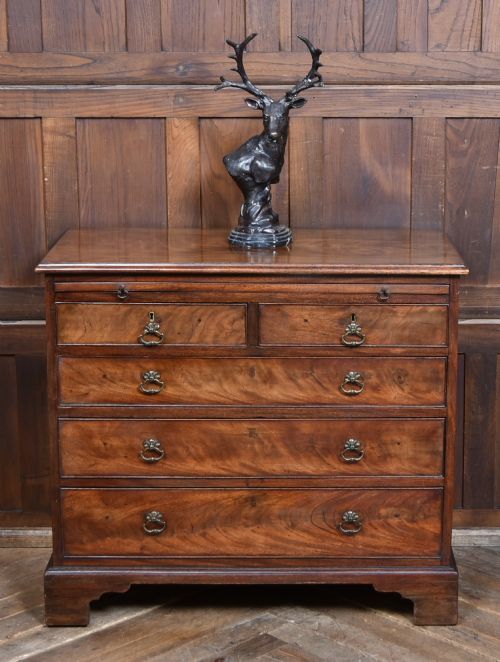
A chest of drawers brushing slide provides a convenient pull-out surface, combining traditional storage with a compact writing ledge.
Chest of Drawers Brushing Slide
A chest of drawers brushing slide is a form of case furniture designed with a retractable shelf integrated into the upper section above the primary drawers.
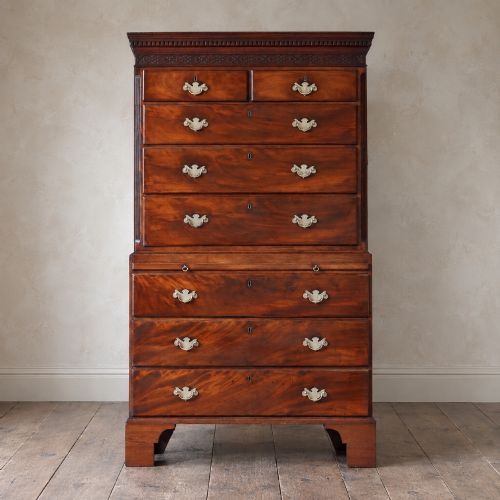
The pieces appearing on this page span from the eighteenth century through the Georgian and Victorian eras up to later revival periods, encompassing standard chests, chests on chests, and bachelor's chests.
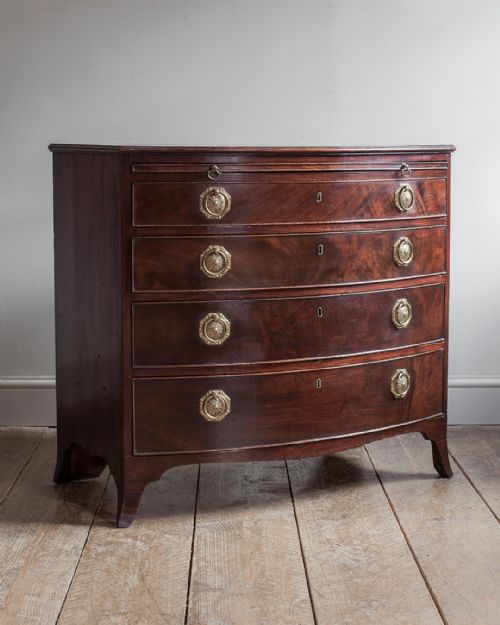
Mahogany and walnut predominate among the surviving examples, often showing figured grains or serpentine fronts alongside original brass hardware.
Materials and construction
Cabinet makers utilised dense hardwoods such as mahogany, walnut, and oak to build the structural carcasses and drawer linings.
Surfaces frequently display figured mahogany veneers or burr walnut, sometimes enhanced with satinwood inlay or delicate ebony stringing.
The sliding panel operates on inset wooden runners, designed to pull out smoothly for writing or sorting garments without disturbing the top surface of the chest.
Several chests still retain their original sliding panels that have glided smoothly for nearly three centuries.
Distinguishing the pieces
The standard of craftsmanship is evident in the precision of the drawer dovetailing, the thickness of the timber used for secondary woods, and the integration of the sliding mechanism.
Proportion and scale distinguish finer examples, particularly smaller bachelor's chests and serpentine forms where shaping the timber requires advanced woodworking skill.
The integrity of the surface timber, including the warmth of the original patina and the preservation of period brass handles, elevates certain examples above standard production.
Druce & Co
The Chest of Drawers Brushing Slide Glossary
- Brushing slide
- A pull-out wooden shelf integrated into the upper section of a chest, historically used for grooming or writing. It sits discreetly above the uppermost drawer.
- Bachelor's chest
- A small, compact chest of drawers equipped with a brushing slide. These pieces date predominantly from the Georgian period.
- Serpentine front
- A furniture front characterised by a concave central section flanked by two convex curves. This shape demands high technical skill from the cabinet maker.
- Chest on chest
- A tall case piece comprising an upper chest of drawers stacked upon a slightly wider lower chest. This form maximises vertical storage space.
- Flame mahogany
- Timber cut from the branching point of the mahogany tree to produce a dramatic, flame-like grain pattern. Cabinet makers reserved this veneer for primary drawer fronts.
Chest of Drawers Brushing Slide: Frequently Asked Questions
What was a brushing slide used for?
A brushing slide served as a convenient pull-out shelf for brushing garments or powdering wigs in the eighteenth century. It also functioned as a temporary writing surface.
Today, the slide offers a practical ledge for placing small items while accessing the drawers below.
How do I date a Georgian chest of drawers?
Dating relies on examining the timber species, construction methods of the drawer boxes, and the style of the brass handles and escutcheons. Hand-cut dovetails and oak linings typically indicate earlier periods.
Changes in proportions and the introduction of specific veneers like flame mahogany or burr walnut further help place a piece within the Georgian timeline.
Where should I place a bachelor's chest?
A bachelor's chest works well in a bedroom or hallway due to its compact footprint and useful surface area. The pull-out slide makes it adaptable for tight spaces where a full desk cannot fit.
Keep the piece away from direct heat sources and strong sunlight to protect the aged timber and delicate veneers.
What is the difference between a standard chest and a bachelor's chest?
A bachelor's chest is generally smaller in scale and specifically includes a brushing slide integrated into the upper framework. Standard chests of drawers vary widely in height and rarely feature the sliding writing panel.
Both forms utilise similar cabinet-making techniques but serve slightly different functional origins in domestic interiors.