
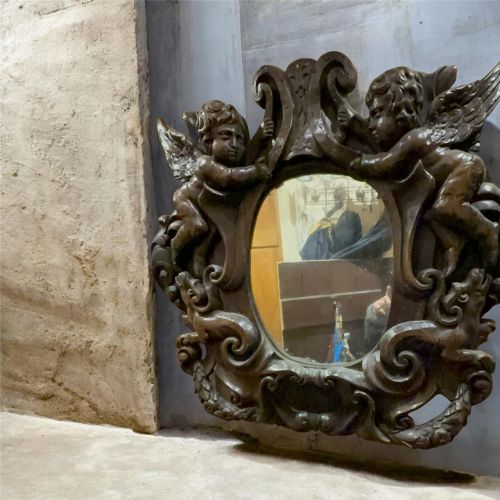


Cherub Wall Mirror
A cherub wall mirror brings playful neoclassical charm to a room, pairing reflective glass with sculpted figures from the nineteenth century and earlier.
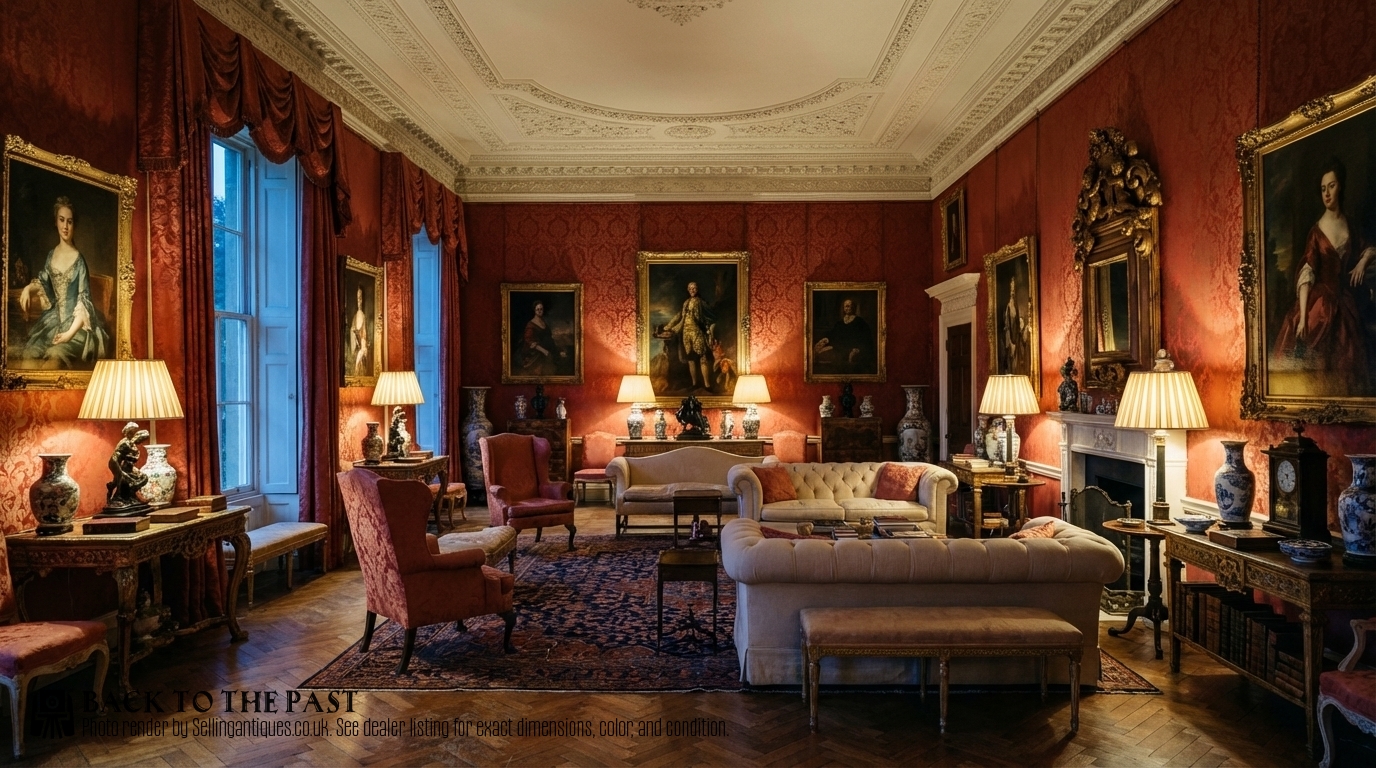
Cherub Wall Mirror
A cherub wall mirror combines practical reflection with ornate sculptural ornament, typically featuring winged putti or cherubic figures atop the crest or framing the glass. These pieces range from compact brass wall-hangings to grand overmantels, drawing heavily on French and Italian design traditions.
Most examples found here date from the nineteenth century, including Victorian interpretations and French chateau styles, alongside earlier eighteenth-century survivals and revival pieces. Makers utilised diverse forms, from arched top gesso frames to oval wooden carvings, placing the cherub motif as the central decorative focus.
How they were made
Carved wood and gesso form the foundation of many pieces, often finished with gold leaf, silvering, or paint to create a rich metallic sheen. Artisans also cast metals such as brass, bronze, and iron to form intricate frames and figural reliefs.
Moulded gesso applied over carved wooden cores allowed makers to achieve deep, sculptural relief for scrolling foliage and cherub details. Original mirror plates, sometimes bevel-edged, were secured within these robust frames by hand.
Listings feature materials spanning giltwood, carved oak, brass, bronze, and cast iron across nineteenth-century and earlier periods.
What varies in quality
The integrity of the finish - whether original gilding, parcel gilding, or silvering - shapes the character and authenticity of the mirror. Surfaces that retain their original patination without crude overpainting command greater appreciation among collectors.
Sir Willian Trotter·Coalbrookdale
The Cherub Wall Mirror Glossary
- Gesso
- A plaster-like mixture applied to wood frames as a base for gilding or painting. It is easily carved and moulded when wet to create relief ornament.
- Putto
- A plump, often winged child figure commonly found in Renaissance and revival art. These figures are frequently referred to as cherubs on wall mirrors.
- Giltwood
- Timber that has been coated with a thin layer of gold leaf. This technique was widely used on decorative frames throughout the eighteenth and nineteenth centuries.
- Overmantel mirror
- A large mirror designed to hang above a fireplace mantel. They often feature decorative pediments or cresting.
- Rococo Revival
- A nineteenth-century style reviving the asymmetrical scrolls, shell motifs, and curving lines of the eighteenth-century Rococo movement.
Cherub Wall Mirror: Frequently Asked Questions
Are these mirrors French or English?
The selection includes both French chateau styles and English Victorian pieces, alongside Italian designs. French examples often display ornate gesso and parcel gilt finishes with prominent crests.
English interpretations frequently utilise oak, mahogany, or brass, reflecting regional craftsmanship trends of the nineteenth century.
How do I clean an antique mirror plate?
Use a soft, dry cloth to remove dust from the frame and glass, avoiding harsh chemical cleaners that might damage aged silvering or gilding. Apply mild glass cleaner sparingly to a cloth rather than directly onto the plate.
Take care around the edges of the mirror glass and the surrounding gesso ornaments to preserve the original finish.
What is the difference between a putto and a cherub?
While modern usage often treats the terms interchangeably, art history distinguishes putti as secular infant figures from celestial cherubs. On nineteenth-century mirrors, both terms describe the decorative winged child motifs.
These figures appear variously perched on crests, supporting brackets, or reclining alongside floral and architectural relief panels.